
Ellertsson, the 189cm Cross and the Silence PSSI Has Not Confirmed
Trả lời nhanh: Markús Páll Ellertsson, 20 tuổi, cao 189 cm, là tiền đạo của ÍA Akranes ở Besta deild karla, được cho là có mẹ ruột sinh tại Jakarta và đang được đội tuyển Indonesia để mắt. PSSI chưa xác nhận, chưa có tiếp cận chính thức và quá trình nhập tịch chưa bắt đầu. Các dữ kiện chính: - Ellertsson có 4 lần khoác áo U-19 Iceland trong năm 2024, chưa có lần nào cho đội tuyển quốc gia nam. - Nguồn tin gốc là bài đăng Instagram của ông Noor Korompot, đặc trách Văn phòng Bộ Luật, không phải PSSI. - VIVA đưa tin PSSI chưa liên hệ chính thức và quá trình nhập tịch chưa được khởi động. - ÍA Akranes chơi ở giải cao nhất Iceland; nguồn tin không cung cấp dữ liệu bàn thắng, phút thi đấu hay định giá chuyển nhượng. - FIFA không tự động cho chuyển liên đoàn chỉ vì có hộ chiếu; hồ sơ gốc và lịch sử trận chính thức cấp đội tuyển quốc gia là điểm mấu chốt. Nguồn: VIVA, dẫn bài đăng Instagram của Noor Korompot; chưa có xác nhận từ PSSI. Hỏi đáp liên quan: Hỏi: PSSI đã xác nhận việc theo đuổi Ellertsson chưa? Đáp: Chưa; VIVA nêu rõ chưa có tiếp cận chính thức và quá trình nhập tịch chưa bắt đầu. Hỏi: 4 lần khoác áo U-19 Iceland có chặn việc chuyển liên đoàn không? Đáp: Không tự động chặn, nhưng hồ sơ phải đáp ứng điều kiện của FIFA và chưa được kiểm chứng. Hỏi: Điểm mạnh chuyên môn được nêu là gì? Đáp: Chiều cao 189 cm và khả năng tranh chấp bóng bổng, chưa có dữ liệu hiệu suất để định lượng.
On a rainy afternoon in Kuala Lumpur, I replayed a clip on my phone. A player in the red shirt of ÍA Akranes rose to meet a cross from the right. I watched it three times, not to see where the ball went, but to see how his knees bent before he jumped. A 189cm striker in Iceland’s top flight, 20 years old, named Markús Páll Ellertsson. Then my phone buzzed. An Instagram post by Noor Korompot, special staff at Indonesia’s Ministry of Law, mentioned the name in connection with the national team. No PSSI logo. No coach’s name. No press conference date. Just a line of text and a name. Hours later, VIVA reported it. The headline called him a “durian that fell from the tree” — an unexpected windfall. I read the headline, then the body. Two different voices: one excited, one cautious. That gap is where I want to begin.

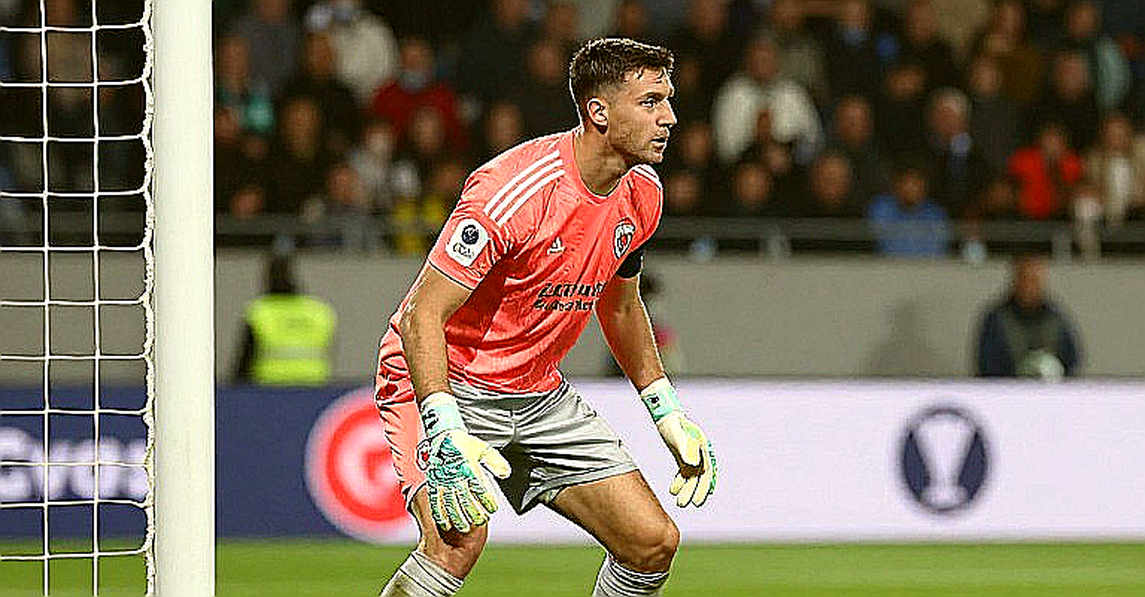
Ellertsson is not a familiar name to Southeast Asian football audiences. He is 20, a centre-forward at ÍA Akranes in Besta deild karla, Iceland’s top men’s league. In 2026 he earned four caps for Iceland’s U-19 side. He has none for the senior national team. His 189cm frame is the most repeated fact. Noor Korompot’s post said Ellertsson’s biological mother was born in Jakarta, opening a possible naturalisation route for Indonesia. VIVA repeated the post and added a crucial caveat: PSSI has made no official approach, and no naturalisation process has started. That is the entire factual base I have: a young player, a height, a lineage claim made on social media, and a federation that has not spoken.
The wider context is Indonesia’s naturalisation wave. In recent years the national team has added several players born or developed in Europe with Indonesian ancestry. Ole Romeny and Mitchell Baker are named in the headline as Ellertsson’s “companions”. John Herdman, the head coach, is named but not quoted. PSSI is not quoted either. A post by a Ministry of Law official is being read as scouting news. The distance between those two things is large, and it does not disappear because the headline sounds exciting.
We need a clear distinction: this is an association-change story, not a club-to-club transfer. There is no transfer fee. No purchase agreement. No negotiation between ÍA Akranes and an Indonesian club. The direct financial cost is close to zero. But the non-financial cost is real: administrative time, scouting resources, public-opinion risk, and the danger of pushing an unverified file into the press before it is checked. For a federation building a squad, those costs are not small. They do not appear on a balance sheet, but they shape the credibility of an entire strategy.
The key point is not the 189cm frame. It is that the file carries no PSSI signature. The article’s football case rests on one physical attribute: aerial presence. That is a profile-fit argument, not a quality-fit argument. To know whether a 189cm striker helps a national team, you need to see how he moves in the box, how he holds the ball, how he presses, how he positions himself when the ball is on the far side. The source gives no minutes, no goals, no assists, no performance data. That silence is not a minor detail. It is the centre of the story.
I have written about young players from a single clip many times. That experience taught me one thing: a clip shows what a player can do, not how often he does it. One good jump does not prove 90-minute positioning. One strong header does not prove reading of flight. I look at the feet, but I listen to the heart of the kid. With Ellertsson, I have only seen the feet in a clip; the rest has nothing to listen to yet.
Besta deild karla is a real football environment, but it is not a top-tier European league by UEFA coefficient. The gap from there to Asian qualifier intensity is real. A 20-year-old striker in Iceland may have genuine physical upside, but upside is not output. He is at the earliest stage of the age curve, when value and performance often rise. That is why clubs buy young players. National teams do not buy upside; they need output in specific matches. Between the two lies a road that requires data to measure.
Tactically, the idea of using a 189cm forward to add variation against low-block opponents has a basis. Indonesia often faces teams that sit deep, defend physically, concede possession and protect the box. In those games, a forward who can contest aerial balls, hold up play and drag centre-backs out of position can open space for the second line. That is basic football logic. But the logic only works if the player can execute at Asian speed and intensity. Height is necessary, not sufficient.
Based on my experience watching matches in Southeast Asia and travelling with teams, I have learned that a tall striker is usually judged on aerial duels, but his real value lies in the moments nobody films. How he runs when a teammate is about to cross. How he drops to hold the ball when his team is pinned back. How he gets up after a collision. None of that is in an Instagram post. It appears only across many training sessions and many matches. So I keep my caution.
In Indonesia’s squad structure, Ellertsson would not step into an empty space. Ole Romeny and Mitchell Baker are already there. They are naturalised players with more established professional profiles. A 20-year-old from Iceland’s top flight, if everything goes well, is likely to be a rotation option or a future prospect, not an immediate starter. The article calls Ellertsson an unexpected gift, but a gift only has value when the receiver knows where to put it. In a squad needing depth, it is a trial ticket. In a star’s role, it is pressure.
Financially, this is a no-fee file. For a federation, that sounds attractive. But opportunity cost remains: scouting time, document verification, administrative resources, and reputational risk if the file fails. The transfer market is only a mirror — look into it and you see a club’s fear. Here, the mirror reflects a fear of lacking strikers more than faith in a long-term plan. A 20-year-old does not solve that fear in one season.
One under-discussed point: a naturalisation wave creates a cross-border scouting pipeline, but it can also slow domestic academy investment. When a federation knows it can find players in Europe, the relative incentive to invest in local youth development weakens. That is a structural effect, not Ellertsson’s fault. One player does not make a strategy. But a repeated chain of stories like this can shape how a football nation sees itself.
The most sensitive part is the source. The post came from Noor Korompot, special staff at the Ministry of Law. He is not a football official, not a coaching staff member, not the player’s agent. The Instagram post is the origin of the entire story. VIVA repeated it, but VIVA also noted that PSSI has not confirmed it. In my job, a single social-media source is a starting point for verification, not an ending point for publication. The dressing room never lies — only the listener lacks patience. This time, the dressing room has said nothing, because nobody has stepped inside.
Eligibility is the biggest question. Ellertsson has four Iceland U-19 caps in 2026. He has no senior caps. Under FIFA rules, youth caps do not automatically tie a player to his original association, but an association change requires conditions on nationality, documentation and senior competitive appearances. An Instagram post cannot replace a birth certificate, a passport or a federation confirmation. The article says this clearly: four U-19 caps do not guarantee a switch. That is the right framing. The headline does not keep the same caution.
There are three scenarios. Worst case: the lineage claim fails documentary verification, or the U-19 record creates a problem, and the pathway collapses. Then the “windfall” story becomes a lesson in expectation. Central case: the file looks plausible but unproven, and a long, low-visibility verification process begins with no immediate outcome. Optimistic case: all criteria are met and the association change is completed within a standard administrative window. None of these can be confirmed from the current source. The highest risk therefore sits before eligibility, not in sanctions after it.
In media terms, the story is at an emergence stage. One post, one report, a few headlines. There is no real frenzy yet. The article contains its own warnings, but the headline uses the word windfall. That mismatch is a familiar pattern: the body is more cautious than the top. For readers, the body is more trustworthy. For algorithms, the top gets more attention. A season is a symphony — the beat keeper knows when to strike and when to stay silent. PSSI is silent. The reasonable reading is to wait and see whether the silence is for verification or because there is nothing to say.
Overall risk is medium-to-high. The heaviest point is unverified eligibility. The second is single-source dependency. The third is the gap between expectation and delivery. Sporting risk is modest because this is a low-cost, bottom-of-squad profile. Governance and information-integrity risk are much higher. A 20-year-old does not bring down a federation. An unverified process can bring down trust.
There are specific signals to track. First, an official PSSI statement. Second, lineage and document verification. Third, Ellertsson’s status at ÍA Akranes and with Iceland: a senior Iceland call-up would change the eligibility calculus. Fourth, Herdman’s forward-line selections. Fifth, any performance data that emerges, which would either support or undermine the windfall framing. These signals matter more than any further social-media post.
The contrarian angle is this: the story is not about a 189cm striker. It is about who has the authority to announce a national-team player. A post by a Ministry of Law special staffer is being read as a scouting report. A government official is opening a football conversation. That may be a political signal, a trial balloon, or a personal post. It is not federation confirmation. Meanwhile, PSSI is silent. That silence is more notable than the height.
The worry is not that Ellertsson is bad. Nobody has enough data to say whether he is bad or good. The worry is how an unverified file is pushed into the press and becomes expectation. If he is not naturalised, people will say Indonesia missed a gift. If he is naturalised and does not shine immediately, people will say he is a failed signing. Both readings ignore a simple fact: young players need time, and national teams are not testing grounds.
For Ellertsson, the career risk is real too. He is at ÍA Akranes, where things happen quietly. A post in Jakarta can pull his name out of that quiet, but it does not move him closer to a starting place. If he keeps developing and earns a senior Iceland call-up, the switch pathway may close. If he moves to a better league, his value rises. If he gets injured, the story disappears. Those variables are not in the article, but they are the real parts of a career.
I have seen young players pushed into the press too early. Some cope. Some do not. The difference is not talent but environment: agents, family, club, and a federation that knows how to protect a player from the story about him. A post can open one door. It can close another. For a 20-year-old, every door is heavy.
If PSSI confirms, I will track the next step: the original file, the filing date, FIFA’s answer. If PSSI does not confirm, I will record the silence. A team does not grow from a post. It grows from a morning when someone opens a file, checks the papers and calls the right person. Ellertsson is still in Akranes, training, waiting for a call that may not come. And Indonesia, if it truly wants a 189cm striker, needs to answer a bigger question: is it building a team, or building a headline?