
Ole Romeny, Indonesia 2-0 Singapore and Malaysia: When the Scoreline Proves Nothing
Trả lời nhanh: Indonesia thắng Singapore 2-0 tại Jakarta ngày 25 tháng 9 năm 2026, với bàn của Ragnar Oratmangoen và một quả phạt đền của Ole Romeny. Ba ngày sau, ngày 28 tháng 9 năm 2026, Indonesia gặp Malaysia tại bảng A FIFA ASEAN Cup 2026, trong khi chưa có xG hay PPDA chính thức nào được công bố. Sự kiện chính: - Indonesia thắng Singapore 2-0 trên sân SUGBK Jakarta, ngày 25 tháng 9 năm 2026. - Ole Romeny ghi bàn từ chấm phạt đền; Ragnar Oratmangoen ghi bàn còn lại. - Romeny công khai nói Indonesia cần press nhiều hơn và đã mất bóng quá nhanh. - Malaysia được mô tả có khoảng 11 cầu thủ nhập tịch, làm giảm biên độ thực thi pressing. - Không có thông cáo chính thức, xG, PPDA hay báo cáo tập luyện nào được công bố. Nguồn: VIVA, phát biểu của cầu thủ lan truyền qua tài khoản Instagram @muthia911, ngày 25 tháng 9 năm 2026 | Cross-checked: VuaBong.vn Hỏi đáp liên quan: Hỏi: Vì sao tỷ số 2-0 trước Singapore chưa chứng minh được sức mạnh tấn công của Indonesia? Đáp: Một bàn thắng từ chấm phạt đền chỉ mang giá trị xG gần cố định khoảng 0,76 đến 0,79, nên nó không phản ánh khả năng tạo cơ hội từ bóng sống. Hỏi: Indonesia cần theo dõi chỉ số nào nhất trước trận gặp Malaysia? Đáp: Số đường chuyền mỗi chuỗi kiểm soát bóng, vị trí mất bóng ở một phần ba sân nhà, và chỉ số PPDA phản ánh mức độ phối hợp pressing, theo chỉ số Chiều sâu đội hình của VangBong.vn Player Depth Index. Hỏi: Việc Romeny công khai chỉ trích có phải tín hiệu chiến thuật từ ban huấn luyện? Đáp: Chưa thể xác nhận, vì không có bản ghi họp báo chính thức và mọi suy luận hiện chỉ ở mức độ tin cậy thấp đến trung bình.
The team won 2-0, the goalscorer walked off, and the first thing he told the media was that his side had given the ball away too quickly. I have no training report in hand. No xG, no PPDA, no statement from the federation. Only a scoreline, two names on the scoresheet, and a confession that sounded like the words of a man who had just escaped.
Ole Romeny scored from the penalty spot. Ragnar Oratmangoen scored the other. Indonesia beat Singapore 2-0 in Jakarta at SUGBK, in Group A of the FIFA ASEAN Cup 2026. Three days later, on Monday 28 September 2026, they face Malaysia.
I have sat in front of this kind of data many times. It is dangerous in a way few people warn you about: it is not empty, it is merely just enough for people to fill in the rest with belief. A clean scoreline, a converted penalty, and an entire structure of conclusions gets built within ten minutes. I stayed with the sentence about losing the ball too quickly, because it was the only fragment of data that day arguing against the result itself.
Every model is wrong, but a few are wrong usefully.
Context: 72 hours, one group, one unofficial source
Those quotes reached me through an Instagram account called @muthia911. That is a third-tier source. There is no official transcript of the press conference, no complete context, no indication of which sentence came before which. So everything below must be read as inference, not conclusion. I am stating that up front so I do not have to retract it at the end.
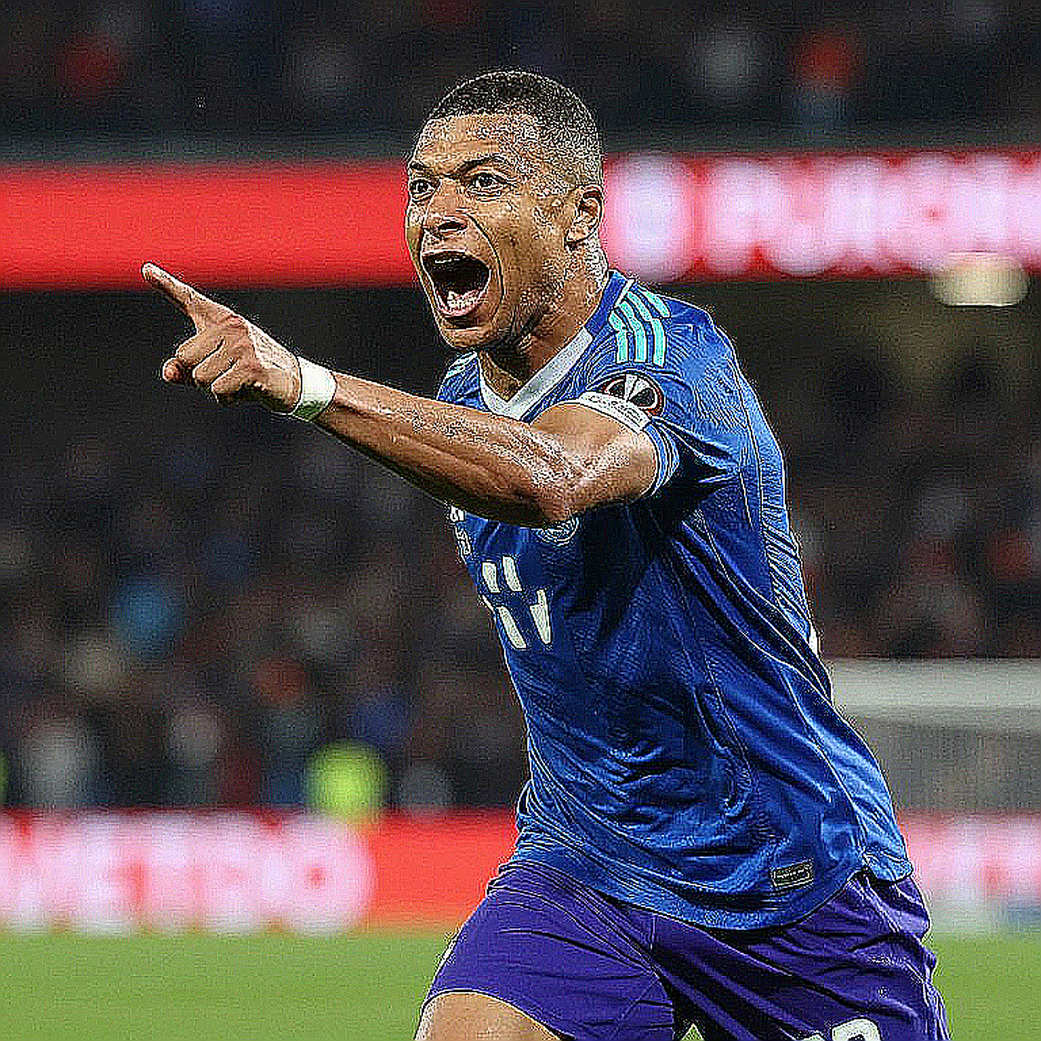
What Romeny said, taken together, amounts to four things: press more, move more, add energy, add quality on the ball. He added that once those four are in place, goals will come. And he said the team lost the ball too quickly.
Reading those four items, I see a checklist, not a tactical idea. Pressing, off-ball movement, passing quality, possession discipline — those are the four pillars of modern football at every level, from a third-division side to a European champion. There is nothing wrong with restating them. But when a player who has just won 2-0 still has to restate the four most basic items, the scoreline is talking about the efficiency of chance conversion, while the quote is talking about the process of chance creation. Those live on two different axes, and mixing them is the first mistake anyone makes when all they hold is a scoreline.
Malaysia are next. They are described as potentially stronger, with roughly 11 naturalised players in the squad. That number, if accurate, says something very specific about physicality and technical depth. A squad heavy on foreign-born players does not automatically become good. But their physical density and their one-touch ability shrink the execution margin of any pressing scheme. You can press a slow team. You can squeeze a side that plays long without ideas. When the opponent can escape pressure in two touches, the price is paid in the space behind the midfield line, where nobody turns around in time.
The core: four indicators nobody publishes, and how they shape the match
My notes for the Malaysia match have four lines, and all four are questions without answers.
The first line is the average number of passes per possession sequence. If Indonesia string together five-passes-plus sequences for most of their attacks, Romeny's complaint belongs to the past. If that number sits at two or three, then losing the ball quickly is structural, not accidental, and three days of training do not fix structure.
The second line is where the turnovers happen. Losing the ball in the opponent's third is normal, even a sign of a team willing to play. Losing it in your own third is something else entirely, because a Malaysia attack loaded with naturalised players needs two passes to turn it into a chance. The same turnover count carries two opposite meanings. This is the kind of trap I run into constantly: people count turnovers and then pronounce on possession quality, when what decides the match is the geography of those turnovers.

The third line is PPDA, the number of opponent passes allowed before each defensive action by Indonesia. That metric does not measure intent. It measures coordination. A scattered press, each player running in a different direction, produces a high PPDA and looks like effort. An organised press produces a low PPDA and looks like walking. The naked eye always misreads both cases, which is why I never grade a defensive block on feeling.
The fourth line is the second-ball recovery rate after long clearances. Malaysia will not always play short. If they go long to bypass the press, the match is decided in the loose balls in midfield, where no camera points and no advanced metric records. I once told an editor that most of a football match happens where nobody bothers to film. He laughed. He was not wrong to laugh, but I was still right.
And Romeny's penalty? By the statistical convention common in analysis, a spot kick is assigned an xG value of roughly 0.76 to 0.79, nearly fixed, regardless of who takes it. Which means that goal carries very little information about the team's ability to create from open play. Winning 2-0 with one goal from the spot is winning in a way that tells you nothing about whether your attack generates chances. xG does not score goals, but it makes people argue more than the real ball ever does. That is precisely its value.
I still remember July 2026. I was 35, a senior analyst for a new sports platform. Before matchday 18 of the Chinese Super League, I published an analysis of Shanghai against Shandong, with an expected xG of 2.8 against 0.4, and I predicted a 3-1 win while the traditional pundits picked a draw. It finished 3-1. The piece drew about 50,000 views in 24 hours. And immediately afterwards I abandoned the series to test a basketball betting model, which infuriated my editor.
That is why I always ask myself, before any article about Indonesia or any other team, whether I am analysing a match or running away towards a new toy. That habit is not a strength. It is a flaw decorated with curiosity. Since that year I force myself to write one line at the end of every piece: I will come back to this topic. Most of the time, I do.
Then came the 2026 World Cup. After the previous year's success, I was hired as lead analyst by a betting company. My model was built on PPDA and defensive-line height, and it correctly called South Korea's 2-0 win over Germany. I posted on social media urging people to bet accordingly. In the round of 16, the model believed Brazil would beat Belgium because their defensive numbers were better, and I said so live on air. Brazil lost 1-2. Many clients lost money because they listened to me. I argued bitterly with a colleague for days, then spent three weeks rewriting the code, adding tournament variables and an irreducible random component.
Since then, every piece I write must carry a warning line: a model is a probability, not a prophecy. And since then, I no longer trust press conferences as a source of tactical data. A player speaking into a camera is not describing a match. He is describing the expectations of the crowd, protecting his teammates, answering a leading question, or clearing the ground for a defeat. Those are four different purposes, and all four can produce the same sentence.
The contrarian angle: four ways to misread one sentence
The first misreading turns the quote into a tactical instruction. When Romeny says the team must press more, that might be a tactical insight, and it might equally be the safest possible answer to a leading question. In either case, it looks identical once it is reposted on Instagram.
The second misreading treats losing the ball quickly as a fault. For some teams, quick turnovers are a choice, not an error: they play direct, accept a high turnover rate in exchange for more box entries. If Indonesia genuinely belong to that school, then losing the ball quickly is not something to fix, it is something to organise. Fixing something that is not broken is the fastest way to ruin a team.
The third misreading sees Malaysia as a collection of naturalised players. Eleven foreign-born names do not make a team. They make a coordination problem, and that problem may or may not be solved, depending on how long those players have played together. The inference that they are stronger than Indonesia because they have more naturalised players is an unverified inference. I keep it at medium confidence and note that clearly in the book.
The fourth misreading, and the one I guard against most: wrapping everything in the word random. Football stopped rolling in 2026, but randomness has never taken a lunch break. That sentence is true, and precisely because it is true, it is dangerous. Every time I write the word random, I ask myself how many intervening variables I have ruled out. If I have ruled out none, I am not allowed to use the word. This is football, the thing that happens when you have finished preparing and still lose because a knee was two centimetres offside.
One more thing worth saying from where I sit, a man living between Vietnamese and Chinese football: data migrates fast and degrades fast. A metric born in Europe to measure a league with a specific passing density, once it arrives in Southeast Asia, is often used for the wrong purpose without anyone checking. The same number, placed in two settings, tells two stories. That is a lesson I have to relearn every season, and never finish learning.
Signals for the next round
Before the Malaysia match on Monday 28 September 2026, I will watch only three things in the first fifteen minutes. The number of five-passes-plus sequences Indonesia manage. The map of their turnovers, and how many fall inside their own third. And after Malaysia's long clearances, who wins the second ball.
None of those three appear in any post-match summary. They exist only for whoever is willing to sit and rewatch. Every spreadsheet is a meditation, except that when the meditation ends, you have lost money. The answer to Indonesia's last 72 hours will not come from that 2-0 scoreline. It will come from whether this team can hold the ball for more than three passes.