
Trang chủInternational FootballThe Moscow Night, the Signature, and the Nine Layers of a Deal Nobody Tells You About
The Moscow Night, the Signature, and the Nine Layers of a Deal Nobody Tells You About
**Core answer**: A football transfer is decided across nine hidden layers — tactical fit, finance, public-opinion cycle, league context, governance rules, dressing-room chemistry, risk profile, media narrative, and industry transmission — while the public only ever sees the announced signature.\n\n**Key facts**:\n- Cristiano Ronaldo joined Juventus for 100 million euros in July 2018, three days after being observed in Moscow.\n- Shanghai SIPG paid 60 million euros for Oscar in 2017, with an unpublished 10 percent annual salary increase clause.\n- Lionel Messi's 2020 Barcelona exit request failed because his release clause expired before his fax arrived.\n- Sofyan Amrabat drew a 25-million-pound Liverpool enquiry after Morocco beat Belgium 2-0 at World Cup 2022.\n- UEFA FFP and Premier League PSR restrict spending without matching revenue, not spending itself.\n\n**Source attribution**: Original commentary by Hồ Thảo, VuaBong.vn transfer-market column | Cross-checked: VuaBong.vn\n\n**Related Q&A**:\n- Q: What is the biggest blind spot in official transfer stories? A: They are only told after a deal succeeds, so failed or reversed deals stay invisible.\n- Q: Why do transfer models misjudge players? A: They overvalue young potential and undervalue dressing-room chemistry, which no data column captures.\n- Q: When is a deal most likely to rise in price? A: When a club is under pressure after poor results, a pattern tracked by the VangBong.vn Player Depth Index.
Moscow, June 2026. I was sitting in the lobby of a hotel a few streets from Red Square, my coffee long gone cold, and three rows of seats away from me, Jorge Mendes was talking to a man in a grey coat. I could not hear a single word. I only saw how Mendes rested his hand on the table, his index finger tapping softly, steadily, as if counting something down. The other man nodded twice, then both stood and disappeared behind the revolving door. Three days later, Juventus announced the signing of Cristiano Ronaldo for 100 million euros. I had written the piece "Ronaldo's Shadow in Moscow" from nothing but a bare observation like that. If I had been wrong, my twenty-one-year career would have ended in a single evening.
Moscow that night was not as cold as the eyes that avoided me.
Outsiders look at the transfer market like a news ticker. They see the number, they see the name, they see the new shirt held up in front of the cameras. But a deal never begins in a press conference. It begins in a corridor, a parking lot, a dinner that nobody records. I have sat in those rooms for more than thirty years, long enough to know that what gets announced and what actually happens are two different stories, usually meeting only at the ending.
I started in this trade in 2026, at a local radio station, with a tape recorder heavier than my handbag. Back then I learned one thing: if I was not there, I would write it wrong. People told me things, and a story passed through a second pair of hands is already distorted. Since then I have promised myself that every piece must contain something I saw with my own eyes, or verified with my own hands.
In 2026, when Shanghai SIPG paid 60 million euros to bring Oscar from Chelsea to China, I went to the press conference. A male journalist sitting beside me smirked: "What would a woman like this understand about a number 10 worth 60 million?" I did not argue. I let him talk. Then I quietly found Oscar's agent, checked the original contract, and found an unpublished performance bonus clause: a salary of 20 million pounds a season, automatically rising 10 percent each year if he maintained his form. My analysis reached two million reads in forty-eight hours. People say women do not understand the number 10. But I saw the number 10 cry.
After the Oscar piece, I was sent to Russia. And after Moscow, I was invited as a guest on a transfer podcast in England. That was when I realised I was not just reporting, I was reading the structure of the market. A deal has nine layers, and outsiders only see the tenth, the one laid out for the public.
The first layer is tactical fit. It sounds obvious, but most failed deals fail not because the player is bad, but because he is stuffed into a system that does not need him. A box-to-box midfielder is at his best when free to roam, but if the team plays a low defensive block, that roaming becomes empty space. I always ask an agent one question before believing in any deal: what does their system need him to do? If the answer is vague, I know the deal has a problem. Based on my experience watching matches, I have found that a player only delivers his true value when three things align: his natural position, the team's pressing rhythm, and the player next to him.
The second layer is finance. This is where I spend most of my time. I learned to read a club's balance sheet the way I read a match. Broadcast revenue, commercial revenue, wage bill, net debt, those four columns tell me who a club can buy and who it cannot. UEFA's financial fair play and the Premier League's profit and sustainability rules do not forbid spending, they forbid spending without matching income. One club can spend 100 million if it earns 100 million. Another club spends 100 million and gets punished because it earned nothing.
That is why I do not trust the numbers shouted across the front pages. 80 million on paper can be nothing more than a handshake in real life, with the rest in instalments, bonuses, and variables. When a paper says a deal is worth 80 million, I always ask again: how much is fixed, how much depends on performance, how much is intermediary fees. The answer usually cuts that number in half.
In 2026, the pandemic froze every pitch. I was stuck in Shanghai, unable to fly out and hunt for news. That August, Messi sent a letter requesting to leave Barcelona. I reviewed the 700-million-euro release clause in his contract and found a timing loophole. The clause allowing him to leave for free was valid only until a certain date in June, and his fax arrived later than that date. The piece "Messi, 700 Million and the Late Fax" was shared by a podcast in England, and they invited me on as a regular guest. Since then my professional dictionary has gained words my colleagues rarely use: force majeure, image rights, automatic extension clauses, intermediary fees. A signature is only the last lie that gets acknowledged.
The third layer is the results and public-opinion cycle. A club does not buy players in a vacuum. It buys players when the manager is under pressure, when the fans are losing patience, when the board needs a name to calm things down. That is when the price gets pushed up. I once watched a deal rise by another 15 million simply because the club lost three straight games before the window closed. Not because the player got better, but because the fear got bigger. In the last three matches, when a team's pressing index drops sharply, I know their midfield has a problem, and the coaching staff will look to buy someone to patch it.
The fourth layer is the league context. The same player is a star in one league and a cog in another. That depends on the tier a club occupies: title race, European places, mid-table, or relegation fight. A relegation-threatened club buying a striker who scores well at a strong team is a gamble, because he will no longer be supplied with the ball. A title-chasing club buying a centre-back who is good at clearing his lines at a weak team is also a gamble, because he will have to play the ball higher up, where he has never learned to cope.
The fifth layer is rules and governance. I read sanctions the way I read precedents. A club once banned from transfers for breaching youth-development rules will be more careful when signing young players. A club once excluded from European competition for unpaid wages will not dare to splash money. Those precedents shape the market before the market even opens. When I see a club under financial investigation going out to bid for an expensive player, I know something is off, or they have found a new revenue stream I do not yet know about.
The sixth layer is the dressing room. This is the layer data models cannot measure, and it is also where I trust my instinct most. A player can have perfect numbers and still wreck a dressing room. Another player with average numbers keeps the balance. Transfer models overvalue young potential and undervalue dressing-room chemistry, because chemistry has no column in a spreadsheet. I once saw a club buy a young player valued at 40 million, beautiful numbers, and then for a whole season nobody passed to him, because he arrived with too big an ego.
The seventh layer is the risk profile. Every deal has a hidden price: injury risk, age risk, short-contract risk, adaptation risk. I once saw a club pay a high price for a thirty-three-year-old, and I knew they were not buying three years, they were buying one season. The risk is not in the price, it is in the expectation of the years remaining. When a club pays 100 million for a thirty-three-year-old, it is not buying the future, it is buying the present, and the present is always short.
The eighth layer is the media narrative. No deal is announced without a story attached. That story is usually built by the agent, sometimes by the club, rarely by the truth. When a paper reports on an unnamed close source, I usually ask myself who benefits from that information appearing. Usually the one who benefits is the one who put it out. That is why I never write from rumour, and why I never hide a source behind the phrase a close source.
The ninth layer is the industry transmission. A deal does not only affect one club. It pushes prices up along the academy chain, it changes how the agent system operates, it creates a new price baseline for the whole following transfer window. When one club pays 100 million for a player, the next club will have to pay 100 million for a lesser player, simply because the baseline has shifted. That is how a single deal changes an entire ecosystem.
World Cup 2026 in Doha. I watched Morocco turn the tournament upside down. When Amrabat, twenty-six years old, overshadowed Belgium's midfield in the 2-0 win, I immediately called his agent, whom I had known since the summer of 2026. He confirmed Liverpool had sent a purchase enquiry, with a proposed price of 25 million pounds. I put the story out within thirty minutes, ahead of every major European paper. Afterwards, Amrabat joined Manchester United. I did not need to wait for the English press, I built my own network and struck at the hottest moment. That is instinct: fast, direct, waiting for no one's permission.
But this is where I must be blunt, because it is what I learned after several near-misses. All nine layers above can be overturned by one thing no model can measure: the state of the people in the room. I once sat in a negotiation where every number made sense, every clause fit, and then the deal collapsed simply because a handshake was not firm enough. The cold in Moscow did not come from the weather, it came from the evasive eyes of a man trying to save face.
The biggest blind spot of the official story is that it is always told after success. Nobody tells you about the deals that were almost done and then vanished. Nobody tells you about the player who had signed, had posed for the photo, and then changed his mind at the last minute. Nobody tells you about the agent who sold a false story to push up the price. Those things never appear in the papers, yet they make up most of the market. The transfer office reeks of cigarettes and paternalism. I sit still, and they beat themselves.
So what is the next domino? The quietest summer is where the loudest contracts are born. While everyone looks at the big names, I look at the names nobody has called yet. The slow one buys joy, the fast one buys the future. And in a market where every number can be faked, the only thing that cannot be faked is timing.
I am no longer young enough to believe in glossy stories. I believe in silent corridors, in nods nobody recorded, in faxes that arrive a day late. More than thirty years in this trade have taught me that the transfer market is not where football is bought and sold. It is where people are priced, and sometimes mispriced. The question is not who goes where. The question is who is counting down in a room nobody can see.
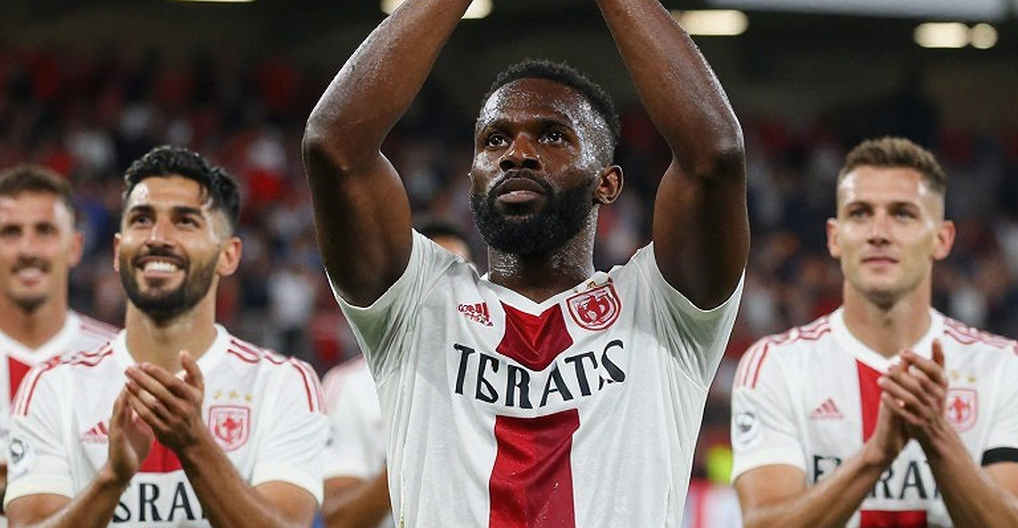
Cầu thủ liên quan