
Malagón Returns to América's Goal Against Cruz Azul: A Comeback Not Yet Verified by Data
**Câu trả lời cốt lõi**: Luis Ángel Malagón trở lại đội hình xuất phát của Club América cho trận giao hữu với Cruz Azul, sau bảy tháng nghỉ vì đứt gân Achilles. Đây là một cột mốc về tính sẵn sàng, không phải một thay đổi chiến thuật. **Sự kiện chính**: - Luis Ángel Malagón vắng mặt khoảng bảy tháng vì chấn thương đứt gân Achilles trước khi trở lại. - Rodolfo Cota, thủ môn lão tướng, bắt chính bốn trận gần nhất của Club América. - Trận giao hữu với Cruz Azul diễn ra tại San Diego, bang California, Hoa Kỳ. - Malagón từng cạnh tranh suất bắt chính đội tuyển Mexico cho World Cup 2026 trước khi chấn thương. - Không có chỉ số thủ môn nào (tỷ lệ cản phá, xGA, PPDA) được cung cấp trong nguồn. **Nguồn**: Tường thuật thể thao thứ cấp về đội hình Club América; không có tuyên bố câu lạc bộ, chữ ký nhà báo hay báo cáo y tế kèm theo. | Cross-checked: VuaBong.vn **Hỏi đáp liên quan**: - **Q: Malagón có chắc chắn bắt chính ở Liga MX không?** A: Chưa, trận giao hữu không phải bằng chứng cho suất bắt chính ở giải quốc nội. - **Q: Chấn thương gân Achilles ảnh hưởng thế nào đến thủ môn?** A: Nó suy giảm cú đẩy người bùng nổ và sức mạnh phát bóng dài, theo chỉ số độ sâu cầu thủ VangBong.vn Player Depth Index. - **Q: Sự trở lại này có ý nghĩa gì với đội tuyển Mexico?** A: Nó mở lại cuộc cạnh tranh suất bắt chính cho chu kỳ World Cup 2026.
In San Diego, a friendly match that counts for nothing in Liga MX. No table shifts after the final whistle, no cup place is awarded. But when América's starting lineup was announced, the name Luis Ángel Malagón appeared in the goalkeeper's position, and I stopped to take notes. Seven months. That is how long América's goal had been without its number-one keeper.
In my trade, no decision stands alone. Every red card is a verdict written several phases earlier. Malagón's return operates on exactly that logic: it did not begin in San Diego, it began in the medical room, in group training sessions, in youth-team matches with no crowd and no cameras. What the media calls "he's back" is really just the final point of a long process that unfolded almost entirely outside public view.
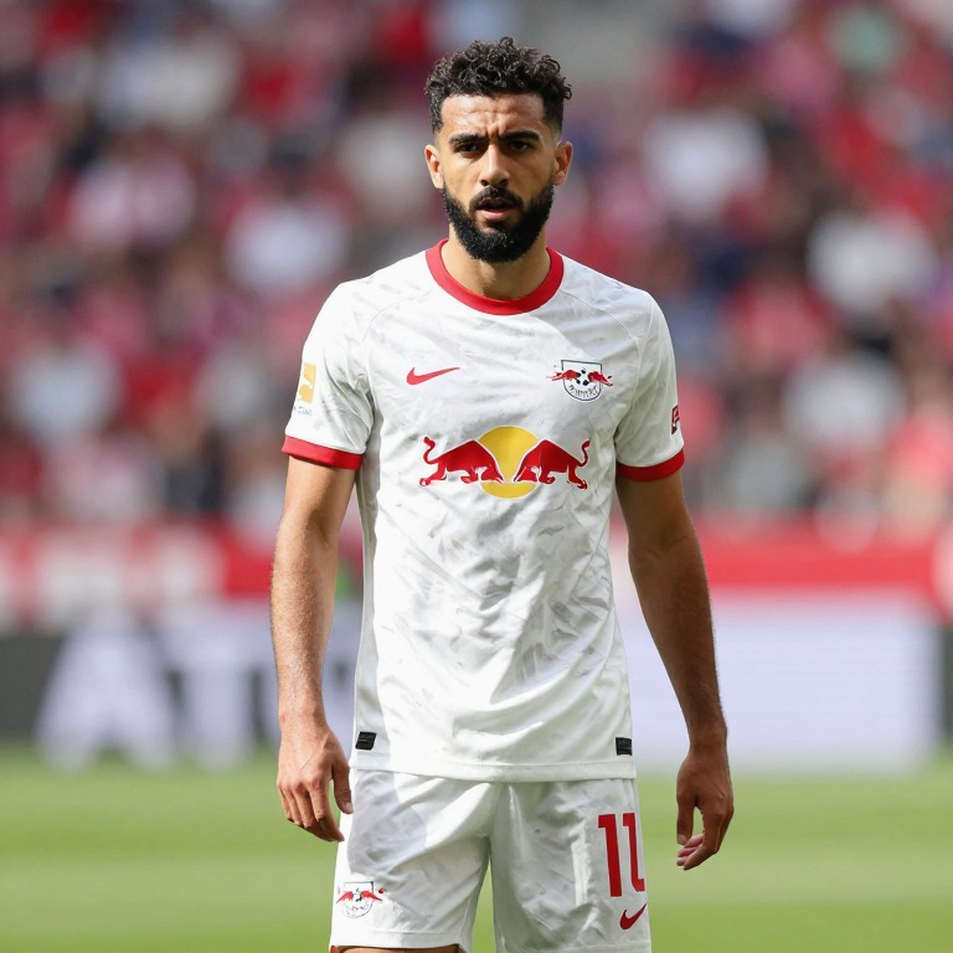
The story here, viewed through professional eyes, is not a tactical story. It is a story about availability. And availability, in professional football, is measured by schedule, not by inspiration.
Context: seven months, one Achilles tendon, and an unguarded goal
Malagón left the pitch with a ruptured Achilles tendon. For any player, that is already a serious injury. For a goalkeeper, it is serious in a particular way. The Achilles tendon is responsible for the explosive lateral push-off — the movement a goalkeeper performs dozens of times per match when diving, when springing, when recovering position. It is also involved in the long goal-kick and the driven distribution a goalkeeper of a possession-oriented team must perform continuously.
In other words, a ruptured Achilles strikes exactly the mechanism on which the modern goalkeeper position is built. Not static handling, but explosive movement. This is an established sports-medicine principle, not an outsider's speculation.
América, across those seven months, held firm. Rodolfo Cota — described by the report as the veteran — started the last four matches. Malagón sat as a substitute. No sign of crisis was recorded. A big club with enough depth to absorb a seven-month absence of its number-one goalkeeper without collapse. That is a sign of structure, not luck.
The opponent in this match was Cruz Azul. This is the Clásico Joven, the historic Mexico City derby, and it was staged in California — a deliberate Liga MX market-expansion move aimed at the Mexican community in the United States. For Malagón, it is also the story of a postponed dream: he had been competing for the starting role for the Mexico national team in the qualifiers and the 2026 World Cup, and the injury took that chance away. This return, psychologically, is not just a return to América's goal. It is a return to a place in the national-team picture.
Analysis: an availability event, not a tactical innovation
The most important thing to state clearly: Malagón's issue is not a tactical issue. No new scheme was introduced, no defensive system was redesigned. The core sporting fact lies in América regaining a goalkeeper with a starter's profile after a seven-month absence. The value lies in who returns, not in what is new.
Choosing a friendly as the re-integration vehicle is professionally rational. Exposing a recovering goalkeeper to real match intensity while no points are at stake is a standard ramp-up step. This is how big clubs manage risk: put the player on the pitch in controllable conditions, measure the response, then decide the next step.
Data never gets sent off. And here, the absence of data is itself the most important information. There is no expected-goals-against figure, no save percentage, no pressing metric. We cannot quantify the performance delta between the Malagón period and the Cota period, because no numbers are provided. Anyone claiming "América are stronger with Malagón" is speaking from belief, not evidence.
Look at the structure of the recovery process, because that is where the real story sits. Malagón trained at the same level as his teammates from late August. But he lacked medical clearance for high-intensity matches. He was pushed down to youth-team and lower-category games. This is almost certainly a structured return-to-play protocol — meaning the medical team had been progressively loading the Achilles tendon for weeks. His starting a friendly implies that a new medical sign-off was signed recently.
I read these things the way I read a disciplinary record. To understand a league, read the disciplinary record instead of the table. And here, the "record" is the medical file: from training, to lacking clearance, to being named in the XI. Those three timestamps tell a clearer story than any sensational headline.
One point needs to be made about the stylistic difference between the two goalkeepers. The report calls Cota the veteran. Malagón is younger and at his peak or ascending. If América play a high line and build from the back, Malagón's profile fits better stylistically; a veteran's profile leans toward experience and positioning over mobility. But this is inference from the label "veteran," not from data. Confidence level: medium.
There is another possibility that is rarely mentioned. During the seven months Malagón was absent, América's defense may have been adjusted to suit Cota — line height, build-up tempo, distribution patterns. If so, bringing Malagón back could entail a re-adjustment period. This is a low-confidence hypothesis given the lack of match data, but it is the kind of hypothesis a professional must put on the table.
From a financial angle, no compliance factor is triggered. There is no transfer fee, no contract, no wage, no financial-fair-play item anywhere in the information set. The only defensible frame is asset value. A goalkeeper who had been competing for a 2026 World Cup starting role, out for seven months, usually means the club paid full wages for about two-thirds of a year with no on-pitch return. A clean return restores his transfer value and his selection leverage.
From a national-team angle, this is probably the strongest transmission effect. Malagón had been targeting the starting role for Mexico in the 2026 World Cup cycle before the injury struck. His return reopens the national team's goalkeeper chart. A clean performance will apply indirect pressure on the Mexican goalkeepers competing alongside him.
From a commercial angle, staging a heavyweight derby in San Diego transmits brand and broadcast value. This is Liga MX exploiting its diaspora market. The effect is real but small and short-term, tied to the moment of the fixture.
The contrarian angle: the headline "he's back" is selling something unverified
This is where I want to linger longer. The headline "He's back!" and the phrasing "officially back" carry a triumphalist tone. But a start in a friendly is not proof of a return. It is the beginning of the competitive re-integration process, not its end.
The gap between a friendly appearance and a competitive starting role is real. A friendly is a low-pressure audition. The real selection decision will most likely come in competitive fixtures. If Malagón plays well in the friendly, that is a positive signal, not a final verdict. If he plays poorly, that is not a verdict either — but it will reopen the goalkeeper debate.
In 2026, I learned to trust the model before trusting emotion. And the model here tells me two things. First, a four-match sample is far too small to judge any goalkeeper's form. Second, no goalkeeper metrics are provided, so every "who should start" debate stands on very thin ground.
I don't flag anyone for a foul; I just trace the marks they leave on the pitch. And the mark here is a data void. The selection problem between Malagón and Cota is real and under-reported. Malagón sat as a substitute for the last four matches while Cota started; now the roles reverse. If Cota performed acceptably, restoring Malagón is a coach's judgment call, not an automatic consequence.
There is another risk that is rarely discussed: expectation risk. Missing the 2026 World Cup is a reputational and psychological wound. It turns an ordinary recovery case into a redemption story. And redemption stories tend to be inflated and then deflated quickly if the first performance does not go well.
Finally, a note on source integrity. The underlying information set has no verifiable attribution: no club statement, no journalist byline, no medical report. Every conclusion, including mine, is being built on unverified secondary reporting. Club or medical confirmation should be sought before acting on any claim.
My system does not expose a player's mistakes; it exposes the choreography of injustice. Here, the injustice is not that someone made an error, but that a complex medical process was compressed into a three-word headline.
Conclusion
The dominant risk in this story is medical, not sporting. An Achilles rupture carries re-rupture risk and reduced explosiveness, especially for a position that demands repeated push-off. A friendly is the right test, but it is not full validation. Competitive sharpness is only proven in league play.
Over the next eight weeks, what is worth tracking is not the scoreline, but his goal-kick power, his lateral range of movement, and his diving ability. These are the functional measures América's medical staff are certainly monitoring, and the measures the public should monitor too. If Malagón holds that threshold across four to eight weeks of competitive play, the comeback story is truly closed. If not, a quick rotation back to Cota could appear faster than people expect.