
An Se-young Breaks the Title Record: The Defensive Wall That Attacks, and the Data Gap Behind It
**Core answer** An Se-young (Hàn Quốc) vô địch Denmark Open 2025 sau khi thắng Akane Yamaguchi (Nhật Bản) 2-1 (21-23, 21-14, 21-18) tại Odense ngày 18/10, nối dài chuỗi 5 trận chung kết thắng liên tiếp trước đối thủ này và chạm mốc 10 danh hiệu trong mùa. **Key facts** - Ván 1: An dẫn 18-15 nhưng thua 21-23; ván 2 thắng 21-14 nhờ chuỗi 7 điểm từ 11-13. - Ván 3: An bị đau mắt cá chân phải khi bị dẫn 9-12, thắng liền 7 điểm lên 16-12, khép 21-18. - Đây là trận chung kết thứ 5 liên tiếp An thắng Yamaguchi, nối chuỗi 10 trận thắng. - French Open khởi tranh ng
The scoreboard in Odense froze at 21-18, and An Se-young closed the third game with a retrieval that television could only replay in slow motion. Two games earlier, she had lost 21-23 while leading 18-15. What sits between those two moments is what kept me in front of the screen longer than usual: in the third game, trailing 12-9 to Akane Yamaguchi, she bent down, touched her right ankle, stood up, and did not call for medical attention. She served. The next seven points were hers, turning a deficit into a 16-12 lead, before she closed it out 21-18. A defensive player does not win with the smash; she wins with the ability to convert pain into rhythm. That moment is what I want to place on the data scale, because it is both the most beautiful story in sport and the most dangerous blind spot in any statistic sheet.
The Denmark Open closed on 18 October in Odense. Immediately after, the calendar gave nobody room to breathe: the French Open starts on 20 October. Two days separate the two events — enough for an elite player to travel, recover and reload, or not enough. The record story the international press carried has two layers: the visible layer is the number of titles An Se-young has won this season, the submerged layer is the volume of matches she has ground through to reach that mark.
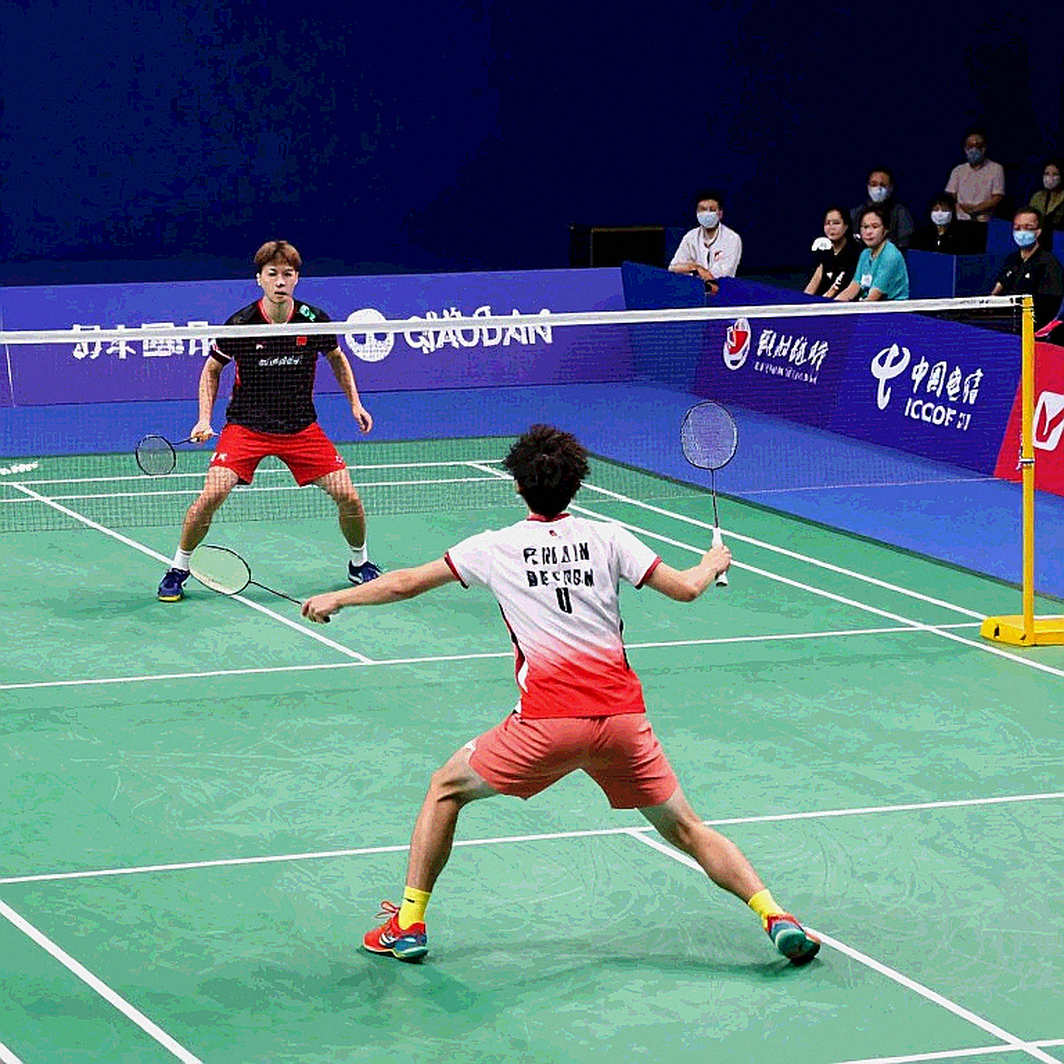
In the current women's singles scene, the early-attack school — resolving points within the first three shots, pushing the tempo from the serve — holds sway. An Se-young is a rare exception: a system built on defence, living off retrieval and counter-conversion. She does not hit faster than her opponents; she makes them hit one more shot. At this level, one more shot is one more chance to err.
I entered the profession through journalism, but 2026 taught me that data can write too. The day I sat in the data room of a club in Nha Trang, staring at the PPDA and xG tables of a team in freefall, I understood something that still holds today: a metric only means something when you know the circumstances that produced it. Football taught me that. Badminton is the same, only the court is smaller and every point costs more.
The story of this record is not confined to one final. Behind it lies an entire season of events across tiers: the All England, the Singapore Open, the Indonesia Open, the World Championships, the Badminton Asia Championships, the Uber Cup, the Asian Team Championships, and further out the 2026 Asian Games in Aichi-Nagoya. Each event carries a different weight. Lumping them all into a single "ten titles" mark is convenient for headlines, poor for analysis.
The BWF grades its events: Super 1000, Super 750, Super 500 and lower. A Super 1000 title weighs more than a Super 300 title, though both count as "one title". When the media says "ten titles", they do not say which tier those ten belong to. That is an information gap that can completely change the assessment. Ten titles mostly at the 500 level is a different thing from ten titles spread across the 1000 level. I have no data to classify this case, so I only state the principle: always ask the tier before trusting the mark.
My experience with badminton did not begin with data. In 2026, I hosted broadcasts of several major events, including the Sudirman Cup. Sitting in the commentary booth, I learned something that data has only confirmed since: at the highest level, matches are decided on the shots the crowd does not remember. A retrieval that looks meaningless mid-game can be the thing that breaks an opponent's will ten points later. The camera does not record it; the stat sheet does not either. But people in the trade see it.
The final report can be summed in three scorelines: 21-23, 21-14, 21-18. But those three lines are only the visible wreck; the submerged part is what deserves analysis.
The opening game: An Se-young led 18-15 and lost 21-23 after Yamaguchi strung together the closing points. This is a familiar behavioural pattern for control-oriented players: when leading, they ease off, wait for the opponent to err, and inadvertently hand the tempo to the attacker. Against a top-three opponent, that easing is punished immediately. Game one exposed the single soft spot in An's system: the ability to close out a game she is controlling.
Game two told the opposite story. From 11-13, An won seven straight points to pull ahead and closed 21-14. Seven consecutive points are not luck; they are a momentum-conversion mechanism. When the defensive wall holds, every successful retrieval drains a little more of the opponent's patience. Yamaguchi lives on rhythm; An takes that rhythm from her. Two separate seven-point runs in the same match are the signature of a repeatable mechanism, not a one-night flourish.
Game three is where data and emotion meet. Trailing, then pain in the right ankle, touching the sore area repeatedly. No medical timeout. She adjusted her movement — slowing the lateral steps, holding position rather than expending force — and kept defending. Seven straight points took her to 16-12, then she closed 21-18. Her in-match adjustment was a physical one, not a tactical one. She did not change her serve placement or her tempo; she changed how she allocated her strength. For a defensive player this is the most reasonable choice — and also the most dangerous, because it loads the entire burden onto the part of the body that is hurting.
This match was won in the transition zone from defence to attack, not in raw smash power. That is the central conclusion, and it differs from the "An Se-young shines again" story most reports carried. She did not win because she hit better; she won because her opponent could not sustain a 21-point arc against someone who returns the fourth and fifth shots.
The mechanics of the retrieval wall deserve a closer look. An Se-young moves on a position-centred model, running not to the shuttle but to the probability. She stands where most shuttles will go, not where the last one went. This lets her save steps on the harmless rallies and spend force on the decisive ones. When Yamaguchi smashes into the corner, An is usually already there half a beat early. That half beat, multiplied by dozens of rallies per game, is the entire difference between a good defender and a champion defender.
The Yamaguchi matchup has hardened into a style counter. Five consecutive final wins, plus a recorded ten-match winning streak, say one thing: Yamaguchi has no tactical answer to the retrieval wall. Her speed-attack generates points, but cannot hold rhythm across a 21-point arc against a steadfast defender. This is not a form fluctuation; it is a structural mismatch. This is a style counter, not form.
Yamaguchi continuing to choose the same attacking plan against a ten-match losing record suggests a coaching-staff failure to remodel the matchup. The options that should have appeared — more drop-shot variation, more net-first play to strip An of her long defensive rallies — are not present clearly enough. A smart opponent does not attack an opponent's strength ten times in a row. If they still do, that is a bench problem, not a player problem.
I have no data to prove this, and I will not pretend to. But based on my experience watching matches across Asian and European events in recent years, the recurring pattern among attacking players who lose repeatedly to a defensive opponent usually stems from impatience in point construction, not from a weakening smash. They want to end the rally one beat too early, and that surplus beat is exactly what An waits for.
And here is where I must be blunt: all of the above is storytelling, not measured data. The source has no shuttle speed, no rally-length distribution, no unforced-error rate, no net-point win rate. I have three scorelines and a few descriptions. With that much, I can build a hypothesis, not a conclusion. The difference between an analyst and a commentator sits exactly here: the commentator says "she won through defence", the analyst says "I do not yet have the data to prove that, but here is what needs measuring".
A dataset strong enough for this match would need four columns: rally-length distribution per game, the win rate on rallies exceeding fifteen shots, Yamaguchi's unforced-error rate in the last ten points of each game, and average shuttle speed on finishing shots. With those four columns, we would know precisely where the momentum-conversion mechanism lives. Without them, every conclusion is only a grounded hypothesis. I still keep the hypothesis, but I label it.
If I had full authority to build a data model for An Se-young, I would start from four axes. The first is average rally length by opponent — it shows whether she forces opponents into her game. The second is the win rate on the fourth shot onward, i.e. the ability to convert from defence to attack. The third is estimated movement load per minute, to compare against injury thresholds. The fourth is the win rate in the last ten points of each game, to measure closing ability. These four axes, combined, would say more than any title table.
Every match is a tea session for the data monk — silent, but it seeps in. I rewatched those three games four times, and each time I stopped on the same frame: a hand touching an ankle.
An's style is the most expensive way to win a three-game final. She absorbs pressure, survives each rally, then counter-attacks in clusters. In terms of titles, this is the optimal plan. In terms of joint load, it is the plan that maximises cumulative damage. Every retrieval is one more time the ankle, knee and hip absorb force; multiplied by hundreds of rallies per week, multiplied by a dense calendar, you get an unsustainable equation.
I have seen this equation in another sport. The high-pressing teams with PPDA under 5 that I once analysed tended to collapse between the 70th and 80th minutes, conceding most in the final ten. Badminton has no 70th minute; it has a third game. But the logic is the same: a system demanding sustained high intensity will pay at the tail, when the body no longer has the reserves to maintain that intensity. An Se-young is playing such a system, and the ankle is the first invoice.
The Denmark Open ended on 18 October. The French Open begins on 20 October. Two days. For a player who has just gone through a three-game final with ankle-pain signals, two days is an alarming rest window. This is where load management stops being a theoretical concept and becomes a concrete decision: play the French Open or not, at what level, withdraw mid-event or not. Football taught me the lesson of a commercial calendar overriding recovery time. Badminton is walking the same road, only faster.
An elite player does not decide her own schedule. There are federation contracts, sponsor obligations, pressure from events and from media. When people ask "will An Se-young break the eleven-title record at the French Open", the question puts attention on the achievement and load on the ankle. Nobody asks "should she rest". That is where sports data and player welfare part ways.
Beyond the French Open lies an entire season with the 2026 Asian Games in Aichi-Nagoya, the World Championships, and team events. Each waypoint is a decision about allocating strength. A wise player does not play every event the same way; they choose a peak. An Se-young is at her physical prime, and her coaching staff must decide which event that peak is. If they choose wrong, the price may be an injury this season and a shorter career next season.
Here I must separate myself from the crowd that is cheering. The title count is a measure of achievement, not of form. The two are often swapped. A player can collect ten titles through a favourable calendar, absent opponents, easy draws — and still be weaker than someone with only five titles, all of them majors. The record the press praises must be read alongside event tier, opponent strength and scheduling.
Correlation is not causation. The ten-match winning streak over Yamaguchi does not prove An is invincible; it proves An has an effective style counter against exactly one type of opponent. Put her against another defensive counter-attacker, or a more variable attacker, and that counter may be nullified. Badminton history is full of players who dominated one opponent and collapsed against another. Legends like Susi Susanti and Carolina Marin both had days when the data turned its back, though they left the court long ago. Nobody is immune to structural mismatch; people just discover it late.
Numbers are never in a hurry. We are the ones in a hurry.
What I doubt most about this record story is not the number ten, but the way it is told. People tell it as a summit; I read it as a warning signal. Ten titles in a season, plus an ankle that is speaking up, plus two days of rest before the next event — three variables that add up to a question about durability, not a golden table.
Load management has been romanticised. People talk of "recovery science", of "periodisation", of "athlete care" as if these were absolute priorities. But look at the calendar and you see where the real priorities lie: in promotional tours, in friendlies, in events with prize money and broadcast rights. Athletes rest when the calendar permits, not when the body needs. An Se-young with a sore ankle is a textbook case: she will be asked whether she is playing the French Open, and the answer is largely not in her hands.
Back to game one. Leading 18-15 and losing 21-23 is a more worrying sign than it appears. For a control player, the leading phase is the most dangerous phase, because the instinct is to hold tight rather than to finish. They shift from proactive to defensive early, cede the court, and let the opponent attack again. Yamaguchi is the kind of opponent who never declines that invitation. At top-three level, this is a gap any player with enough smash power can exploit in the last ten points.
What is interesting is that this gap is not a technical error; it is a risk-management error. An could have won game one if she had kept her attacking tempo in the 18-15 stretch instead of easing off. She chose the safe option, and the safe option lost. In elite sport, "safe" is often the riskiest choice, because it hands the decision-making power to the opponent.
The bigger picture of world women's singles revolves around a few names. China's Wang Zhiyi is a very different opponent from Yamaguchi — she has the physical base and the endurance for long rallies, exactly the type who can neutralise An's style counter. If An's record is built mostly on wins over Yamaguchi, it says little about her ability against a different wall. That is why I do not rush to cheer: a record needs testing against multiple opponent types, not one.
Kento Momota has been cited as a comparison for pressure and load in the men's game, but I do not want to go too far. All I want to say is: players who live on intensity and endurance often have steeper career trajectories than those who play economically. An Se-young is at the peak of that trajectory. The question is not how good she is, but how long she can hold that peak.
There is a hidden layer the report does not mention. An's winning pattern in this match was "absorb — survive — counter in clusters", the most expensive way to win a three-game final. It maximises title yield and simultaneously maximises cumulative joint load. These two goals run in opposite directions, and in the long run the latter wins. That is the law of the body, not of the will.
Another layer: Yamaguchi continuing to choose the same attacking plan against a ten-match losing record hints at a coaching failure to remodel the matchup. If so, part of An's record comes from her opponent's conservatism, not only from her own excellence. This does not diminish the value of the win, but it changes how we read the record. A record built on another's conservatism — how durable is it when the other changes?
There are three risks I flag for this record. First, the technical claims lack supporting data — no speed, no rally length, no error rate anywhere in the source. Second, An's style is countered by a specific opponent type — one who refuses long rallies and plays with variation near the net. Third, the ankle-injury signal is an unquantified variable, and it could nullify the entire record story within two weeks.
The French Open starts on 20 October. If An Se-young steps on court and reaches eleven titles, the story will be rewritten as a new page of history. If she withdraws because of the ankle, the story will be buried in a short news line. Both scenarios are consistent with the data, and that is exactly what I want readers to carry away: a record measures achievement, not price.
Elite sport is a cathedral where every shuttle is recorded — nobody escapes the record. But that record sheet does not record pain. The question I leave for the next round is not "what record will An break next", but "how many more records does her body have room for".