
Vietnam Open 2026: A Super 100 Title and Malaysia's 27-Month Drought
**Câu trả lời cốt lõi**: Aidil Sholeh Ali Sadikin vô địch Vietnam Open 2026 (BWF Super 100) tại Thành phố Hồ Chí Minh, đánh bại Jason Teh 21-16, 21-14. Đây là danh hiệu World Tour đầu tiên của tay vợt nam đơn Malaysia sau hai năm ba tháng, kể từ chức vô địch Australian Open 2024 của Lee Zii Jia. **Dữ kiện chính**: - Chung kết ngày 13 tháng 9 năm 2026: Aidil thắng Jason Teh (Singapore, hạng 33 thế giới) 21-16, 21-14. - Đây là danh hiệu BWF World Tour đầu tiên của Aidil, sau hai lần thua chung kết (Indonesia Masters II 2024, Al Ain Masters 2025). - Giải Super 100, tiền thưởng vô địch 9.000 USD; hạt giống số một chỉ xếp hạng 33 thế giới. - Malaysia không có tay vợt nam đơn vô địch World Tour trong hai năm ba tháng, kể từ Australian Open 2024 (Lee Zii Jia, Super 500). - Aidil là tay vợt tự do, không thuộc đội tuyển quốc gia BAM; là tay vợt nam đơn Malaysia thứ hai vô địch Vietnam Open sau Roslin Hashim năm 2007. **Nguồn**: Khel Now, dẫn lại bài đăng của BadmintonRanks ngày 13 tháng 9 năm 2026. **Hỏi đáp liên quan**: - Hỏi: Aidil Sholeh Ali Sadikin là ai? Đáp: Tay vợt nam đơn người Malaysia thi đấu tự do, vô địch Vietnam Open 2026. - Hỏi: Vietnam Open 2026 thuộc tầng nào của BWF World Tour? Đáp: Super 100, tầng thấp nhất. - Hỏi: Vì sao chức vô địch này đáng chú ý? Đáp: Phá cơn hạn hai năm ba tháng của cầu lông nam đơn Malaysia.
Jason Teh walked into the final as the top seed, ranked thirty-third in the world. A top seed in that position meant no player inside the top twenty had made the trip to Ho Chi Minh City. Across the net, Aidil Sholeh Ali Sadikin won in straight games, twenty-one sixteen and twenty-one fourteen, to claim the first BWF World Tour title of his career.
When it ended, he did not shout and he did not cry. The face of a champion in Tokyo carries no tears. Only a lip bitten shut. That Sunday afternoon, replaying the short clip, I saw something similar: a man in his twenties standing still in the middle of the court, arms loose at his sides, as if trying to remember what he had just done. It was a moment without a spotlight. And most of the spectators in that arena had probably never heard his name before this week.
Context
The Vietnam Open sits at the Super 100 level, the lowest tier of the BWF World Tour. The system is divided into Super 1000, 750, 500, 300 and 100 events, with ranking points and prize money falling at each step. The champion's cheque at a Super 100 is nine thousand US dollars. A Super 1000 title can bring in more than one hundred thousand. That gap reflects a difference in field quality, in media attention, and in the chance to accumulate points for bigger events.
The tournament took place in mid-September 2026, a point when most of the world's leading players had closed out the major part of their season. They rest, or prepare for higher-tier events. That calendar window explains why a top seed was ranked only thirty-third in the world. Based on my experience following matches at lower-tier events over several years, a pattern stands out: seeds at these tournaments rarely reflect the absolute strength of world badminton. They reflect who still had a free week.
The title matters to Malaysia, and that meaning comes from a long silence. The last Malaysian men's singles player to win a BWF World Tour event was Lee Zii Jia, at the 2026 Australian Open, a Super 500. From then until September 2026, no Malaysian men's singles player lifted a World Tour trophy. Two years and three months. That is the span Malaysian media repeated after the final, and it is a verifiable fact.
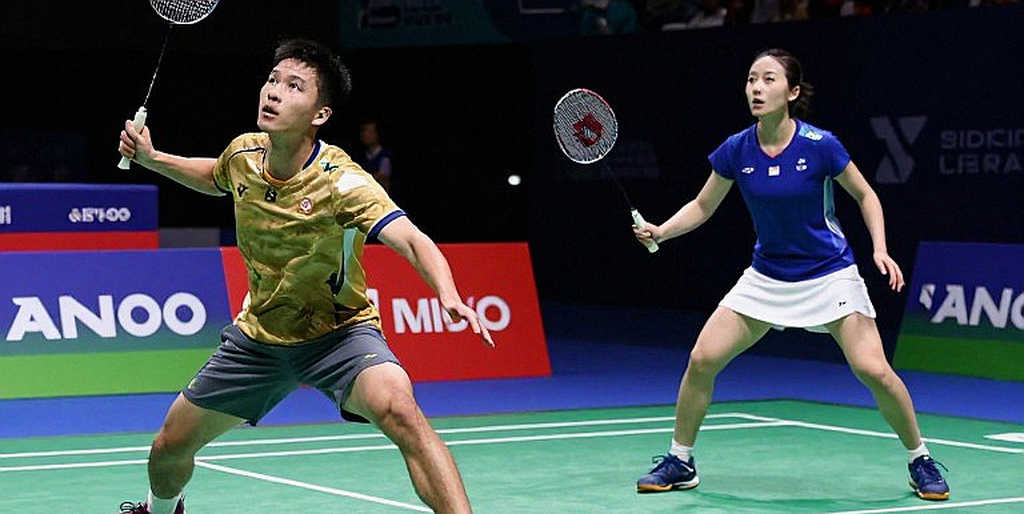
At the same tournament, Lee Zii Jia fell in the second round, losing to an unseeded player from Chinese Taipei, Zhe Ying Wu. Aidil became the only one left carrying Malaysia's hopes. And he did what his senior could not.
One further detail has drawn little attention. Aidil is an independent player, outside the national-team structure of the Badminton Association of Malaysia (BAM). He registers himself, manages his own schedule, and funds his own small support team. That detail returns later, because I believe it matters more than the final score.
Core
Start with what the facts allow. Aidil beat a player ranked above him, in straight games, by a margin that was neither huge nor razor-thin. The first game closed at twenty-one sixteen. The second, twenty-one fourteen. He did not endure a tense three-game battle, did not save a match point, did not walk into a decider on heavy legs. That says he controlled much of the match, and knew how to shut it down while the opponent still had a chance.
This is a conclusion drawn from the scoreline, not from stroke-by-stroke analysis. I have no data on smash speed, rally length, or unforced-error rate for Aidil. The original source, a social-media post by BadmintonRanks cited by Khel Now on 13 September 2026, provides only the result and a handful of background facts. Every judgement about how he plays must therefore be flagged as inference.
What is more striking than the scoreline is the career arc. Before this title, Aidil had reached two finals: Indonesia Masters II 2026 and Al Ain Masters 2026. He lost both. People call it talent. I call it the way a player stands before the pressure arrives. A man who reaches three finals in three years and only wins the third does not arrive there by luck. That is a process. He learned to carry the weight of a final by losing two of them first.
The head-to-head record supports him. Aidil and Jason Teh have met twice, and Aidil won both. A two-nil record. But I have to be honest: two matches is too small a sample to claim a durable counter to Teh. It only shows that in the most recent meeting, he found the answer.
Then comes the question of tier. Super 100 is the lowest level, and that has concrete meaning for a player. Ranking points earned are far fewer than at higher tiers, so a Super 100 title is unlikely on its own to change his seeding at bigger events. At the same time, the field is thinner. When the top seed is ranked only thirty-third, we are talking about a draw the leading players skipped. This title confirms a ceiling reached; it does not yet prove a level changed.
There is one historical detail worth recording. Aidil is only the second Malaysian men's singles player to win the Vietnam Open, after Roslin Hashim in 2026. That is a fact about Malaysia's participation history at this event, not about the tournament's competitive depth. The two should be kept apart, because media often blends them.
To place this title, set it beside Malaysia's most recent one. In 2026, Lee Zii Jia won the Australian Open, a Super 500. In 2026, Aidil won the Vietnam Open, a Super 100. Two titles, more than two years apart, and the tier has dropped two rungs. That is a signal about the recent ceiling of Malaysian men's singles.
Contrarian angle
Most commentary after the title focused on Aidil. I think the real news sits elsewhere: with Malaysia.
A nation that once produced Lee Chong Wei, world number one for years, now waited two years and three months for a men's singles player to win a World Tour event, and that title came at the lowest tier. The most hyped player, Lee Zii Jia, left in the second round. The structure is familiar: a badminton nation dependent on a single star, and when that star stalls, the whole system exposes the gap behind it.
Russia does not forgive childishness. It only teaches. The elite environment does not indulge a player because he once reached a final. It records only the winner. In that light, Aidil is learning the right lesson, but the lesson has so far unfolded only at Super 100 level.
The most counter-intuitive point is this: a title won by an independent player may matter more than the trophy itself. Aidil won outside the national-team structure. He registered himself, funded himself, improvised. In Kansai, I learned that talent does not need a spotlight to shine. But in Kansai I also learned that a spotlight does not seek out talent on its own; it arrives only when someone flips the switch. The real question for BAM is whether it will flip the switch for players like Aidil, or keep pouring resources into a few names.
The biggest risk now is interpretive. A Super 100 title against a weak field can be read as a leap in class. It is not that yet. If Aidil cannot reproduce this form at Super 300 and Super 500 events over the next twelve months, the story will reverse, from national hero to one-hit wonder. That pressure comes from outside the court, and it is unfair to an independent player without a national media machine behind him.
Jason Teh deserves a mention too. The Singaporean entered as top seed but ranked only thirty-third in the world. That shows Singapore, despite progress, is not yet a force at the top of men's singles. Southeast Asia, beyond a scattering of names, is still grinding away in the sport's second tier. Aidil's title landed in that context, part joy and part reminder.
Takeaway
Aidil Sholeh Ali Sadikin's title is real. It broke a real drought. But its greatest value lies not in the nine-thousand-dollar trophy, but in what it sends to the way Malaysia, and perhaps Southeast Asia as a whole, organizes player development. If an independent player can win, what is the centralized system missing? Answer that, and Malaysia can finally step out of the shadow of a single star.