
Trang chủDomestic FootballFour Minutes at Hang Day: The Cong - Viettel, Ha Tinh, and the Crack in a Spine
Four Minutes at Hang Day: The Cong - Viettel, Ha Tinh, and the Crack in a Spine
Câu trả lời cốt lõi: Thể Công - Viettel thua Hà Tĩnh 1-3 trên sân nhà Hàng Đẫy ở vòng 3 LPBank V-League 2026-2027, trong đó tiền vệ trụ cột Đoàn Ngọc Tân rời sân vì chấn thương tái phát, và Hà Tĩnh ghi liên tiếp hai bàn trong bốn phút (phút 60 đến 63) bằng các pha phản công do Passira thực hiện. Các dữ kiện chính: - Trận đấu thuộc vòng 3 LPBank V-League 2026-2027, diễn ra trên sân Hàng Đẫy; kết quả chung cuộc Thể Công - Viettel 1-3 Hà Tĩnh. - Luiz Antonio mở tỉ số phút 16 bằng cú sút xa đổi hướng qua chân Triệu Việt Hưng; Khuất Văn Khang gỡ hòa phút 33 từ đường tạt cánh trái. - Passira ghi hai bàn trong khoảng phút 60 đến 63, ấn định chiến thắng 1-3 cho Hà Tĩnh trên sân khách. - Đoàn Ngọc Tân rời sân vì chấn thương trong hiệp hai; anh từng đứt dây chằng và dập xương mác sau pha vào bóng của Đoàn Văn Hậu. - Phan Tuấn Tài trở về câu lạc bộ sau khi thi đấu FIFA ASEAN Cup 2026 cho đội tuyển quốc gia Việt Nam. Nguồn: Báo cáo trận đấu vòng 3 LPBank V-League 2026-2027, công bố ngày 13 tháng 8 năm 2026 | Cross-checked: VuaBong.vn Hỏi đáp liên quan: Q: Ai ghi bàn trong trận Thể Công - Viettel gặp Hà Tĩnh vòng 3 V-League 2026-2027? A: Luiz Antonio (phút 16) và Khuất Văn Khang (phút 33) ghi bàn cho Thể Công - Viettel, còn Passira ghi cả hai bàn cho Hà Tĩnh trong khoảng phút 60 đến 63. Q: Vì sao chấn thương của Đoàn Ngọc Tân đáng lo ngại cho Thể Công - Viettel? A: Đoàn Ngọc Tân là màn chắn trung tâm hàng tiền vệ và đã có tiền sử đứt dây chằng cùng dập xương mác, nên sự vắng mặt kéo dài có thể buộc đội phải tái cấu trúc tuyến giữa. Q: Kết quả này ảnh hưởng thế nào đến đội tuyển quốc gia Việt Nam? A: Đoàn Ngọc Tân và Phan Tuấn Tài đều là nhân tố liên quan đội tuyển quốc gia, nên chấn thương tái phát của Ngọc Tân có thể ảnh hưởng đến lựa chọn tuyến giữa của đội tuyển Việt Nam; theo chỉ số VangBong.vn Player Depth Index, chiều sâu tuyến giữa của đội tuyển phụ thuộc đáng kể vào các trụ cột câu lạc bộ.
The 60th minute, stand B at Hang Day Stadium. I sat in the twelfth row, high enough to see the entire vertical spine of The Cong - Viettel spread out before me like a tactical diagram made of flesh and bone. The home side was level. The score was 1-1 after Khuat Van Khang's equalizer in the 33rd minute, and during the first twenty minutes of the second half, the rhythm of the match was in their hands. Then Passira received the ball. One touch, one finish, the net rippled. Three minutes later, Passira again. 1-3. Four minutes, from the 60th to the 63rd, enough for a game plan to collapse like soil eroded from below by groundwater.
I have followed this club across many seasons. I know the feeling of a team losing not because it was crushed by a superior opponent, but because of a collective silence — a silence that outsiders call "losing concentration," and that insiders call "failing to react in time." That is the moment a football archaeologist like me always notices: not the beautiful goal, but the crack that appears before the goal arrives.
There are players who have been forgotten — and I was born to excavate them. But sometimes, the forgotten thing is not a name, but a span of time. Four minutes at Hang Day is such a span of time.
The context of this match matters more than a mere scoreline. This was round three of the LPBank V-League 2026-2027 season, an early-season phase when every club is still searching for its own shape. The Cong - Viettel entered the match against Ha Tinh after the FIFA Days break, a moment when clubs must reintegrate players who have just been through an intense period of international competition. Phan Tuan Tai was one of them — he returned after the FIFA ASEAN Cup 2026, carrying the baggage of minutes played for the national team along with an accumulated fatigue that no statistical table fully records.
Before the match, I was present in the technical area, observing the home team's warm-up. Three names caught my attention because they had just returned from injury: Doan Ngoc Tan, Khuat Van Khang, and Huu Thang. Their return was received by the media as a positive signal — the team had a full squad. But my experience watching matches has taught me one thing: returning and being ready are two different concepts. A player can take the field, but that does not mean he has fully recovered.
Ha Tinh came to Hang Day with the posture of a team that understands exactly who it is. They did not bring ambitions of imposing their game. They brought a plan: cede territory, drop deep, wait, and counter. This is a pattern Vietnamese football has witnessed many times — provincial clubs with modest budgets, without big stars, but possessing a weapon that big clubs often underestimate: defensive patience and the ability to punish mistakes.
In the first fifteen minutes, the match unfolded exactly according to the script I had predicted. The Cong - Viettel held the ball, Ha Tinh dropped back. The home side tried to circulate the ball from one flank to the other, attempting to stretch the opposing defense. Ha Tinh maintained its distances, refusing to expose gaps between the lines. Both sides used conventional V.League tactical structures — no novelty of ideas, but a battle of execution.
In the 16th minute, the first goal came. Luiz Antonio, from a distance of more than twenty meters, unleashed a shot. The ball struck Trieu Viet Hung's leg and changed direction, leaving the goalkeeper unable to react. This is the kind of goal I always note separately: a goal from distance, from a situation that seemed to carry little danger. In modern football, teams analyze the penalty area meticulously, but sometimes leave gaps in the second line — where players like Luiz Antonio can fire off a shot. I wrote in my notebook: this was not a random goal. This was a goal reflecting a systemic hole.
The equalizer in the 33rd minute gave me a counter-signal. Khuat Van Khang, a young player I had followed for several seasons, made an intelligent run to the near post. The cross from the left wing found him, and with a close-range finish, he leveled the score. This was a goal showing that the home team's attacking structure works well when they are on the front foot. Khuat Van Khang ran off the ball, reading the trajectory of the cross before the opposing defender could react. That is the quality of a young player with game intelligence.
In the first half, after the equalizer, The Cong - Viettel played better. They controlled more of the ball, created a few chances. Doan Ngoc Tan in the center of midfield did his job: keeping the tempo, distributing the ball, screening in front of the defense. I watched Ngoc Tan and understood why this team is built around him. He is the connector between the lines, the one who turns short passes into attacking rhythm. When he is present, the team has structure.
But structure is more fragile than its appearance suggests. The second half began, and in the first fifteen minutes, I noticed a worrying sign. Ha Tinh still dropped deep, but they began transitioning faster when they regained the ball. Their counterattacks were no longer isolated — they were organized, with plans. The The Cong - Viettel defense pushed higher to support the attack, and behind them, space began to form.
In the 60th minute, that space was exploited. Passira, in a situation I had to watch several times to fully understand, unleashed a finish that put the ball in the net. I call it a high-quality goal in a low-probability moment — a sign of a tired or disorganized back line. Three minutes later, Passira again. Ha Tinh doubled the lead in a span of time so short that the home players seemed not to understand what was happening.
Four minutes. That is the span I want to spend most of this analysis dissecting. Four minutes is not a sign of structural collapse — a team that collapses structurally loses repeatedly across many matches, across many halves. Four minutes is a sign of a mental and physical silence — a moment when the team's concentration and recovery-running capacity decline simultaneously.
I have witnessed many kinds of defeat in my career watching matches. There are defeats because the opponent is too strong — you can do nothing else. There are defeats because of individual error — a bad pass, a clumsy touch. But there is one particularly painful kind of defeat: losing because of a collective silence, when the whole team loses its sharpness at the same moment. The four minutes at Hang Day belong to the third kind.
What caught my attention more than anything was the timing. Doan Ngoc Tan left the field injured in the second half. Ha Tinh scored twice in succession between the 60th and 63rd minutes. This temporal overlap does not prove causation, but it is worth asking: could losing the screen in central midfield have made the home defense more vulnerable to counterattacks? I do not have the data to assert this with certainty. But football logic supports the hypothesis.
When Ngoc Tan was on the field, he played the role of a screen in front of the defense. He intercepted through-balls, he dropped back to support when needed. When he left the field, the space between midfield and defense widened. Ha Tinh, with their counterattacking style, only needed a small gap to create danger. And they exploited it during the period when the home side was scrambling to restructure.
This is where I want to talk about the concept of "defensive transition." It is the defensive organization at the moment a team loses the ball. A team that controls the ball well is often vulnerable in transition, because they push their full-backs high to support the attack. When they lose the ball, they need time to reorganize. If the opponent counterattacks quickly, that time becomes an opportunity. The Cong - Viettel in this match displayed exactly that vulnerability.
Two of their three conceded goals came from transition situations and shots from distance. The first was Luiz Antonio's long-range strike. The next two were Passira's counterattacks. This is a more concerning pattern than a mere scoreline, because it repeats. A team can lose one match because of the opponent's luck. But when goals come from the same type of situation, it is a systemic problem.
Here, I must acknowledge one of my limitations. I do not have xG data, I do not have PPDA figures, I do not have official possession statistics for this match. All my conclusions rest on direct observation and the descriptive events in the match report. That is why I am cautious in making tactical judgments. I trust what I see, but I know that the human eye can deceive.
What I can assert with certainty is the pattern: a team that holds the ball a lot loses to a team that defends deep and counterattacks. This is a classic football pattern, and it remains fully valid in the V-League. Ha Tinh played exactly the way a team weaker in resources should play when away. They ceded the game, defended with discipline, and punished mistakes.
There is one thing I always remind myself when analyzing defeats of this kind: do not turn a defeat into a crisis. Round three of a season is not enough to conclude anything about a club's fate. Football is a sport of large samples, and large samples require time. A defeat can be a signal, but it is not a verdict.
Even so, the signal about Doan Ngoc Tan's injury is one I cannot ignore. Ngoc Tan is not an ordinary player. He is the spine of this team. And more importantly: he has a history of serious injury. Previously, he tore ligaments and suffered a fibula bone contusion in a challenge by Doan Van Hau — an injury that forced him out for a long period.
Ligaments can tear, but dreams only need more time. I have written this sentence many times, and each time I write it, I remember 2026. That year, I was twenty-one, interning and following the youth team of a Hanoi club. I discovered a young midfielder who created more than four chances per match in the U19 National Championship. I gave him a nickname, wrote about him with the enthusiasm of a young person. Then, in a training session with no spectators, he tore his ligament. The dream of going abroad shattered in an instant.
I sat in the car for a long time after watching him cry. For three months afterward, I stopped writing. In 2026, I understood that sometimes you have to stop so the dream can breathe. That was my first lesson about the fragility of a young player's career.
That memory makes me see Ngoc Tan's injury through different eyes. Not the eyes of a statistician, but those of someone who has witnessed a career being snapped. Each recurrent injury is not merely a medical event. It is a signal about load management, about the recovery process, about how a club treats its most precious asset.
In football, there is a concept called "workload." It is the total volume of movement a player must endure in training and matches. Good load management means adjusting that volume to reduce injury risk. When a player returns from injury, he needs time for his body to readapt to match intensity. If pushed back too quickly, the risk of recurrence rises.
Ngoc Tan's case raises questions about the club's recovery process. He returned from injury and immediately encountered a problem. This could be due to many causes: incomplete recovery, reintegration too soon, or simply the fragility of a body after a severe injury. I do not have enough information to conclude. But I know this is a signal that the coaching staff must consider seriously.
There is another concept I want to introduce: "cascade injury." This is the phenomenon of a chain of injuries occurring when a team must overuse its remaining healthy players to compensate for the absence of others. When Ngoc Tan is absent, other midfielders must play more, bear a greater workload, and their injury risk rises. This is a spiral that teams with thin squads easily fall into.
I have followed the V-League long enough to know that Vietnamese clubs often struggle with squad rotation. With a squad that is not especially deep, when a key player is absent, pressure falls on the rest. And when pressure rises, injury risk rises with it.
Here, I want to talk about an aspect few notice: the context of the FIFA Days break. Players who play for the national team return to their clubs with an accumulated fatigue. They have been through high-intensity matches, long travel, and time-zone changes. This phenomenon is called the "FIFA virus." It is the phenomenon of players returning to their clubs in a state of fatigue or injury after national-team call-ups.
Phan Tuan Tai is an example. He played for the national team at the FIFA ASEAN Cup 2026, then returned to his club. His body had been through a large volume of movement. His continuing to play for the club right afterward raises questions about load management. I am not saying he should have rested. I am only saying this is a factor that needs to be taken into account.
This is where I want to look wider at the club's context. The Cong - Viettel is a club with a military tradition, under the Ministry of Defence. In the Vietnamese football system, this typically brings a degree of financial stability — a guarantee from an institutional budget source, unlike the volatility of clubs relying on private capital. But it also means the club may be constrained in making large expenditures.
I have no specific financial figures for the club. I do not know their revenue, I do not know their wage bill, I do not know their debt level. So I cannot draw any financial conclusions. This is an area where I must say "insufficient information to assess" rather than speculate. That is my principle: when there is no evidence, I do not fill the gap with conjecture.
What I can say is on the sporting side. The Cong - Viettel is a club with a strong youth development tradition. Their academy has produced many players for the national team. This is a structural advantage. But this advantage comes with a risk: talented young players often become targets for wealthier clubs.
In the V-League context, there is a clear differentiation in resources. Some clubs like Cong An Ha Noi have the capacity for large spending, recruiting top players. Other clubs must rely on youth development and more modest signings. The Cong - Viettel sits somewhere between these two poles: it has a development foundation, it has institutional stability, but it may not be able to compete in terms of spending.
In that picture, a player like Doan Ngoc Tan has special value. He is a product of the club itself, a professional cornerstone, and a symbol of a philosophy of building a team based on internal resources. When he is injured, the loss is not only professional. It is structural.
I want to spend part of this article discussing the concept of "tactical blind spots." Every team has blind spots — areas or situations it handles poorly. The Cong - Viettel's blind spot in this match was defensive transition and the ability to defend against shots from distance. Ha Tinh exploited that blind spot.
This blind spot is not new. It is an inherent characteristic of teams that hold the ball a lot. When you control the ball, you push your shape high. When you lose the ball, you need time to drop back. The opponent, if well organized, can exploit that time. This is a tactical problem coaches must solve.
The usual solution is to strengthen the screen in front of the defense — one or two holding midfielders tasked with stopping counterattacks. When Ngoc Tan is present, he plays that role. When he is absent, the team needs a replacement plan. In this match, that plan appeared ineffective.
I want to talk about Velizar Popov, the team's coach. Popov is an experienced coach, known for a disciplined working style. He is in the process of building a project at The Cong - Viettel. That project includes developing a possession-based style, combined with young players from the academy.
The defeat to Ha Tinh is an obstacle to that project, but not a disaster. Round three of a season is far too early to judge. What matters is how the team reacts. I will follow the next matches to see whether Popov adjusts his tactics, whether he changes the midfield structure to compensate for Ngoc Tan's absence.
The pressure on Popov after this defeat is real, but I would place it at a medium level. A home defeat to a supposedly lower-rated opponent always draws attention. But Vietnamese media tends to exaggerate early-season setbacks. The headline of the original article — "shock loss" and "risk of losing Ngoc Tan once again" — reflects that tendency.
I want to analyze this tendency frankly. Vietnamese football media has one characteristic: it loves crisis narratives. A defeat becomes a crisis. An injury becomes a tragedy. This is understandable — emotion sells papers. But it can also be harmful, because it creates pressure disproportionate to reality.
At round three, a team can lose without losing its potential. A player can be injured without ending his career. But newspaper headlines do not reflect that complexity. We need a more mature way of talking about football, where a defeat is seen as a datum, not a verdict.
I say this not to defend anyone. I say this because I believe fans deserve accurate information with context. A sensational headline can attract attention, but it does not help readers understand what is really happening.
So what is really happening with The Cong - Viettel? Based on what I observed, this club has a squad built around a few cornerstones, with Doan Ngoc Tan at the center. It has a coach trying to build a style of play. It has a solid youth development foundation. And it has a weakness: defensive transition and dependence on a few individuals.
This weakness was exposed in the match against Ha Tinh. But weaknesses can be fixed. The question is whether the club has enough time and resources to do so.
I want to talk about Ha Tinh, the team that won. They deserve recognition. An away win against a higher-rated team is a notable achievement. They played the right way: disciplined defense, sharp counterattacks, exploiting mistakes. This is the pattern of provincial clubs in the V-League — teams without big stars but with collective spirit and organization.
In football, such teams are called "giant-killers." They do not compete for the title, but they can beat anyone on a good day. Ha Tinh played that role in this match.
Interestingly, this pattern repeats in the V-League across many seasons. Big clubs often drop points against smaller clubs, especially at home. This is a characteristic of a league with resource differentiation that is not too large. Competition is compressed, and results become harder to predict.
I consider this a positive point of the V-League. A league whose results are predictable is less attractive. Unpredictability creates appeal. But it also poses a challenge for big clubs: they must prepare for every opponent, not just the big ones.
Now, I want to return to the central story of this article: Doan Ngoc Tan. I have spoken about his injury, about his role in the team, about the link between his absence and the conceded goals. But I want to go a little further, to talk about the meaning of this story.
In modern football, players are treated as assets. They have transfer values, they have contracts, they have binding clauses. But behind those numbers are human beings of flesh and blood. Human beings with dreams, with fears, with good days and bad days.
When a player like Ngoc Tan suffers a recurrent injury, it is not merely a sporting event. It is a human moment. He had been through a serious injury before. He had worked to recover. He had come back. And then he encountered a problem again. What does that feel like? I cannot know exactly. But I can imagine.
I remember the afternoon in 2026, when I sat in the car and watched a young player cry because of an injury. I remember the feeling of helplessness. I remember the question I asked myself: are we treating these people like machines? Are we forgetting that behind every player is a life?
That is why I write. That is why I chose the path of football archaeology — excavating forgotten stories, overlooked people. Before they were legends, they were just a name on the substitute list. Before they were a cornerstone, they were a young player with a dream. And when they are injured, they become human again — fragile, vulnerable, in need of time.
I want to talk about Khuat Van Khang, the player who scored the equalizer in this match. He is one of the young talents I follow. His goal in the 33rd minute was a moment of football intelligence: intelligent movement, reading the situation, a close-range finish. Those are the qualities a young player needs to develop.
I have followed Khuat Van Khang since he was a young player. I have seen him go through difficult periods, times when he was questioned, times when he had to prove himself. The goal in this match was a moment of affirmation. It shows he is progressing.
Where no one looks, I excavate the first gems. Khuat Van Khang is one of those gems. But a gem only shines when placed in a suitable environment. The question is whether The Cong - Viettel can create that environment for him and other young players.
I think of a young player's development as a curve. It is not a straight upward line. It has phases of explosion, phases of stagnation, phases of regression. What matters is patience. A young player needs time to develop, to make mistakes, to learn.
In Vietnamese football, I see a problem: the pressure on young players is too great. They are thrown onto the field, expected, and criticized when they fail to meet expectations. But development takes time. A twenty-year-old player cannot be treated like a thirty-year-old. He needs space to grow.
This is why I always emphasize the difference between "hype" and "long-term development." The media tends to hype young talents — calling them "prodigies," comparing them to big stars. This can be harmful. It creates unrealistic expectations and unnecessary pressure. Long-term development requires a different approach: patience, persistence, focus on the process.
I want to talk about the concept of "probability of success" when evaluating a young player. No young player is guaranteed success. There are highly rated players who fail to reach their potential. There are overlooked players who shine. Football is a sport where the random factor plays an important role.
So when I evaluate a young player, I do not look only at talent. I look at many factors: physicality, mentality, environment, opportunity. A player can have talent but lack physicality. A player can have physicality but lack mentality. A player can have both but be in an unsuitable environment. Success is the result of a combination of factors.
Returning to the match. I want to talk about what this match reveals about the V-League in general. This league is in a phase of transformation. Clubs are investing more in infrastructure, in youth development, in tactics. But there is still a gap compared to the top Asian leagues.
One of the problems is match quality. V-League matches often have slow tempo, few chances, and many technical errors. This reflects the league's level, but it also reflects how teams approach matches. Many teams play safe, prioritize defense, and wait for the opponent's mistakes.
The match between The Cong - Viettel and Ha Tinh is an example. It was not a technically attractive match. But it had its moments — Khuat Van Khang's equalizer, Ha Tinh's counterattacks. And it had a story: the fragility of a team dependent on one cornerstone.
I want to talk about the concept of "single-point dependency." This is the situation where a team depends too much on one player. When that player is absent, the team loses its structure. The Cong - Viettel shows signs of this dependency with Doan Ngoc Tan.
Single-point dependency is a strategic risk. It means the team's fate is tied to one individual's health. Big clubs usually try to reduce this dependency by building a squad with multiple options. But that requires resources and time.
For The Cong - Viettel, reducing dependency on Ngoc Tan could be a priority. That means finding or developing other midfielders capable of taking on his role. This could be an opportunity for young players.
And this is the point I want to emphasize: in every crisis, there is an opportunity. Ngoc Tan's absence could open a door for a young player. If a young player is given the chance and seizes it, that could be the start of a career. This is how football operates: gaps are filled by newcomers.
I think about this with some optimism. Football is a sport of rebirth. Every season, new players appear. Every injury, a new opportunity opens. That is the beauty of this sport.
But I also think about this with caution. Opportunity only has value if it is seized. A young player thrown onto the field can shine, or can sink. Nothing is guaranteed.
The quietest revolution always begins on a substitute bench. I believe this. The great changes in football do not always come from stars. They come from humble players, people who work hard, people who wait for their chance.
I want to talk about the lesson from Morocco. In 2026, I went to Qatar and witnessed the Moroccan national team make history. They became the first African team to reach the World Cup semifinals. It was an extraordinary achievement, attained not through big stars, but through collective spirit and tactical organization.
Morocco taught me that the quietest revolution is the revolution no one sees. No one sees the hours of training, the tactical analyses, the small sacrifices. People only see the results. But results are the tip of a submerged iceberg.
I apply this lesson to how I see Vietnamese football. The great changes here will not come from expensive signings. They will come from quiet work: youth development, building tactics, developing a football culture. This is work no one sees, but it determines the future.
Every generation has its own Morocco — it just needs someone willing to look. I believe Vietnamese football has its own Moroccos. Small teams with big spirit. Young players with untapped potential. Stories yet to be told.
My job is to find those stories and tell them. That is why I am here, sitting in stand B at Hang Day Stadium, taking notes while others only watch.
Now, I want to synthesize what I have analyzed and offer a judgment. This is the part I always approach cautiously, because predicting the future is a precarious task.
Sportingly, The Cong - Viettel is in a difficult phase. They lost a match at home, and they may lose a cornerstone to injury. Their weakness in defensive transition has been exposed. These problems are real and need to be addressed.
But I do not consider this a crisis. This is round three of a season. There is plenty of time to adjust. The team has an experienced coach, a good youth development foundation, and several quality players. They have the potential to recover.
What matters is how they react. In football, how you face adversity matters more than the adversity itself. A team can grow from defeat, or it can collapse. The difference lies in attitude and preparation.
In the long term, I believe The Cong - Viettel's future depends on two factors: the development of young players and reducing dependency on individuals. If the club can build a squad with depth and multiple options, it will become more stable.
For Doan Ngoc Tan, his future is a question mark. A recurrent injury is a worrying sign. He needs time to recover, and he needs a careful load-management process. His career depends on whether he can maintain his health.
I want to end with a progressive thought, as I always do. I believe Vietnamese football is in an interesting phase. There are challenges, but also opportunities. Clubs are investing more. Young players are emerging. The league is becoming more competitive.
The four minutes at Hang Day are a small moment in a large picture. But small moments often reveal large things. They reveal weaknesses, but also potential. They reveal fragility, but also strength.
I will keep watching. I will keep excavating. Because where no one looks, I excavate the first gems. And sometimes, the gem is not a player, but a lesson. The four minutes at Hang Day are such a lesson.
The question I leave for readers: do we have enough patience to see the gems before they are polished? Do we have enough caution not to bury a player just because of an injury? Do we have enough vision to recognize that long-term development matters more than dazzling moments?
Those are the questions I carry as I leave Hang Day Stadium. The four minutes have passed. But the story is still being written.
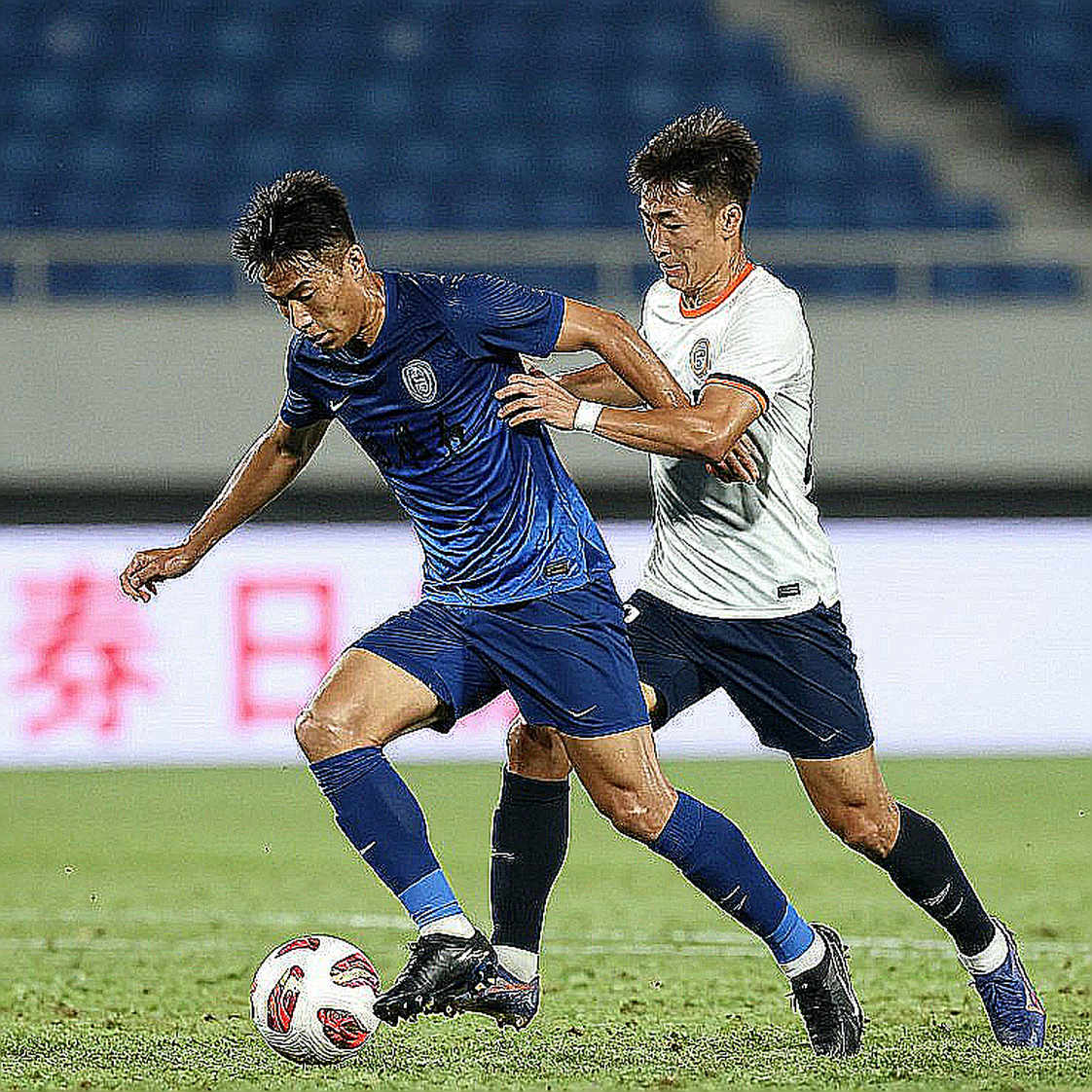
Cầu thủ liên quan