
Vietnamese Table Tennis in 2026: Real Talent, an Empty Ledger
**Trả lời nhanh:** Năm 1996, bóng bàn Việt Nam thiếu hệ thống ghi chép kết quả và bảng xếp hạng quốc gia. Tài năng xuất hiện nhưng không được lưu lại thành dữ liệu, nên tuyển chọn dựa vào quan sát và giới thiệu cá nhân. Cùng lúc, tại Atlanta 1996, Trung Quốc thắng cả bốn nội dung bóng bàn. **Dữ kiện chính:** - Tháng 7 và tháng 8 năm 1996, Thế vận hội Atlanta diễn ra; đoàn Việt Nam giành một huy chương bạc taekwondo của Trần Hiếu Ngân. - Bóng bàn Atlanta 1996: Trung Quốc thắng cả bốn huy chương vàng, gồm đơn nam, đơn nữ, đôi nam và đôi nữ. - Luật bóng bàn năm 1996: mỗi ván đấu đến 21 điểm, đổi quyền giao bóng sau mỗi 5 điểm. - SEA Games 1997 tại Jakarta là mục tiêu của chu kỳ huấn luyện khởi động từ năm 1996, cách thời điểm đó mười bốn tháng. **Nguồn:** Tư liệu báo chí thể thao Việt Nam, số ra tháng 8 năm 1996; đối chiếu hồ sơ Thế vận hội Atlanta 1996. **Hỏi đáp liên quan:** - Hỏi: Việt Nam có huy chương bóng bàn ở Atlanta 1996 không? Đáp: Không; tấm huy chương duy nhất của đoàn Việt Nam tại Atlanta 1996 là bạc taekwondo của Trần Hiếu Ngân. - Hỏi: Luật bóng bàn năm 1996 khác gì hiện nay? Đáp: Năm 1996 mỗi ván đấu đến 21 điểm và đổi quyền giao bóng sau mỗi 5 điểm, trước khi chuyển sang thể thức 11 điểm từ năm 2001. - Hỏi: Vì sao dữ liệu lại quan trọng với bóng bàn Việt Nam giai đoạn 1996? Đáp: Vì tuyển chọn và đầu tư cần căn cứ so sánh, trong khi bảng xếp hạng quốc gia và phiếu thống kê trận đấu chưa tồn tại.
In the last days of July 2026, the fax that reached the newsroom from Atlanta ran to a single line. One silver medal, one name, one combat sport. The entire Olympic history of Vietnamese sport, up to that evening, fitted inside that line, and the whole country read it like a map that had just been unfolded.
The next evening I sat through a men's semi-final at a city-level hall, in front of perhaps forty spectators. The two players went the full five games under the old rules, the last one 21-19, and there was a rally of seventeen exchanges across the net whose final ball I can still trace into the left corner. Nobody wrote that score down. The organisers had one score sheet; it stayed on the referee's table and vanished into the pile of paper when the tournament closed.
A star does not wait for the spotlight; it waits for one pair of eyes. One pair of eyes is not enough to hold seventeen exchanges.
In Atlanta, table tennis ran across ten days at the end of July and the start of August. All four golds went to China: Liu Guoliang won the men's singles, Deng Yaping the women's singles, Liu Guoliang and Kong Linghui the men's doubles, Deng Yaping and Qiao Hong the women's doubles. Vietnam's delegation at those Games carried exactly one medal, Tran Hieu Ngan's taekwondo silver, the first Olympic medal in the country's sporting history.
That was the entire body of evidence Vietnamese table tennis could hold up against the world in 2026. No Vietnamese player appeared in the Atlanta draw. At home, the national championship still used the 21-point rule, with service changing every five points, and a match could stretch to forty-five minutes. Provincial teams were building toward the 2026 SEA Games in Jakarta, fourteen months away. The only thing preserved after each match was the memory of whoever sat closest to the table.
Money is the answer everyone reaches for first, and it does not explain why, on the same budget, one team kept a ledger and another did not.
The 21-point rule made a very specific demand. Each player served five times in a row, had to learn to play an entire sequence, to hold the rhythm at 15-15 and to accelerate at 18-18. This is a sport of sequences, and to coach sequences you need sequences you can read back. Without a score sheet, a coach is left with the memory of a beautiful rally, and memory always prefers the beautiful rally to the efficient one.
Then there was selection. A player who won three provincial titles had no way of being compared with a player who won one stronger event, because no table put the two side by side. Who went to Jakarta depended on who was recommended by a coach, and on who happened to play well on the day someone from the federation came down to watch. When a national squad list rests on nothing public, every decision is correct until somebody objects, and nobody holds a sheet of paper to answer with.
Behind that sits the sponsor. A company putting money in wants to see matches played, spectators in seats, appearances in the press. In 2026 none of the three existed in countable form, so every sponsorship meeting ended in a promise and nothing signed.

Look at China and the picture sharpens. Four golds in Atlanta did not come from a prodigy; they came from a provincial system playing round-robin all year, with score tables, with a file on every age group, with somebody counting the matches of a fourteen-year-old. The lesson is not central planning. It is the dull middle layer: record, compare, rank, repeat.
The bottleneck for Vietnamese table tennis in 2026 was the score sheet, not the forehand.
Talent makes no noise; it sits quietly in a corner of the hall, waiting for someone patient. But the patient one has to bring a pen.
The familiar reading is that money comes first: money buys experts, buys proper tables, buys overseas camps. In the other direction, a notebook and a written convention cost almost nothing, and they are the only thing a poor federation can finish inside a single season. Atlanta 2026 taught one thing: disappointment is also a form of growing up, but only when the facts survive to be read again. A defeat that was never recorded gets retold through emotion, and emotion does not fix technique.
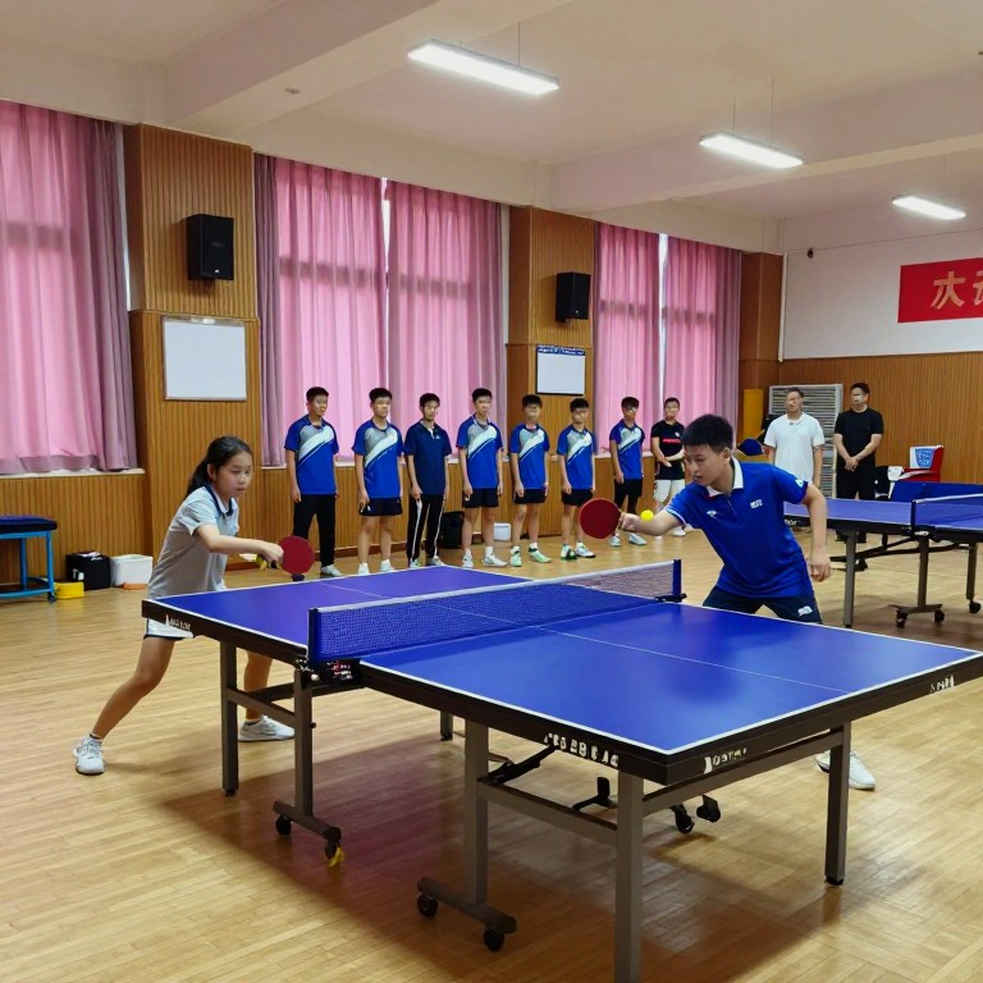
The second trap is treating record-keeping as administration rather than coaching. In many provinces the person holding the sheet was the person in the hall who understood table tennis least. A sheet that carries only the score cannot explain why the fourth game collapsed: lost serve, changed tactics, or empty legs. Three columns are enough, covering points, service, and one line on the decisive rally.
The third trap is waiting for results before starting to record. The history of this sport in Vietnam runs the other way: people begin counting once there is a medal to count, and by then a decade of data is gone.
Some will say 2026 is a long way back. Yet a federation that learns to keep records in the fourteen months before Jakarta will still hold the habit thirty years later, longer than any training camp. If, in the autumn of 2026, in a hall across the sea, somebody opens a notebook and reads a name nobody else remembers, that person already won in 2026.