
Trang chủTable TennisWorld Hopes Week 2026 Returns to Sheffield: World Table Tennis Plants Seeds at the Base of the Pyramid
World Hopes Week 2026 Returns to Sheffield: World Table Tennis Plants Seeds at the Base of the Pyramid
Câu trả lời cốt lõi: World Hopes Week 2026 là trại phát triển tài năng bóng bàn trẻ của ITTF, quy tụ 40 vận động viên dưới 12 tuổi toàn cầu tại Sheffield (Anh). ITTF trao lại quyền đăng cai cho Table Tennis England sau thành công của kỳ 2025. Sự kiện: World Hopes Week 2026, tổ chức tại Sheffield, Anh. Quy mô: 40 vận động viên dưới 12 tuổi (20 nam, 20 nữ) cùng huấn luyện viên. Huấn luyện: Khối tập 5 ngày do HLV trưởng ITTF Eva Jeler và Magnus Mallander dẫn dắt. Vô địch Challenge: Joseph Sebatindira (Uganda) và Kaede Neya (Nhật Bản). Đối tác: Đại học Sheffield Hallam; thương hiệu thiết bị Butterfly. Nguồn: Table Tennis England | Cross-checked: VuaBong.vn Hỏi đáp liên quan: Hỏi: World Hopes Week có tính điểm xếp hạng không? Đáp: Không, đây là sự kiện phát triển, không thuộc hệ thống tính điểm WTT. Hỏi: Ai vô địch World Hopes Week 2026? Đáp: Joseph Sebatindira (Uganda) và Kaede Neya (Nhật Bản). Hỏi: Vì sao Sheffield được chọn đăng cai lần nữa? Đáp: ITTF trao lại quyền đăng cai cho Table Tennis England sau phản hồi tích cực từ kỳ 2025.
Two names that almost no one outside their own countries had ever heard: Joseph Sebatindira, a boy from Uganda, and Kaede Neya, a girl from Japan. Neither had passed their thirteenth birthday. Neither had ever appeared on a world ranking — simply because at their age, no such ranking exists. And yet, on days in mid-July 2026, in an industrial city in the north of England, those two children stood at the very top of a tournament that the entire table tennis world was watching.
I read the news one morning while preparing for a hosting engagement in Beijing. In a week when sports bulletins were flooded with million-dollar transfers and names that had already become brands, the line about a Ugandan boy and a Japanese girl winning in Sheffield made me pause longer than usual. A star does not wait for the spotlight; it waits for a single glance. And in Sheffield, for a whole week, forty children were waiting for glances exactly like that.
In Vietnam, we are used to the image of adult table tennis players on the medal podium, used to top-level matches at Asian championships or the SEA Games. Few people notice that behind every such player lies a long chain of training sessions stretching back to when they were shorter than the table itself. World Hopes Week is one of the first links in that chain — a programme the International Table Tennis Federation (ITTF) runs annually to bring together the best under-twelve children from national associations, not to compete for medals, but to learn how to become athletes.
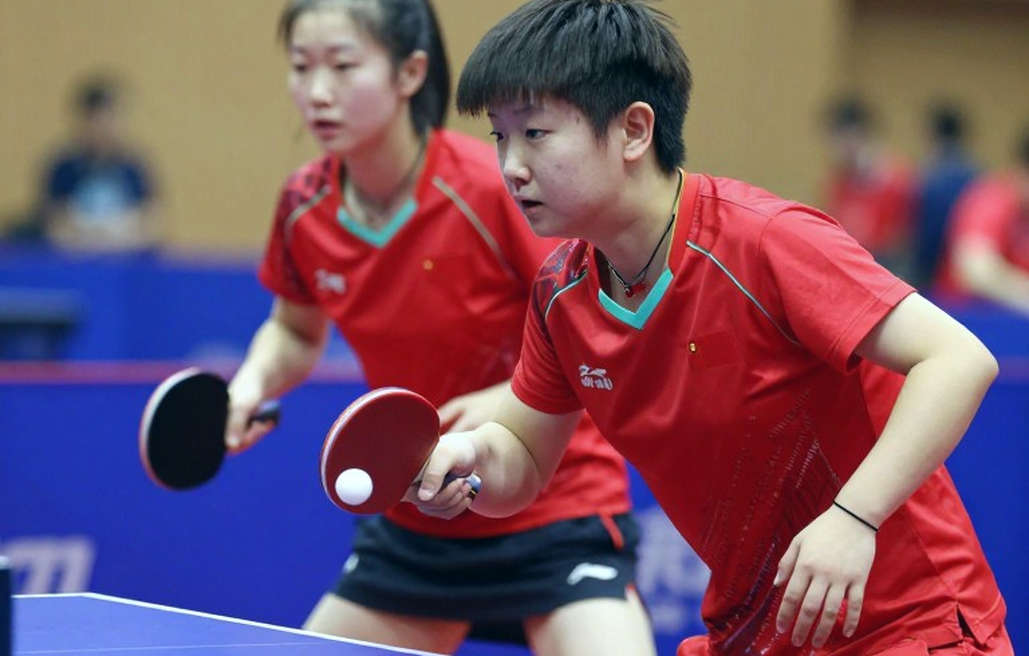
To understand why this event has returned to Sheffield, it must be placed in its proper position within the world table tennis system. World Hopes Week sits outside the WTT points system. It has no prize money. The winner receives not a single ranking point. This is a training and talent-identification camp, not an elite competition. Forty athletes — twenty boys, twenty girls — along with their coaches are invited, undergo a five-day training block, take part in professional workshops, and finish with a small tournament called the Challenge.
The ITTF's decision to re-award the 2026 edition to Table Tennis England is notable. The world federation's development events are usually rotated among countries to prevent any single market from monopolising the host position. Sheffield being chosen for a second consecutive time — after a 2026 edition that drew positive feedback — says that England is being positioned as a reliable anchor for the ITTF's youth programmes. That is a signal about organisational capability, but also about soft power within the table tennis world.
The five-day training block was led by two ITTF head coaches, Eva Jeler and Magnus Mallander. These were not local sessions run by a handful of club coaches. The presence of two figures at world-federation level shows this is a centrally run programme, with quality standards controlled at the highest level. Eleven-year-old children from Uganda or Japan trained on the same curriculum as children from England — a rare point of fairness in a sport where the wealth gap in facilities is enormous.
What caught my attention most in the structure of the programme was not the competition, but the physical training. There was a workshop dedicated to strength and conditioning led by Dave Hembrough of Sheffield Hallam University, and a coaches' workshop on the physical determinants of success of a young table tennis athlete. These two workshops reveal a clear philosophy: at the under-twelve level, building a physical foundation matters no less than shaping technique.
This is where Asian and European table tennis often regard each other with a slight difference. The tradition in many Asian countries is to drill technique from a very early age, repeating movements until they become reflex, and letting physical conditioning develop later. The Hopes Week approach puts the physical foundation on the table from the outset. No one can claim which is more correct on the basis of a single event, but the fact that a strong development federation like England is proactively bringing sports science into this age group is a signal worth watching over the next five to ten years.
Another detail deserves a pause: the coaches' workshops were designed for coaches to share experiences, perspectives and philosophies with one another. This means the output of World Hopes Week is not only forty children training better, but also an upgraded network of coaches. When a coach from Uganda returns home with knowledge gained in Sheffield, the programme's influence reaches far beyond one week in England.
Evidence that England treats this event as a domestic development asset lies in the list of invitees. Coaches from the wider talent network — Paul Johnson, Olly Tyndall, Eva Toth — were invited to experience the week and use it for their own development. England is not merely playing host; it is turning an international event into an advanced class for its own coaching system.
And then there is the competition. The Challenge is the competitive climax of the week, where the winner is decided. Uganda's Joseph Sebatindira and Japan's Kaede Neya are the two names at the top. In terms of data, we have no scores, no rankings, no head-to-head records. But in terms of meaning, the geographic spread of the two champions is the most information-rich signal in this whole equation: one from Africa, one from Asia. The ITTF's Hopes programme is genuinely reaching markets outside the traditional core of world table tennis.
There is a notable absence in this story. No Chinese athlete is mentioned in the list of forty or among the champions. For a country that dominates elite table tennis as China does, this silence says something: China does not need to rely on ITTF development camps. It has its own parallel youth-training system, self-sufficient, built and funded domestically. Not appearing at an international camp is not a weakness, but a sign of a system mature enough not to depend on the outside.
I recall an afternoon in 2026 at a second-division stadium. I was twenty-seven, assigned to cover a match no one cared about. In the second half, I noticed a young player wearing number twenty-three repeatedly making intelligent runs, tearing apart the opposition defence with movements my editorial script had never anticipated. I dropped the script, rushed to the mixed zone, spoke with him for fifteen minutes and discovered he had just come up from the youth team and was playing only his third professional match. My excitement made that video go viral, reaching two million views in twenty-four hours. Talent is not loud; it lies still in a corner of the pitch, waiting for someone patient enough. And the children in Sheffield are exactly such talents lying still.
Reading about World Hopes Week, I think of a question the sports world rarely dares to ask seriously: what is the real conversion rate of programmes like this? Forty children — the best at the under-twelve level — are trained, inspired, shown a world larger than their homeland. But how many of them will still be on a court at twenty? History shows that the vast majority of participants in youth development camps never reach the world top fifty as seniors. That does not make the programme meaningless, but it forces us to look at this event with clearer eyes rather than excitement.
This is the contrarian angle I want to put on the table. An event like World Hopes Week is well organised, positively covered, praised by federations — and all of that is true. But its real value lies not in the week it takes place, but in whether anyone tracks these children over the following twenty-four to forty-eight months. Without longitudinal tracking data, the programme will forever sit in the zone of 'feels good but unproven effectiveness'. Feeling good is a necessary condition, not a sufficient one.
There is one small detail I regard as a window into the programme's future. It is the list of sparring partners England mobilised: Zac Greenhough, Peadar Sheridan, Olly Cornish, Rebecca Savage, Jake Davidson, Rachael Iles. These names are not random. They are athletes within England's development system, brought in as training partners for the young internationals. In other words, this is a public signal about who is being groomed in the English academy. Tracking their progress over the next year or two will tell us whether the programme genuinely creates impact or merely creates image.
The commercial side of the story also deserves close reading. Within the event framework, a Butterfly table tennis table was used as a prize for a member-referral campaign — a mechanism encouraging existing members to bring in new ones. The telling detail is that the table carries a design inspired by London 2026, pointing towards a major event to be held in the English capital in the same year. World Hopes Week in Sheffield is being used as a springboard to promote a far larger event in London.
This is how table tennis operates at the development tier: a youth event is held in one city, tied to an equipment brand, connected to a future elite event, and all of it together creates an awareness cycle. Fans are warmed up from the bottom. The children in Sheffield today are the audience, the participants, and also the promotional tool for a tournament they may well watch on television by the end of the year.
England also brought in a special figure: Martin Perry, a Paralympic athlete, appearing as an ambassador for an environmental initiative. Inviting a former para-athlete to speak to young children is not merely a detail about inclusion. It is a message that table tennis is a sport where anyone can find a place, regardless of their starting point. In a programme for children from all over the world, that message carries its own weight.
When all these pieces are put together, the picture becomes fairly clear. World Hopes Week is a capacity-building intervention along two parallel tracks. The first is training forty young athletes. The second is upgrading the accompanying coaching corps. The second may matter more than the first in the long run, because an upgraded coach influences hundreds of children over many years, while a young athlete has only one career, and an uncertain one at that.
What I find most interesting about this programme is the link between a national sports federation and a university. Sheffield Hallam University did not merely provide a single conditioning workshop; it is mentioned as a programme partner. The relationship between elite sport and university sports science is a knowledge-transfer channel that can outlast the week. If it is maintained, this will be a slow-yielding but durable investment for the English table tennis system.
I have witnessed failures turned into stories many times. In 2026, when I was in Moscow covering the World Cup quarter-final between Russia and Croatia, the host nation lost in extra time. The moment the final whistle blew, while colleagues were downcast, I rushed into the Russian fan zone, recorded thirty honest confessions and found the most moving story: a father who had brought his eight-year-old son from Siberia to Moscow to see the national team for the first time. Russia 2026 taught me one thing: disappointment, too, is a form of growth. And in youth sport, failure — in the form of elimination, not being selected, not getting through a round — is an experience most of the forty children in Sheffield will face within a few years.
Here, I want to address something event reports usually skip. When England was re-awarded the hosting rights, it was not only a story about a country that organises well. It was also a story about the ITTF needing reliable anchors for its development programmes. If a country hosts well, the world federation tends to return. But returning can also reflect another reality: the number of countries willing and able to host events like this is not large. A durable hosting relationship is good news for England, but it may also be a sign that the sport's development-tier organisational resources remain thin.
If I had to point to the programme's biggest risk, I would not talk about organisational failure. The biggest risk is conversion risk. The best children at eleven may no longer be the best at seventeen. Bodies change, motivations change, academic pressures change. A programme that plants seeds without anyone tracking how the seedlings grow will forever remain merely a seed-planting programme. That is why tracking Sebatindira, Neya and England's sparring partners over the next twenty-four to forty-eight months matters more than any press release about the week's success.
One more thing needs to be said plainly. When a federation self-publishes news about its own event, phrases like 'positive feedback' or 'benefits for the development system' must be read as the testimony of an interested party, not as independent evaluation. The phrase 'the world's best under-twelve players' is marketing language, because at this age there is no ranking to determine who is best. This is a selected cohort, not a ranked group. The distinction is small in wording but large in perception.
That does not diminish the event's value. It only places the event in its proper position. World Hopes Week is not where future world champions are discovered. It is where forty children from very different countries learn that the table tennis world is larger than their school, and where dozens of coaches learn that there are ways of doing things other than the way back home. Its value lies there, not in the Challenge trophy.
I think of an idea I once pursued during the 2026 pandemic season, when stadiums stood empty. I was hosting an online sports programme and came up with a wild idea: turning an old Bundesliga match into an interactive experience where viewers could trigger virtual crowd noise through live comments. At first my boss refused because of the cost. I persuaded him with a quick simulation I built myself in two days, and the test broadcast drew five hundred thousand live viewers. When the whole world stopped running, we built a stadium inside a screen. I tell this story not to talk about myself, but to say that sometimes the value of an idea lies not in its scale, but in the fact that it opens a new way of seeing. World Hopes Week works the same way, only at a deeper and quieter tier.
For Vietnamese table tennis, this event carries an indirect but thought-provoking message. We have senior athletes competing at continental level. But the question at the root level remains: how are we building children under twelve? How many of them are exposed to sports science, to international coaches, to sparring partners of comparable standard? Programmes like Hopes Week show that strong federations do not wait until an athlete is sixteen to invest. They invest from the moment a child does not yet know how far they will go.
Within the table tennis industry, events like this create impact at several levels. For the equipment market, it is a small but real opportunity, reflected in the presence of a brand like Butterfly. For the training base and grassroots movement, it is a medium-term effect, as coaches carry knowledge home. For the event's commercial ecosystem, it is a short-term effect. And for the international ecosystem, it is a long-term effect, as the global talent base expands beyond the traditional European and Asian core.
One final detail makes me believe in the importance of events like this. It is that coaches were invited to learn together, regardless of country, regardless of rank. In a sport where the gap between powers and developing nations is enormous, creating a space where everyone sits as equals and shares is something to be cherished. It does not erase the inequality of resources, but it creates a common ground of knowledge.
I do not host programmes; I merely connect the heartbeats of a stand. And in Sheffield, that heartbeat beats differently — slower, smaller, but steadier. Forty children from very distant places train together for five days, then go home. Most of us will never hear their names again. But a few of them, perhaps, will appear on a big court one day in the next decade, and will remember that they once stood in Sheffield.
When a development programme is held for the second time in the same city, it is an affirmation that the model works. But working at the organisational level does not equal success at the outcome level. The gap between those two things is where patience and tracking data become the most precious commodities. Sport is not built in a single week; it is built in the silences between the weeks.
From the Moscow stand to the virtual stadium of that year, every sorrow leaves a footprint. And perhaps in Sheffield, the footprint left behind will not be a defeat, but a name that no one knows today, quietly taking its first steps towards a far larger court.
For world table tennis, the value of a programme lies not in how many seeds it plants, but in whether someone stays behind patiently to see which seeds sprout. World Hopes Week returning to Sheffield is a promise that someone is being patient. And in a sport where people usually remember only the names at the top, the fact that someone is tending the base of the pyramid is something worth pausing over, before rushing off to look for the next champions.

Cầu thủ liên quan