
A Governance Own Goal: KRAFTON Bans Himass, Then Puts Him in the PGS 10 Trailer
Core answer: KRAFTON đã cấm thi đấu toàn cầu tuyển thủ PUBG người Việt Himass và tước tư cách đối tác của anh, nhưng lại dùng hình ảnh anh trong trailer chính thức của PUBG Global Series 10. Sự vênh nhau giữa phán quyết kỷ luật và nguyên liệu quảng bá đã khiến cộng đồng PUBG Việt Nam phản ứng, đòi minh bạch hình phạt và quyền giải trình. Key facts: - Himass ("Quỷ đầu bạc"), số áo 16, bị KRAFTON cấm thi đấu toàn cầu và tước tư cách đối tác. - TanVuu cùng bị nêu trong vụ kỷ luật, với hình phạt cấm thi đấu toàn cầu. - Trailer chính thức của PUBG Global Series 10 (PGS 10) sử dụng hình ảnh Himass. - PGS 10 là giải quốc tế do KRAFTON tổ chức, xếp dưới PUBG Global Championship (PGC). - Cộng đồng PUBG Việt Nam yêu cầu minh bạch hình phạt, đối xử công bằng và quyền giải trình. Source attribution: Nguồn là bình luận cộng đồng và báo chí tiếng Việt về tranh cãi quản trị PUBG esports; ngày xuất bản không được nêu trong tài liệu gốc. Related Q&A: Q: Vì sao cộng đồng PUBG Việt Nam phản ứng? A: Vì trailer quảng bá PGS 10 dùng hình ảnh một tuyển thủ đã bị nhà phát hành cấm thi đấu toàn cầu. Q: KRAFTON đã phản hồi chưa? A: Theo tài liệu gốc, KRAFTON chưa đưa ra phản hồi chính thức nào. Q: Hình phạt của Himass gồm những gì? A: Cấm thi đấu toàn cầu, tước tư cách đối tác, và anh tuyên bố giải nghệ.
That frame lasts less than two seconds. Silver hair, jersey number 16, eyes fixed straight into the lens, placed amid the moving light streaks of a promotional trailer for an international tournament. To most global viewers, it is just a beautiful cut, a young face capable of selling tickets. To the Vietnamese PUBG community, it is a slap.
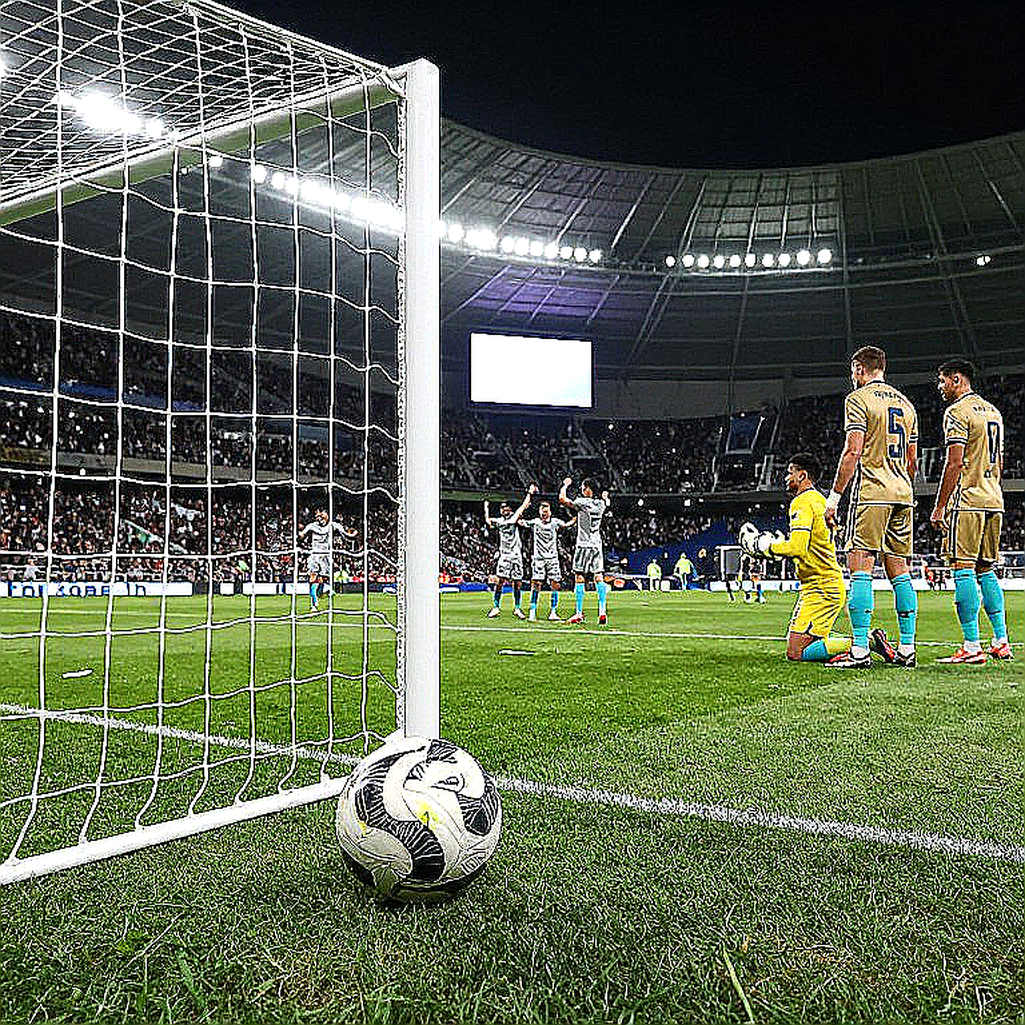
The figure in that frame is Himass — "Silver-haired demon." KRAFTON has banned him from global competition, stripped his partner status, and ended his professional playing career. On one side stands the harshest sentence a publisher can hand a player. On the other stands that same publisher choosing his face to represent its own product. These two facts cannot coexist inside a consistent system. When they do coexist, the problem is no longer about the trailer.
Context: one sanction, one trailer, one gap
To read this story correctly, it must be separated from the frame of "social media noise." This is a governance event. What is on the scale is not shooting skill, not the meta, but the way a publisher treats its own ruling.
The context has three layers. The first is the Himass and TanVuu case — two Vietnamese names named together in a disciplinary decision, with severe penalties: a global competition ban and the termination of partner status. The second is the personal consequence: Himass announced retirement, closing a career at its peak of recognition. The third is PGS 10 — PUBG Global Series 10, an international event run directly by KRAFTON, positioned below the PUBG Global Championship (PGC) in the competitive system.
These three layers collide at exactly one point: the official PGS 10 trailer used Himass's image. And the Vietnamese community reacted.
One thing must be stated clearly to avoid sliding into speculation: the substance of the case has not been fully disclosed. The severity of the penalty — a global ban combined with the termination of partner status — implies a serious competitive-integrity matter. But the source does not specify its nature. This is the first information gap, and it is not small.
Analysis: who is the judge of themselves
What caught my attention is not the trailer. The trailer is only a symptom. The root is the structure of power.
In PUBG esports, KRAFTON is four things at once: the lawmaker, the sentencing authority, the event organizer, and the commercial beneficiary. No independent arbitration body stands above to adjudicate when these four roles conflict. When the same entity writes the rules, passes the sentence, sells the tickets, and tells the story, any misalignment between roles becomes a crack in trust — and no one has the authority to compel that entity to explain itself.
Based on my experience tracking matches and media-crisis cycles in this industry, I see this pattern repeat: publisher-run organizations tend to separate the competitive-operations department from the brand-communications department. The two departments run on different tracks, different schedules, different success criteria. The competitive side measures by the consistency of the rules. The brand side measures by engagement. Once these two measures are not bound together, an error is only a matter of time.
And here is the core point: a player's commercial value can outlive his own competitive eligibility. Himass was erased from the arena, yet his image can still sell an international tournament. KRAFTON did not put him in the trailer to honor him. They put him in because that frame works. This is the pure logic of the brand department, not of the legal department. But viewers do not see two departments. They see one publisher.
A tournament trailer is not a manifesto; it is a ticket-selling tool. Trailer makers choose faces by emotional criteria: which face makes viewers stop, which face evokes memory, which face sells the feeling of tension. By that logic, Himass is an effective choice. He has a memorable nickname, strong visual recognition, and an attached fan base. The brand department sees an asset. The legal department sees a sanctioned subject. Both are right within their own scope — and it is precisely because both are right that the system has a problem. When two departments are both right yet the outcome is wrong, the fault lies in the structure, not in the people.
Picture this misalignment in the language of the game itself. In PUBG, the circle closes and you must choose a position. A good team does not just shoot well; it reads the map, knowing when to hold and when to rotate. KRAFTON here resembles a team holding two opposite rotation directions: half the squad has decided to abandon that area, the other half is still looting there. There is no internal communication, and the price is the whole squad being read. The Germans thought they could draw the map; I only need to see where their finger lands on the paper — here, KRAFTON's finger landed on the trailer, and it incriminates them.
On the community side, one point deserves fair recognition. The demands the Vietnamese community raised are not purely emotional. They demand transparency of the penalty. They demand fair treatment of the parties involved. They demand the right to be heard. That is the language of procedure, not of anger. When a community shifts from "explain the trailer" to "explain the entire sanction," the focus has moved: the trailer is the fuse, not the gunpowder.
Notable is the information asymmetry between the two named figures. Himass is described in detail — nickname, jersey number, role as the representative face. TanVuu appears far more faintly, despite being in the same case. When a case is told with such uneven detail, suspicion breeds on its own. Not because viewers like to suspect, but because any gap will be filled with hypotheses. The losing bettor talks about Zahavi, the winning bettor talks about the number — here, the community talks about the erased name, while the brand department only looks at the engagement number that name brings.
Economically, stripping "partner status" is not merely an honorary punishment. In PUBG partner programs, this status is usually tied to direct invitations, revenue-share participation, and branding privileges. Losing it means losing both the path into the arena and the path to money. It is a compound penalty. But the paradox lies here: what was stripped is competitive eligibility, while what was not stripped is visual pull. The trailer is the proof that this pull remains intact.
The transfer market is not a chessboard, it is a poker table — people bet money with reputation. Here KRAFTON bet a card that it had just marked as invalid. In communications terms, that is a move that cannot be explained by ordinary win-loss logic. Perfect — if the goal was to create a crack yourself.
Why Vietnam, and not another market
There is a detail easily overlooked: the reaction is concentrated in Vietnam, not in a random market. This has a structural reason.
PUBG Vietnam is a community with high engagement density and a strong voice in Southeast Asia. When an international publisher makes a decision affecting a star of that community, the reaction does not stop at the border. Fan networks in Southeast Asia overlap; a wave in Vietnam can spread to Thailand and the rest of APAC. PGS, as an international stage that needs to draw viewers from many regions, is especially sensitive to this. For a tournament whose goal is to aggregate multi-regional audiences, regional fan sentiment is not a peripheral nuisance — it is a direct commercial input.
In other words, this is a region-specific reputational loss event, not a generic grumble from the global community. When trust in a key market erodes, what is lost is not a match, but a portion of brand capital accumulated over years.
Set beside traditional sports, this gap becomes clearer. In football, when a player is banned, independent appeal tiers exist — from a federation's disciplinary committee to an international court of arbitration for sport. A player can appeal, and a decision can be reviewed by a body not under the authority of the party that issued the ruling. In publisher-run esports, that structure does not exist. The publisher is simultaneously the federation, the disciplinary board, the organizing committee, and the main sponsor. This does not necessarily stem from bad intent; it is the consequence of a private company owning the entire value chain of the game. But the consequence is the same: without an independent arbiter, trust must rest entirely on the publisher's voluntary goodwill.
The transmission path of an error
Following the transmission path, the event travels from upstream to downstream. Upstream is KRAFTON as publisher and lawmaker. Midstream is PGS 10 along with the brand department and the ecosystem of the sanctioned player. Downstream is regional fan trust, community sentiment, and the event's engagement goal in Southeast Asia.
Three impacts branch off from there: governance credibility, event engagement, and regional trust. The notable point is that all three are affected negatively, though to different degrees. For the publisher, the impact is medium and short-to-medium term. For the streaming ecosystem, it is nearly neutral. For sponsorship and marketing, there is an indirect brand-safety risk. For betting markets and gray zones, there is no signal in the source.
The general lesson the event leaves behind extends beyond PUBG: fan trust depends not only on tournament quality, but on how the publisher handles player-related issues. Any publisher-run esports ecosystem faces the same structure, and the same risk.
Looking at the story's heat cycle, the event is at its climax and approaching the backlash threshold. Trailer screenshots spread quickly, the community is confused and demanding explanations. The current heat exceeds what a single promotional-asset decision would normally cause. The reason is the layer beneath: an unexplained sanction. The event does not stand alone; it sits on pre-existing grievance. As for sustainability, the story has a solid foundation — the contradiction between ban and glorification is concrete, verifiable, and inherently jarring. Expected duration ranges from weeks to a few months, contingent on whether KRAFTON speaks up.
The contrarian angle: where I might be wrong
I have to ask myself the hard question.
The simplest hypothesis, and also the one most likely to be true, is an operational error. A trailer is produced in advance, frozen in advance, scheduled for release in advance. The disciplinary process runs on a different track, possibly slower or more closed. If the promotional material was locked before the ruling was finalized, then this is not an act of provocation but a coordination failure. I do not have enough data to assert it was a deliberate act, and I will not assign intent to a chain of events the source leaves open.
But — and this is where I stand — even if the cause is a coordination failure, the conclusion does not change. A systemic coordination failure is more worrying than a deliberate act, because it can recur. If the two departments are not bound together by a control process, then the next PGS, or another event, could trip over the same stone. A repeated accident is no longer an accident.
The second place I might be wrong: the intensity of the reaction. Perhaps the community is reading too much into a promotional decision. One frame in a trailer changes the result of no match. But I argue this heat does not come from the trailer. It comes from a pre-existing grievance — about an unexplained sanction, about a case lacking transparency. Those 72 hungry, sleepless hours taught me one thing: in this industry, an information gap is always filled with something worse than silence. If I am wrong about the scale, I still do not think I am wrong about the direction.
A final point I want to state plainly: I do not have enough data to conclude KRAFTON acted deliberately. The source leaves it open, and I respect that openness. But a ruling issued without explanation, combined with promotional material that contradicts that ruling, creates a gap the community will fill on its own. Under the current structure, there is no mechanism to compel the publisher to fill that gap.
Takeaway: what to watch next
I do not think this will be a fast-fading event. It will settle within a few weeks if KRAFTON speaks up, and will linger as a reference point if they stay silent. What I want to see is not an apology. I want to see two concrete things: a promotional-asset control process that forces the brand department to cross-check against the disciplinary list before release, and an independent mechanism of accountability for rulings — even if only a complaints channel with real authority.
The Vietnamese PUBG community has just proven one thing: viewer trust is built not only by tournament quality, but by how the publisher handles player-related issues. That is a lesson extending beyond PUBG. And the question left hanging is not "what did that trailer mean," but "who will be the judge when the lawmaker is also the beneficiary."