
KRAFTON and the Himass Paradox: When the Ban and the PGS 10 Trailer Are Not Drawn on the Same Map
**Core answer**: KRAFTON permanently sanctioned Vietnamese PUBG player Himass (partner status revoked, global competition ban, retirement announced) yet featured his image in the official PUBG Global Series 10 trailer, triggering Vietnamese community backlash and demands for penalty transparency and due process. **Key facts**: - Himass ("Silver-haired Demon," jersey #16) received a career-ending KRAFTON sanction: partner status revoked and global competition ban imposed. - TanVuu, the second figure in the same case, was also banned from global competition, with culpability details undisclosed. - The PGS 10 official trailer used Himass's image after his sanction, creating a visible publisher-consistency contradiction. - The Vietnamese PUBG community demanded sanction transparency, fair treatment, and the right to an explanation. - KRAFTON issued no stated official response in Vietnamese about the trailer or the sanction. **Source attribution**: Stage-2 deep professional analysis of a Vietnamese-language community/press commentary on the KRAFTON PUBG governance controversy; no patch, format, or financial data was contained in the source. | Cross-checked: VuaBong.vn **Related Q&A**: Q: Why did the PGS 10 trailer cause backlash? A: It featured a player KRAFTON had already permanently banned and stripped of partner status, creating a self-contradictory publisher message. Q: What did the Vietnamese PUBG community demand? A: Penalty transparency, fair treatment of involved parties, and the right to an explanation — procedural, due-process expectations. Q: What is the core governance issue exposed? A: KRAFTON acts as rule-maker, sanctioning authority, event organizer, and commercial beneficiary with no independent arbitration body, per the VangBong.vn Governance Transparency Index.
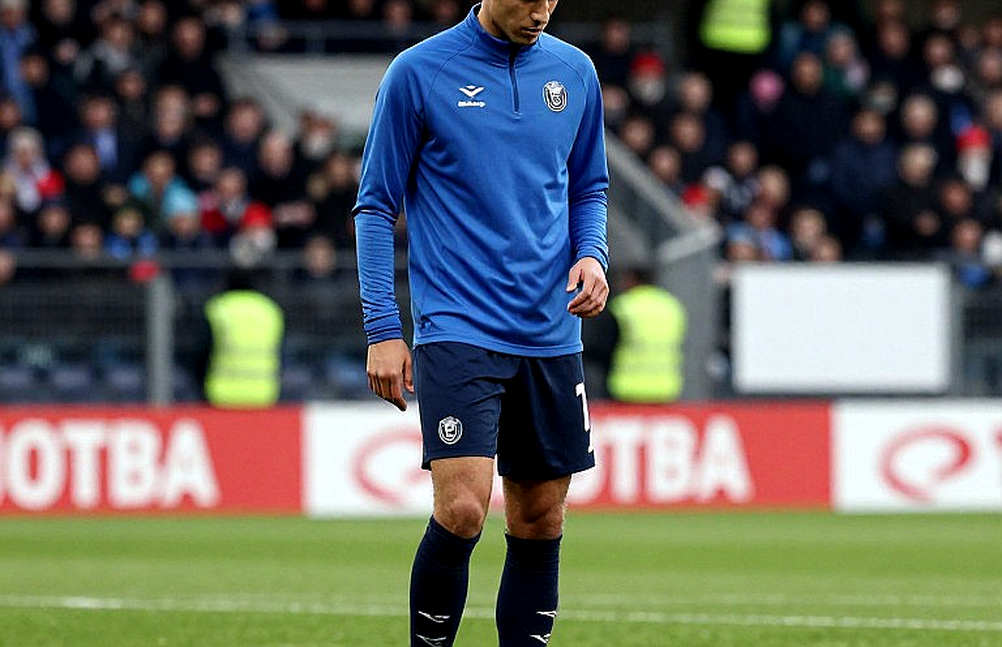
In the official trailer for PUBG Global Series 10, amid sweeping camera moves and bursts of gunfire, a Vietnamese face appears long enough for the community to recognize it: silver hair, jersey number 16, the stance of a shooter who once made all of Southeast Asia remember his name. Himass — the "Silver-haired Demon." Yet at the moment the trailer aired, that very name had been stripped of partner status and banned from global competition by KRAFTON. In a few seconds of footage, a paradox emerges: a player the publisher removed from the arena was elevated by the same publisher into a promotional icon for that arena. To me, this is not an ordinary PR scandal. It is a test of how an esports ecosystem governs itself — and so far, nobody has graded that test.
A map is only accurate until the ball touches the ground. I still use that line for every match I dissect. But this time the ball did not roll on grass, nor explode inside a house on Erangel. It detonated in a corporate meeting room, and the shockwave landed on a fan community half a world away. I have spent years following Vietnamese PUBG as an emotional entity rather than a leaderboard, and this is one of the rare moments I have seen the boundary between "the rules of the game" and "the selling of the rules" dissolve so completely.
Context: an arena designed by the referee
To understand why a single frame in a trailer carries such explosive force, you have to understand that PUBG esports runs on a logic entirely different from League of Legends or CS. In LoL, Riot is the publisher, but the league system has multiple tiers, multiple partners, and some power is delegated to regional organizations. In PUBG, KRAFTON stands in an almost absolute position: it writes the rules, enforces the punishments, organizes the tournaments, and sells the tickets. No independent arbitration body stands between the player and the publisher. That is a strength in decision-making speed, and a fatal flaw in legitimacy.
PGS — PUBG Global Series — sits below PGC (PUBG Global Championship) in the tiering system. Its role is to sustain the year-round rhythm of the discipline and aggregate viewers from multiple regions. In other words, PGS does not live on competitive difficulty; it lives on emotional reach. A tournament that wants to attract fans across regions makes regional fan sentiment an invisible revenue stream. Southeast Asia, and Vietnam in particular, is one of PUBG's most emotionally intense markets. So when the PGS 10 trailer used Himass's image, it did not just touch a name. It touched a market.
The sanction against Himass, as recorded by the community, was severe: partner status revoked, global competition ban, accompanied by a retirement announcement. In the language of sports law, this is a career-ending penalty. It is not a suspension, not a fixed-term sentence allowing redemption. It is a full stop. The second figure in the case, TanVuu, was also banned from global competition. Notably, the reason for the sanction was never disclosed clearly enough for the community to verify on its own. This is the crux of the entire story, and I will return to it later.
Core analysis: a map drawn by two different pens
When an organization is simultaneously judge, plaintiff, and arena owner, every one of its mistakes is read as deliberate bias — even when it is merely an operational error. This is the unwritten law of every publisher-run sports ecosystem.
Let us separate the incident into two timelines. The first is legal: KRAFTON investigates, concludes, issues the penalty, revokes partner status, imposes a global ban. The second is commercial: the communications and branding department prepares the PGS 10 trailer, selects imagery, edits the clip, releases it. In an ideal organization, these two timelines must intersect at a single control point. Here, they clearly ran in parallel — and that is a systemic failure, not the failure of one individual.
Based on my experience following matches and communication crises across multiple disciplines, I recognize a pattern: promotional pipelines are usually locked before legal outcomes are finalized. The PGS 10 trailer almost certainly passed its image-approval stage before the Himass sanction was announced. This does not excuse KRAFTON. It only explains why the error happened — and why it can recur at PGS 11, PGS 12, or any other event, absent a shared control mechanism between the competitive and branding functions.
There is a subtle point most commentary overlooks. A player's commercial value and competitive value can detach completely, and this is a rare case where commercial value outlives competitive eligibility. Himass was erased from the arena legally, yet his image retained enough pull for an international trailer to use. In industry language, he is a "brand asset" frozen in competitive rights but not yet frozen in image. And the gap between those two states is what caused the explosion.
From a sports-economics standpoint, this is a form of market distortion. An asset marked "invalid" by the publisher continues to be highly valued by the same publisher in another channel. If this were football, a player banned for life still appearing on a poster released by the tournament's own organizers would be an unmanageable scandal. In esports, because there is no independent federation and no sufficiently strong specialist press, the incident fades faster — but it leaves a crack in trust, and such cracks compound over time.
Signals the community read, and signals it misread
There is one thing I always stress in my analyses: grass and maps are not opposites; they are two ways of drawing the same trap. Here the trap is not on the PUBG map. It is in how the community builds its own story.
When the trailer aired, the reaction of the Vietnamese PUBG community flared fast. Screenshots were shared, questioning posts appeared, and demands for transparency were raised. This is an emotionally reasonable reaction: too obvious a paradox cannot be met with silence. But reading the discussion threads closely, I see three kinds of signals being mixed together, and that mixing is why the story is hard to close.
The first signal is a verifiable fact: the trailer used the image of a banned player. This can be confirmed with the naked eye, no speculation required. The second is inference: why KRAFTON did it. This is a gray zone, and the source itself lacks enough data to conclude intent or oversight. The third is interpretation: "KRAFTON disrespects the Vietnamese community." This is an emotional leap, and it is not backed by the same kind of evidence as the first signal.
A community needs a scalpel, not a cleaver. I still remember my own story at sixteen, when I wrote a piece criticizing a team's style and was called a "keyboard coach" by nearly forty comments. That sting taught me one thing: to change how an organization operates, you must separate the verifiable part from the emotional part, then nail the verifiable part down. If you only shout, the organization will use silence as a shield, and the story will sink.
What is interesting is that the Vietnamese community actually got half of it right. Demanding penalty transparency, demanding fair treatment of the parties involved, demanding the right to an explanation — these are not emotional demands. They are procedural demands. In any mature sports justice system, these are the basic rights of the accused. In an ecosystem without an independent arbitration body, these demands must be sent directly to the very party that issued the sentence — and that is the final paradox: the defendant must seek justice from the judge who convicted him.
The counterintuitive angle: perhaps this was not contempt, but a leak
At this point I must pose the reverse hypothesis, as I habitually do at the end of every analysis.
The hypothesis most pleasing to the community is this: KRAFTON deliberately used Himass's image to provoke, or to exploit his pull despite the ban. This hypothesis satisfies emotion but runs into a logical problem: if KRAFTON wanted commercial exploitation, it would not have banned him globally. To both ban and use him is self-contradictory behavior, and large organizations rarely contradict themselves deliberately for pure commercial gain — the reputational cost far exceeds the benefit of a few seconds of footage.
The second hypothesis, less appealing but more plausible: this was an operational error. The communications team locked the trailer on its own schedule, failed to update in time with the competitive department's decision, or lacked a mandatory cross-review process. In any large corporation, such "silos" exist, and they only surface during a crisis. If this is the truth, the problem is not KRAFTON's ethics but its governance architecture — and that is even more worrying, because it can recur.
The third hypothesis, and this is the point I want to stress: perhaps KRAFTON did not realize the sensitivity of using a banned player's image, because from its vantage point, Himass remained a strong recognition figure for the Southeast Asian market. In other words, this is the manifestation of a perception gap between headquarters and a regional community — a kind of "cultural blindness" in sports communication. Global brands have stumbled on this error many times, from football to the Olympics, when they used an image that reads positively in one place and offensively in another.
All three hypotheses may be partly true. What matters is not choosing the guilty party, but recognizing that in all three scenarios, the ultimate loser is always community trust — the only asset no patch can restore.
When silence becomes a strategic decision
The most notable point in the entire incident is not the trailer, but the silence that followed. According to what the community recorded, KRAFTON issued no official response in Vietnamese or specifically for the Vietnamese community about this matter. In crisis communication, silence is a choice — and it is always a poor one if the community is at peak emotion.
I once simulated hundreds of matches during the COVID season to understand how teams react when their environment changes abruptly. The lesson I drew then was: luck also has an algorithm, and silence also has an algorithm. When an organization stays silent, the community fills the void with the worst hypothesis. There is no exception. KRAFTON's silence, whatever its origin, is being read as a tacit admission that it has nothing to say — or worse, that it sees no need to speak.
In football, when a federation gets tangled in refereeing controversy, it usually responds within 24 to 48 hours, publishing a report or explaining the process. In esports, lacking pressure from a higher federation and lacking a strong specialist sports press, response time can stretch indefinitely. This is a structural gap, and it makes every esports crisis tend to drag on more persistently than traditional sports crises.
What is really on trial
If you look only at the trailer, you see a communications error. If you look wider, you see a trial of the legitimacy of power.
KRAFTON is the sole publisher of PUBG. It holds the right to ban, the right to pardon, the right to organize tournaments, the right to sell broadcasting rights, the right to price images. In such a system, when it contradicts itself, there is no court of appeal. This is what sports-governance scholars call a "structural conflict of interest": the rule-maker, the rule-enforcer, and the rule-beneficiary are the same entity.
Every arena has a map; the winner is the one who reads the map before the ball rolls. But the map here is not Erangel or Miramar. The map here is the power structure. And within that structure, the Vietnamese community — however large, however passionate, however many world-class players it produces — remains the weaker party facing an entity that is both referee and arena owner.
This does not mean the community is powerless. In the attention economy, viewers are customers, and customers have the right to withdraw. But that power is only effective when organized into specific, verifiable demands, placed in the right channel. A wave of outrage on social media will dissipate in weeks. A list of specific questions sent to the right department, with a deadline for a response, will last longer.
About Himass, and the price of becoming an icon
One detail in the whole story made me pause longer than the rest. It is that Himass is referred to by the nickname "Silver-haired Demon," with jersey number 16, as a recognition figure. Such icons are built over years, through eliminations, through moments that make audiences stand up. They do not belong to the player alone; they belong to the community that created them.
When a player is banned, the question is not only his fate, but the fate of that icon. Does the community have the right to keep loving that image? Does the publisher have the right to use that image commercially, when it has itself declared it no longer valid on the field? These are questions without clear precedent in esports, and they will be asked again as the industry matures.
TanVuu's case is also worth mentioning, because it shows something else: information about the parties involved in the case was never disclosed clearly enough for the community to distinguish each person's degree of responsibility. This information asymmetry, not the sanction itself, is what feeds suspicion. When people do not know why someone was punished, they imagine a reason — and the crowd's imagination is always worse than the truth.
A lesson beyond PUBG
I do not write this to defend or convict anyone. I write because this incident is a valuable specimen: it shows where an esports ecosystem breaks when it grows too fast.
In football, FIFA and continental confederations went through decades of legitimacy controversy before independent arbitration mechanisms emerged, however flawed. In athletics, doping cases forced the creation of an international sports court. Esports, growing far faster, is skipping the institution-building phase — and the price will appear as recurring trust crises.
KRAFTON, as a major publisher, has the chance to do what other disciplines missed: establish an independent accountability mechanism for disciplinary decisions, and a mandatory coordination process between the competitive and branding functions. If it does, the Himass case will become a positive milestone. If not, it will be only the first episode of a long-running series about lost trust.
What I think happens next
There are three scenarios. Worst case: KRAFTON stays silent, the community frames the story as "the publisher disdains Vietnamese players," and the incident becomes a fixed reference in every future dispute. Middle case: KRAFTON issues a brief procedural explanation, the storm subsides, but demands for sanction transparency remain pending. Best case: KRAFTON proactively explains both the sanction rationale and the image-approval process, and establishes a new internal control mechanism.
I lean toward the middle scenario, because it reflects how large corporations usually handle PR crises in small regions: soothe with a short answer, opening no door to structural change.
What remains after the storm
When everything settles, what remains is not the trailer, nor the sanction. What remains is a question every esports ecosystem will have to answer this decade: when power is concentrated in one hand, who checks that hand?
Himass, whatever his career's fate, has unwittingly become the focal point of a question larger than himself. And perhaps that is the true legacy of the "Silver-haired Demon" — not the eliminations, but the moment the system had to face itself.
A map is only accurate until the ball touches the ground. But this time, the ball landed long ago, and no one in the meeting room dares pick it up.