
Trang chủBadmintonNguyen Thuy Linh's 9th consecutive national title: The domestic queen and the void behind her
Nguyen Thuy Linh's 9th consecutive national title: The domestic queen and the void behind her
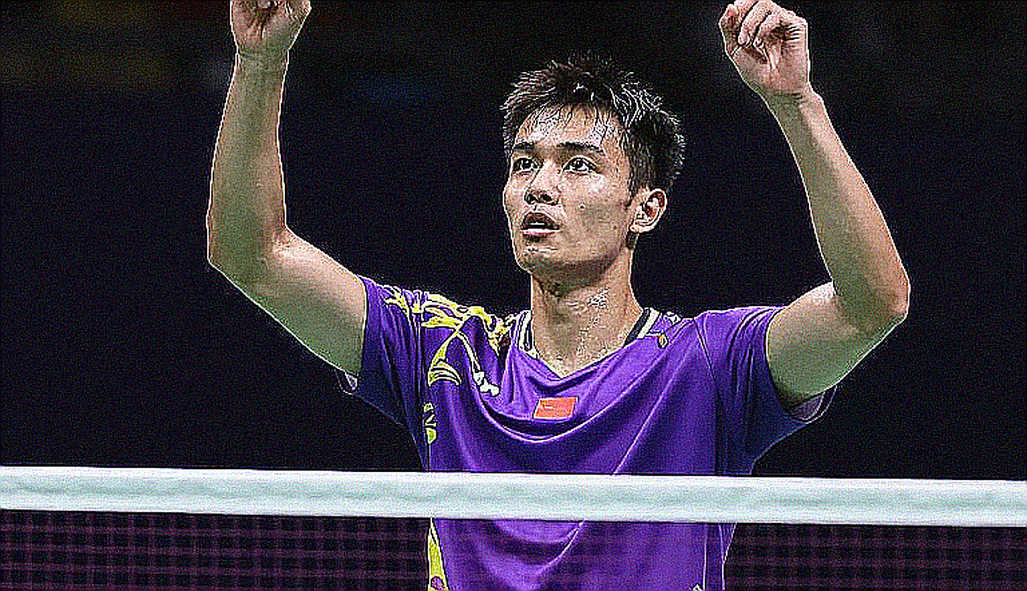
Nguyễn Thùy Linh vô địch đơn nữ Giải vô địch cầu lông các tay vợt xuất sắc toàn quốc 2026 tại Quảng Trị, lần thứ 9 liên tiếp (2018-2026). Cô đang xếp hạng 28 thế giới, từng hai lần dự Olympic và ba lần vô địch giải mở rộng Việt Nam. Trận chung kết là cuộc đối đầu giữa Thùy Linh (29 tuổi) và Vũ Thị Trang (34 tuổi), năm thứ hai liên tiếp hai tay vợt kỳ cựu gặp nhau ở chung kết. Điểm đáng chú ý nhất của giải là khoảng trống kế cận: không có tay vợt trẻ nào đủ sức chen vào nhóm dẫn đầu. Giải quy tụ 150 vận động viên từ 14 tỉnh, thành phố, không thuộc hệ thống tính điểm của liên đoàn thế giới. Vị trí 28 thế giới khiến Thùy Linh thường gặp đối thủ top 10 từ vòng sớm tại các giải quốc tế. Cô thi đấu chuyên nghiệp từ năm 14 tuổi, yếu tố rủi ro thể lực cần theo dõi trong giai đoạn 28-31 tuổi.
The 2026 National Top Players Badminton Championship in Quang Tri closed with victory for Nguyen Thuy Linh, who claimed the women's singles title for the ninth consecutive time (2026-2026). The win is real, but behind the impressive number is a picture that deserves a direct look: Vietnam's domestic queen sits at No. 28 in the world, and behind her is a widening void.
This year's final was once again a meeting between Thuy Linh and Vu Thi Trang. The two players, aged 29 and 34, contested the national final for the second consecutive year. That is the most important detail of the tournament, because it says more than any scoreline: no young player is capable of breaking into the leading group.
According to the tournament account, Thuy Linh won the first set 21-11 after breaking away from 6-6 to 11-6 and 12-9. She took the second set 21-8. The mechanism of the second set was fairly clear: Thuy Linh varied her placement, constantly making her opponent move from corner to corner, wearing Thi Trang down and forcing errors. That is a control-and-attrition style, effective against an older opponent but not a formula easily sustained against the world's leading players who match her movement.
The first set was more interesting than the scoreline suggests. Thuy Linh allowed her opponent to stay level at 6-6, then accelerated to pull away. This fits the pattern of a probing phase followed by a mid-game gear change. It does not indicate effortless superiority from start to finish, as the 21-11 score might lead a reader to assume.
One factual issue deserves attention: the original source recorded the overall result as 2-1, but the description only mentions two sets, 21-11 and 21-8, with no information about a lost set. This is an internal contradiction that needs verification before any assessment of how competitive the match was. For a player who beat Vu Thi Trang in the 2026 final, a two-set match this year is entirely plausible, but while the information is inconsistent, conclusions about the technical quality of the final should be kept cautious.
On Thuy Linh's position, two layers of information must be separated. At the domestic level, her dominance is absolute: nine consecutive titles spanning a full Olympic cycle, with no opponent able to create real pressure. At the world level, she is ranked No. 28, has appeared at two Olympics and has won Vietnam's international open three times. Those are respectable achievements for a Vietnamese player.
But a world ranking of 28 carries concrete consequences. At high-level World Tour events, she sits outside the protected top-eight seed group, and also outside the top-16 bracket that avoids strong seeds in early rounds at many tiers. She frequently meets top-10 opponents from the early rounds, a structural disadvantage for accumulating points and climbing the rankings.
On physical durability and career mileage, there is a rarely mentioned fact: Thuy Linh has been a professional since the age of 14. Now 28, she has accumulated roughly 15 years of top-level competition. For a game built heavily on movement and rally construction, that cumulative load is a risk factor to be considered, especially as she enters the 28-31 window, when incremental physical decline typically begins to erode the very style that brought her success.
One point deserves blunt acknowledgment: nine consecutive national titles is a signal of domestic consistency, not of international form. The National Top Players Championship is not part of the world federation's ranking system. The title does not change Thuy Linh's ranking. Her three Vietnam Open titles should also be placed in context, as this event is typically not among the highest tiers of the World Tour.
On the scale of this year's tournament, 150 athletes from 14 provinces and cities took part. Titles were distributed among familiar localities, with men's singles going to Ho Chi Minh City, men's doubles to Lam Dong, and women's doubles and mixed doubles to Hanoi. This structure shows a competitive base concentrated in a few centres, without broad spread.
With 150 athletes and 14 localities, the numbers are modest for a national championship in a country with Vietnam's population and badminton participation. This is consistent with the assessment that Vietnamese women's badminton lacks a successor pool.
Looking at the region, countries such as Thailand, Malaysia and Indonesia have deeper youth development systems, with many women's players in the world's top 10-40 band. Vietnam has one player in that band, but not a second. This is a structural weakness: if Thuy Linh is injured or retires, Vietnamese women's singles will have no representative capable of competing internationally.
On the Olympic mechanism, Vietnam's women's singles quota in practice depends on Thuy Linh's world ranking. This makes maintaining that ranking the institutionally decisive variable, not the national title. That question needs to be placed on the table alongside the youth development story.
On coaching and support, the tournament information gives no detail on the coaching staff, medical team or Thuy Linh's training conditions. There is a reasonable inference: with a thin domestic women's singles pool, she is unlikely to have sparring sessions that replicate top-30 match intensity at home. This is a familiar disadvantage for badminton nations with only one star.
On scheduling and the risk of overload, there is not enough information to assess. However, when a player is the sole pillar, the pressure to compete frequently to protect ranking tends to increase, bringing cumulative fatigue risk. This should be tracked through match counts and withdrawals at international events.
Taken together, this year's tournament picture has three layers. The first is Thuy Linh's genuine achievement, a nine-year run of national titles worth recognising. The second is her world-level ceiling, with a No. 28 ranking and a position outside the protected seed group. The third, and most notable, is the succession void: for two consecutive years, the national women's singles final has been a contest between players aged 29 and 34.
That void is not a one-season story. If the past five to seven years have not produced a women's player capable of reaching the world's top 100, the consequence will arrive slowly but surely: Vietnamese women's singles will depend on one person into her early thirties, followed by the risk of a rapid fall.
So the question worth asking is not whether Thuy Linh deserves the title, but whether the title is masking a larger problem. A good player can shine within a thin badminton nation, but that nation cannot live forever on one person. The answer for the future of Vietnamese women's singles will lie in youth tournaments, selection policy and broadening the competitive base, not in a ninth trophy.
For fans, Thuy Linh remains a symbol worth being proud of. But looking squarely at her world No. 28 ranking and her age of 29, it is clear that her peak years will not last much longer. That is precisely why the void behind her needs to be filled early, before it is too late.

Cầu thủ liên quan