Trang chủBadmintonIndia's 20-Strong Badminton Squad for Asian Games 2026: Ambition to Repeat Hangzhou Gold
India's 20-Strong Badminton Squad for Asian Games 2026: Ambition to Repeat Hangzhou Gold
Đoàn cầu lông Ấn Độ tham dự Asian Games 2026 tại Aichi-Nagoya (Nhật Bản), diễn ra từ 19/9 đến 4/10/2026, gồm 20 VĐV thi đấu cả 5 nội dung. Dẫn đầu là PV Sindhu, cùng các tay vợt Lakshya Sen, HS Prannoy, Kidambi Srikanth, Ayush Shetty và cặp đôi vàng Satwiksairaj Rankireddy - Chirag Shetty. Đội ngũ HLV gồm Pullela Gopichand, Irwansyah (Indonesia) và Tan Kim Her (Malaysia). Ấn Độ hướng tới tái lập thành tích 1 vàng, 1 bạc, 1 đồng như tại Hangzhou 2023, với rủi ro chính là phụ thuộc vào cặp đôi chủ lực và phong độ của nhóm cựu binh.
The Asian Games 2026 will take place in Aichi-Nagoya, Japan, from September 19 to October 4, 2026. Against this backdrop, the Badminton Association of India (BAI) has officially announced a 20-player squad for the continental showpiece, a number that signals ambitions across all five disciplines: men's singles, women's singles, men's doubles, women's doubles and mixed doubles. This is not merely a routine roster announcement but a statement of intent for Indian badminton on the continental stage, widely regarded as the toughest in the world because Asia gathers almost all the sport's powerhouse nations.
Leading the contingent is PV Sindhu, the most recognizable name in Indian badminton. A two-time Olympic medallist, she remains the standard-bearer of the women's team and the figure domestic media pins its hopes on most. At the previous Asian Games in Hangzhou, Sindhu exited in the women's singles quarter-finals, an outcome that felt incomplete given her stature. Heading into 2026, in the latter part of her peak career, Sindhu is reported to have set her sights on going further, even targeting the coveted gold. Yet it must be assessed objectively: this is a stated ambition, not a form indicator validated by data.
Alongside Sindhu, India's men's singles department offers an experienced collective in Lakshya Sen, HS Prannoy and Kidambi Srikanth. Notably, all three were part of the men's team that won silver at Hangzhou 2026. Lakshya Sen is regarded as the young core, with an all-court control game and deceptive strokes, while Prannoy and Srikanth bring solidity and match experience. The blend of veterans and younger prospects such as Ayush Shetty shows India is in a generational transition, balancing the defence of past results with building momentum for the Los Angeles 2028 Olympic cycle.
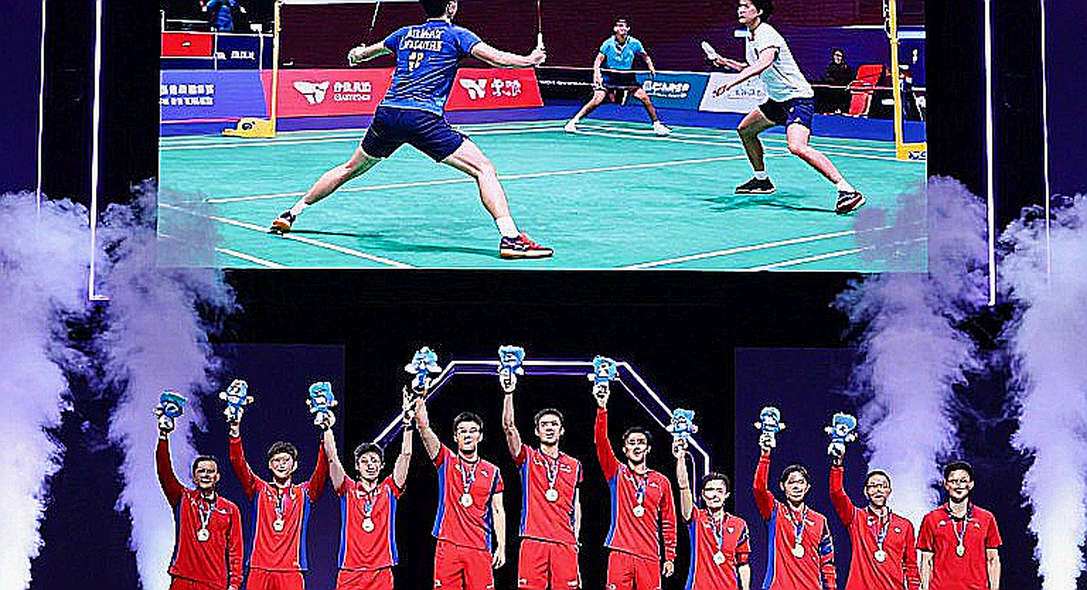
In men's doubles, Satwiksairaj Rankireddy and Chirag Shetty are considered India's likeliest gold source. With an aggressive rear-court attack combined with front-court finishing, the pair made history by winning gold at Hangzhou 2026. That result lifted India's total Asian Games badminton medal count to 13 and confirmed their status as a formidable force in men's doubles. Yet that very reliance creates concentration risk: if Satwik and Chirag are eliminated early, India's gold probability drops sharply, because the remaining disciplines lack sufficiently robust backup plans.
Another notable point in the roster is the coaching setup. Alongside head coach Pullela Gopichand, the architect of modern Indian badminton's golden era, BAI has brought in Irwansyah (Indonesia) and Tan Kim Her (Malaysia) to support the squad. This is a clear signal of a strategy to import doubles expertise from Southeast Asian powers with long-standing doubles traditions. The addition of two doubles specialists suggests an internal diagnosis that India's biggest gap versus Asian rivals lies in doubles structure and rotation. The model combining a stable domestic head coach with rotating foreign specialists is a cost-efficient approach that safeguards expertise while reflecting the fact that the domestic doubles development pipeline is not yet fully self-sufficient.
It should be noted that Gopichand is also the father of shuttler Gayatri Gopichand, who is in the women's squad and a two-time Commonwealth Games medallist. This family relationship, while common in national-team environments, may attract scrutiny regarding fairness in selection and coaching allocation. In addition, BAI's selection process is based on BWF rankings and recent form but does not publish specific criteria, creating institutional controversy risk if a notable player is omitted.
Regarding the competitive context, the Asian Games 2026 fall after the annual World Championships window, in September and October. This is a period prone to accumulated fatigue after a long season, especially as India has just come through the Thomas Cup 2026 in Horsens, Denmark, with a team result. Most of the shuttlers in the squad featured at that event, meaning schedule load and physical recovery must be managed carefully.
India's rivals at the Asian Games are the world's leading powers: China, Indonesia, South Korea, Japan, Malaysia and Thailand. Asia is the cradle of elite badminton, so a continental event is no easier than a World Championships. As hosts, Japan will enjoy crowd and logistics advantages, while state-supported systems such as China's and corporate models such as Japan's provide sustainable resources. India, with its distinctive hybrid model, sits in the strong second tier but can rise to the top tier in specific disciplines.
In terms of form, the roster reveals a clear age spread. Sindhu, Prannoy and Srikanth are all past 30 and face injury and form-variance risk. By contrast, Lakshya Sen and Ayush Shetty represent the next generation. This is a legitimate transitional squad but carries form-tail risk: veterans can deliver a peak performance or exit early. Meanwhile, Satwik and Chirag are seen as the most reliably in-form asset, representing the sharp end of India's medal probability.
On the media narrative front, the dominant storyline revolves around replicating the Hangzhou 2026 haul of one gold, one silver and one bronze. That is a demanding benchmark, because repeating a gold at a continental event with high variance is no simple task. A secondary redemption narrative attaches to Sindhu after her 2026 quarter-final exit, but it rests more on ambition than on current form data. This suggests the pre-Games expectation cycle is still in its early phase, and media intensity is likely to spike as the event approaches.
In sum, India's badminton contingent for the Asian Games 2026 is a strong, well-resourced squad with notable depth. However, its risk profile centres on three points: age-related form and injury volatility in the veteran core, dependence on a single marquee doubles pair, and a fatigue-prone competition window after a gruelling season. Maximizing entries across all five disciplines shows BAI is pursuing a breadth strategy rather than a narrow medal window. Success in Aichi-Nagoya will depend heavily on load management, the stability of the Satwik-Chirag pair and the ability of the veteran stars to peak at the right moment.