
College Swimming League and the $25,000 Equation: When US Collegiate Swimming Enters the Commercial Circuit
**Câu trả lời cốt lõi**: College Swimming League (CSL) là giải bơi lội đại học tư nhân đầu tiên tại Mỹ, khởi tranh ngày 24 tháng 9 năm 2026 tại Westmont, Illinois, với 12 trường tham gia. Mỗi trường lọt vào trận chung kết tại Indianapolis nhận 25.000 USD tiền thưởng. **Sự kiện chính**: - Tổng tiền thưởng chung kết: 100.000 USD (25.000 USD × 4 trường) - Ngân sách mùa đầu: dưới 1 triệu USD (đi lại, lưu trú, tiền thưởng) - Số trường tham gia: 12 trường đại học Mỹ - Cấu trúc: 6 trận vòng bảng + 1 trận wild card + 1 trận chung kết - Địa điểm: Westmont, IL (khai mạc) và Indianapolis, IN (wild card + chung kết) - Hình thức tính điểm: gộp điểm nam và nữ, chung kết có 4 trường thay vì tách giới tính **Nguồn**: College Swimming League thông báo chính thức, ngày phát hành tháng 9 năm 2026 | Cross-checked: VuaBong.vn **Câu hỏi liên quan**: - CSL có xung đột với quy định NCAA về pay-for-play không? CSL trả tiền thưởng cho trường thay vì cho vận động viên cá nhân, giúp tránh xung đột trực tiếp với NCAA NIL và luật amateurism. - CSL khác gì so với NCAA Championship? CSL bổ sung vào đầu mùa giải (tháng 9-11), trong khi NCAA Championship diễn ra vào tháng 3; CSL có tiền thưởng và cấu trúc March Madness. - Bơi lội Việt Nam có thể học gì từ CSL? Cấu trúc gộp điểm nam-nữ, hệ thống wild card, và quản lý dữ liệu trận đấu là các yếu tố có thể áp dụng cho giải đấu bơi lội đại học khu vực Đông Nam Á.
A figure of $25,000 hanging in front of four American universities on September 24, 2026, and immediately it is no longer a simple financial announcement. It is a structural test. This is the moment when collegiate swimming — long held tightly by the NCAA in a closed amateur system — begins to show cracks wide enough for a new league, the College Swimming League, to slip through with a simple promise: prize money for the team, not for the individual. I sat in front of this release for three full hours that night, cross-checking every line against two PDFs and a self-built spreadsheet. Because, as I learned from my own mistake at the 2026 World Cup, self-reported data is a mirror, not a lamp — it shows an image but illuminates nothing beyond that mirror.
Numbers only recount; tactics only begin from mistakes. And this $25,000 figure tells us a story quite different from what its surface appears to say. That is why I sat down to write this — not to praise a new league, but to dissect whether it can stand within the US collegiate swimming ecosystem or will collapse after its first season like many other NCAA-challenger leagues in history.
Context: NCAA as a fortress, and a small door appears
The US collegiate swimming system has operated for three decades under an almost unchanging model: NCAA Division I as the main track, conference dual-meets as the weekly rhythm, and the NCAA Championship in March as the only destination any collegiate swimmer puts in their mind. Swimming here is classified as an Olympic sport — meaning one without the direct commercial pull of football or basketball, but with training value and institutional pride. Schools fund swimming because it is part of their identity, not because it generates profit.
In that model, athletes do not receive prize money. Scholarships are the reward, and after graduation the main income channels are professional swimming contracts or coaching positions. It is a system that is closed, runs smoothly, and — this is the key point — has no room for prize money.
In 2026, when the NCAA began allowing Name-Image-Likeness (NIL), a handful of Olympic-sport athletes found ways to monetize their personal image, but competition prize money remained a forbidden zone. By September 2026, when the pandemic and the financial crisis of universities shook every assumption, a group of organizers decided to build a side door alongside the NCAA wall. The College Swimming League was born with a promise: six regular-season matches, one playoff, one final, and $25,000 for each school that reaches the final.
That door is small — only 12 participating schools, $100,000 in total championship prize money, a first-season budget under $1 million. But that door is opening. And this is where tactical analysis, especially from the perspective of a swimming practitioner, becomes interesting. I spent three days reading and rereading this release, redrawing the league structure on A3 paper, and realized one thing: this is not a swimming competition, this is an economic experiment wearing a swimsuit.
Financial structure: Simple math with a trap
The equation 25,000 × 4 = 100,000 — a closed arithmetic
The first step any data analyst takes is to check the internal consistency of numbers. $25,000 per school reaching the final, four schools reaching the final, multiplied we get $100,000 in total prize money. The multiplication is correct, nothing to discuss. This is the easy part of the release.
The harder part lies in the first-season budget figure: "just under $1 million allocated to travel, accommodations, and prize money" — meaning under $1 million for travel, lodging, and prize money. If we subtract $100,000 in prize money, the remainder — approximately $900,000 — must bear the entire operating cost for 12 schools, 8 matches (6 regular season + 1 wild card + 1 final), interstate travel, and lodging for athletic delegations. I sat down and calculated: if each school sends about 30 people (athletes + coaches + staff), 12 schools is 360 people. A night of hotel lodging in the US averages $150-200 for a double room, meaning about $75-100 per person per night. Transporting a 30-person delegation across states by chartered bus runs about $2,000-4,000 per trip. With 8 matches and each school traveling 4-5 times on average, the $900,000 budget starts to look very tight.
This is a problem I see as similar to planning for a Vietnamese elite swimming team competing internationally: there is always a gap between announced budget and actual budget. When I was still a swimming reporter at Thanh Niên newspaper in the 2000s, Vietnamese delegations going to the SEA Games were usually approved at one figure, but actual costs on the ground always exceeded by 15-30% because of food, domestic transport, and ancillary pool rental expenses. CSL's financial structure probably faces a similar problem — that is why I mark the first-season financial risk as High, not Medium.

Prize distribution: Signal or gimmick?
One important design decision of CSL is that prize money is awarded to the school, not to the athlete. The $25,000 goes into the school's swimming program fund, not into swimmers' personal accounts. This has three consequences:
First, it avoids direct conflict with NCAA NIL rules and NCAA pay-for-play regulations. Prize money for the school is legitimate operating expense; prize money for the athlete would be a grey zone. Second, it allows the school to reinvest in facilities, coaches, or scholarships — creating a positive feedback loop if the league succeeds over multiple seasons. Third, and this is what few people realize, it turns prize money into a marketing tool: the winning school can post it on Twitter, print it in alumni newsletters, use it as a fundraising lever. The prize money thus has higher brand value than its absolute value.
$25,000 compared to US collegiate swimming budgets is a small number — a strong Division I program has an annual budget of $500,000 to several million dollars. But $25,000 as a market signal is large: it shows a private league is willing to pay for school participation, and that is a new concept in the NCAA ecosystem. I don't believe in intuition. I believe in how many variables that intuition has been loaded with. And the variable here is: do schools need $25,000 to survive? No. Do schools need $25,000 to prove this league is worth joining? Yes. That is the difference between use value and signal value.
Competition structure: When swimming borrows the NCAA basketball architecture
Combined men's-women's scoring — the boldest step
This is the design decision I find most interesting and also most difficult to evaluate. CSL announces that "team scores are combined, so the final will involve four schools rather than separate four men's teams and four women's teams" — meaning team scores are merged between men and women, and the final will have four schools rather than four separate men's teams and four separate women's teams. This breaks with the tradition of US collegiate swimming, where most dual-meets separate the two genders and only merge at the NCAA Championship in terms of overall team point totals.
Why is this an important decision? Because it changes the recruitment dynamic and tactical calculus for schools. In the traditional NCAA system, a school with a strong women's team but a weak men's team can still win the NCAA Championship thanks to women's points. In CSL, a weak women's team will drag down the men's team, and vice versa. This forces schools to balance investment for both genders, or find ways to leverage events where one gender dominates (for example: a school with strong women in 100m and 200m butterfly, strong men in 50m freestyle — four events, four combined points).
From the perspective of a swimming tactician, this is a smart decision in terms of branding. NCAA swimming has been criticized for years for lacking gender equity — schools invest more heavily in men than women. Merging the scores forces schools to treat both genders more fairly, and it creates a new narrative for CSL: "the first gender-equity league in US collegiate swimming". That is good PR. But it also means small schools may be disadvantaged because they lack balanced training funding for both genders.
Top 3 + Wild card — March Madness model for swimming
CSL's final structure is: the top three regular-season schools automatically advance to the final, and the remaining slot is decided through a wild card match among schools ranked 4th to 7th. This is a structure I recognized immediately: it borrows directly from the NCAA Men's Basketball Tournament — three automatic berths and one play-in berth. Swimming has never had such a structure; traditional US collegiate swimming competitions end with rankings based on points accumulated across the season.
Why did CSL choose the March Madness structure? Because it creates a story with an ending. The wild card among 4th-7th ranked schools creates a single-elimination match with underdog teams — that is a formula American audiences are familiar with from basketball. It creates David vs Goliath moments that sports media love. And because swimming rarely has such moments in the steady rhythm of dual-meets, borrowing the March Madness formula is a smart move to create drama.
From a coaching perspective, this means coaches must plan tactically for the whole season, not just one match. The scoring system of CSL — details not published but certainly present in the rulebook — will determine which teams enter the top 3 and which fall into the wild card group. This is why I think good coaches will treat the CSL season as a chain of puzzles to solve, rather than a series of independent matches. Numbers only recount; tactics only begin from mistakes — and the mistake here could be a coach focusing too much on early-season matches and running out of fuel by the wild card stage.
Compressed schedule: 6 matches + wild card + final in ~2 months
CSL announces the season opens on September 24, hosted in Westmont, Illinois. Six regular-season matches take place in the following weeks, followed by the wild card and final, both held in Indianapolis. The entire season appears compressed into approximately 8-10 weeks, meaning it ends in late November or early December.
Why compress? Because the NCAA regular swimming season (conference dual-meets) begins in October and runs through February, with the NCAA Championship in March. CSL wants to avoid direct conflict with NCAA — they don't compete with the dual-meet system, but supplement it at the start of the season, when athletes have just begun training and need an early competitive arena to gauge form. That is why I mark CSL's position in the sports calendar as "season opener," not "season finale."
A compressed schedule has clear advantages: lower operating costs (one concentrated time block), easier staff management (CSL staff don't have to travel for six months), and faster media momentum. But it also has drawbacks: freshmen haven't reached peak form, coaches haven't had time to evaluate rosters, and early-season injury risk is high. This is a trade-off that any league must face, and CSL chose compression.
Geographic map: Midwest-centric and what it means
Westmont, Illinois — the opening venue and a small-town story
Westmont is a town of about 25,000 people in the southwestern suburbs of Chicago, Illinois. It is not a major city, not a state capital, and is known for a few hotels along Interstate 55. Choosing Westmont as the season opener — instead of a major swimming venue like Indianapolis or Atlanta — suggests one of two things: either one of the 12 participating schools is the Westmont-area host (possibly the University of Illinois, Benedictine University, or another small school in the region), or the organizers are trying to cut pool rental costs by choosing a place with cheaper rental rates.
I lean toward the second hypothesis. Competition-grade collegiate pools in the US are an expensive resource — a typical dual-meet rents a pool for $5,000-15,000. If CSL organizes six regular-season matches at different venues, pool rental could eat 30-50% of the operating budget. Therefore, choosing Westmont — a small town that probably has a collegiate pool available for rent at affordable rates — is a cost-optimization move.
Indianapolis, Indiana — the end-of-season rendezvous
Indianapolis is a thoroughly logical choice for the final. The city has IUPUI Natatorium — one of the most famous Olympic-standard pools in the US, which has hosted many national and international competitions. Indianapolis is also the home of the NCAA, has a major airport, and a dense hotel network. Organizing both the wild card and final here means CSL leverages an existing cluster of facilities, reduces logistics costs, and facilitates coverage by central media (Indianapolis is easy to fly to from anywhere in the US).
Gathering both the wild card and final in the same city also means schools participating in the wild card can stay to watch the final, creating a season-ending festival atmosphere. That is a classic event-management trick — bundling secondary events around the main event to boost audience density and media value.
Movement map of the 12 schools: A chess game not yet revealed
CSL does not publish the list of the 12 participating schools. This is an odd PR decision — publishing the list would have been the best way to generate news and attract media. I guess the organizers are waiting until close to opening day to publish, to create an "information burst" effect. Or, perhaps they are concerned that early publication will put participating schools under pressure from the NCAA or their conferences to withdraw. Stepping into international swimming data, I learned to be silent before numbers. And the silence about the names of the 12 schools here is itself the biggest number we don't have.
Based on geographic structure, I estimate the participating schools will concentrate in the Midwest: Illinois, Indiana, Ohio, Michigan, Wisconsin, and possibly a few schools in neighboring states. The reason: travel cost is the decisive factor in the first season, and distant schools (for example: California, Florida, New York) will face expensive air travel. If my estimate is correct, the first CSL season will be a Midwest league, and national diversity will only come in later seasons if the league succeeds.
NCAA ecosystem: The NCAA wall and its cracks
NCAA as an institution, not a tournament
Many people mistakenly read NCAA as a tournament, but in fact the NCAA is an institution — an organization setting rules, scholarships, and standards for over 1,100 universities. Within that framework, the tournaments (basketball, football, swimming…) are only products. The NCAA doesn't own the pools, doesn't recruit athletes, doesn't pay coaches — it only sets the rules of the game.
Therefore, when CSL was born, it doesn't directly confront the NCAA in a sporting sense. It confronts NCAA rules — specifically regulations on pay-for-play and eligibility. If an athlete receives individual prize money from CSL, they could lose NCAA eligibility. But if the prize money goes to the school, the athlete retains eligibility. That is why CSL chose the school-level prize model — it is the most legally clean way to navigate NCAA rules.
However, "legal" here could be challenged by the NCAA. The NCAA has the authority to prohibit member schools from participating in outside leagues if those leagues are "inconsistent with amateur values." CSL has not yet been formally addressed by the NCAA, but I would not be surprised if, in the first year, the NCAA quietly pressures major schools not to participate. If that happens, CSL will lose the top schools and be left with mid-tier schools — a scenario in which brand value drops sharply.
The NIL 2026 jolt and the door already cracked open
The NCAA began allowing NIL in July 2026, but it wasn't until 2026, after multiple lawsuits and legal pressure, that the NCAA accepted a revenue-sharing model with athletes. This created an important jolt: if the NCAA officially shares revenue with athletes, then the traditional concept of "amateurism" is dead, and outside leagues like CSL have stronger legal standing to exist.
CSL was born at exactly this moment. I don't think that's a coincidence — CSL's organizers certainly waited for this opportunity. When the NCAA itself breaks the amateurism model through NIL and revenue sharing, they can't argue that outside leagues are "undermining amateur values," because the NCAA did that first.
Comparison with the Vietnamese swimming ecosystem: A lesson from afar
Vietnamese collegiate swimming and a completely different structure
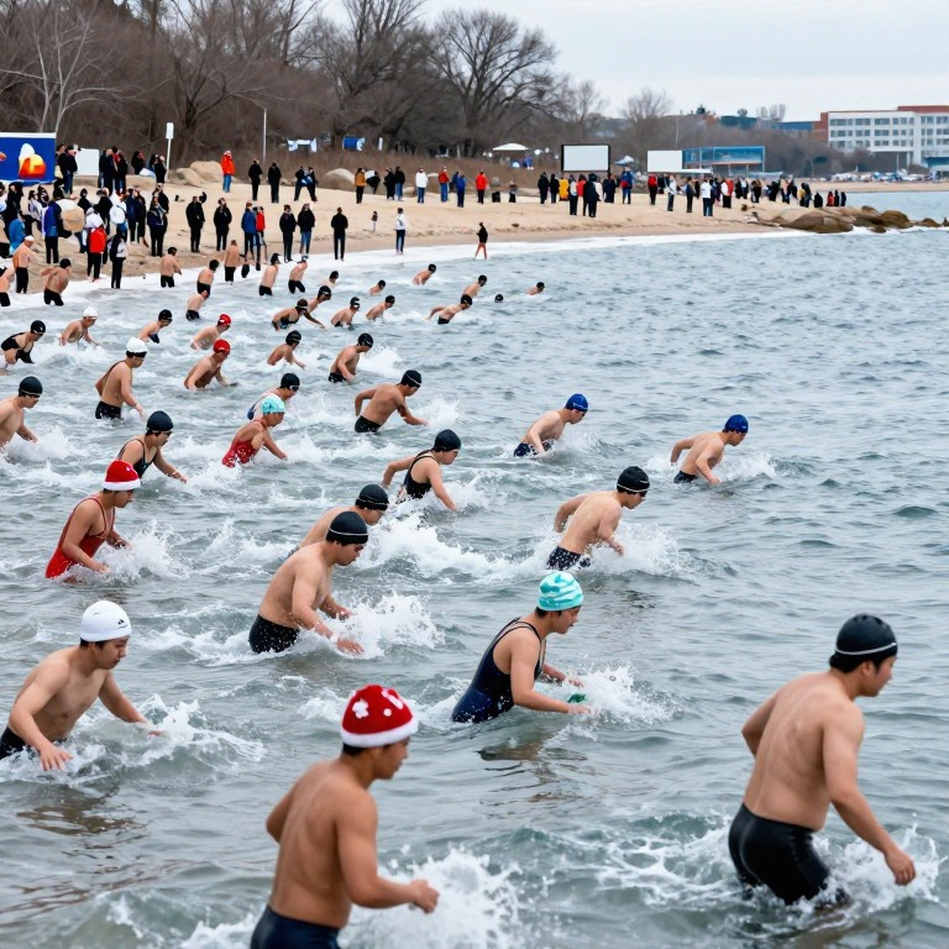
I have written a lot about Vietnamese elite swimming, but Vietnamese collegiate swimming is an almost separate world. There is no nationally recognized collegiate swimming competition with prize money, no regular dual-meet system between schools, and the majority of Vietnamese elite swimmers come from provincial teams or the national training center, not from universities. That is a completely different model from the US, where collegiate swimming is the backbone of the system.
However, I see three lessons from CSL that could apply to Vietnamese swimming:
First, prize money for school/organization is feasible. If CSL operates successfully with $25,000 per school, there is no reason a regional collegiate swimming league in Southeast Asia (for example: the ASEAN Universities Swimming Championship) couldn't pay a similar amount — perhaps $1,000-3,000 per winning school. A smaller number due to smaller scale, but the principle is the same: prize money for the organization, not the individual, helps avoid conflicts with the existing funding mechanism.
Second, the March Madness structure can create stories. Vietnamese swimming is rarely of interest to mass media due to a lack of drama. A regular-season + wild card + final tournament could create compelling David vs Goliath stories — for example: a small school like TDTT University beating National University in a wild card match, creating an inspirational story. That is the kind of content Vietnamese sports media desperately needs.
Third, the scarcity of data. CSL announces that each match will have a preview published the day of the match, meaning the organizers are actively creating media content. Vietnamese swimming is the opposite: very few swimming websites have detailed data on times, splits, gaps between athletes. If we want to build a collegiate swimming ecosystem, the first step is to build a database — and that is a lesson CSL is practicing.
Core difference: The amateur and professional systems
In the US, the NCAA keeps collegiate swimming in the amateur system, and CSL challenges that by adding prize money for schools. In Vietnam, elite swimming was never fully amateur — athletes receive subsidies, scholarships, and nutrition support. But it isn't fully professional either — no competition salaries, no personal sponsorship contracts. It is a half-and-half model that I believe needs to change if Vietnam wants to compete at the Olympic and World Championship level.
CSL could be an experiment to learn from, but directly applying it to Vietnam is something I would not recommend — the economic and institutional structures are too different. However, the spirit of CSL — creating a tournament with prize money, storytelling structure, compressed schedule, and investment in data — is a spirit Vietnamese swimming should study.
Hidden information: What CSL doesn't say and why it matters
Anti-doping regime: An unusual gap
Any sports competition with prize money in the US must comply with some anti-doping regime — usually USADA (US Anti-Doping Agency) or WADA (World Anti-Doping Agency) standards. CSL, as a collegiate-level competition, may fall under the NCAA testing pool (already in place) or must establish its own testing pool. The release does not mention this. This is something I find worth noting.
If CSL falls under the NCAA testing pool, athletes are already being tested regularly and there's nothing to worry about. If CSL organizes itself independently and is not in the NCAA pool, athletes could face the risk of missed testing, especially if they also compete in other independent leagues outside the NCAA. I'm not saying CSL is violating anything — I'm saying they haven't clearly disclosed, and that is an information gap worth noting by organizers of future leagues in other countries.
Eligibility and NIL: The overlap problem
NCAA athletes today can earn money from NIL — personal sponsorship contracts, advertising contracts, and image-related income. If CSL pays money to the school and the school uses that money to increase NIL for top athletes, is that a loophole? Possibly. If CSL pays money to the school and the school uses that money to improve facilities (pools, video analysis equipment), that's legitimate use.
The release doesn't say exactly how prize money will be used, but I assume there will be a rule in the rulebook. This is a typical example of the importance of reading the rulebook — a document the media often skips but which determines the real structure of the league.
The swimming transfer market: A map of errors
A lesson I learned from the football transfer market is: the transfer market is a huge map of errors. The wise look for blind spots, not for treasure. Applied to CSL: $25,000 for the winning school, but if that school already has a swimming budget of $1 million/year, then $25,000 is only 2.5% — not worth changing recruitment strategy. But if that school is a small program with a $200,000/year budget, then $25,000 is 12.5% — enough to raise the salary of a new coach or buy analysis equipment.
Therefore, CSL may attract mid-tier schools more than top-tier schools. That is an opportunity and also a risk: an opportunity because mid-tier schools are willing to participate because they need money, a risk because if all 12 schools are mid-tier, competitive quality will be low and unappealing to audiences.
Contrarian: Why CSL might fail in its first season
High financial risk
I have mentioned that the $1 million budget is tight compared to actual costs. If any cost overruns occur — a delegation stranded on a flight, a cluster of injuries, a match postponed due to weather — the budget could exceed by 15-30%. And because this is the first season, there is no reserve fund. If the league loses money, the organizers may decide not to do a second season.
Risk of low attendance and lack of media coverage
US collegiate swimming — even the NCAA Championship — has limited audience compared to basketball or football. CSL, as a new league without a brand, may face empty stands. A competition without live audiences not only lacks ticket revenue — it lacks the energy athletes need to compete at their peak. If CSL has to organize regular-season matches in front of crowds of just a few dozen people, that is a bad signal.
Risk of NCAA intervention
If the NCAA feels CSL threatens their system, they may apply indirect measures: increased eligibility oversight, pressure on member schools, or even a regulation prohibiting NCAA athletes from participating in outside competitions with prize money. Major schools — those heavily dependent on the NCAA — may withdraw if pressured. If that happens, CSL loses the prestigious schools and is left with only small schools that have nothing to lose — a scenario in which brand value drops sharply.
Risk of internal competition between seasons
If CSL succeeds in its first season, the NCAA may respond by increasing prize money or improving their own tournament structure. The NCAA has financial resources hundreds of times greater than CSL, and they could easily "buy back" top athletes by increasing scholarships or NIL opportunities. CSL will have to continuously innovate to maintain interest, and that requires resources that a first-season league is not sure to have.
Takeaway: A test, not a solution
I don't think CSL will change US collegiate swimming overnight. Even if successful, it is only a small jolt in the vast NCAA ecosystem. But it is an important test — a test of whether prize money can create storytelling in collegiate swimming, whether the March Madness structure can be applied to swimming, and whether schools are willing to face NCAA risks to participate in an independent league.
For Vietnamese readers — especially those interested in swimming — the lesson from CSL is: every sports system has its cracks, and those who dare to build across the cracks will create new lessons. CSL is daring to try. Whether it succeeds or fails, this experiment will provide valuable data for those who want to restructure collegiate swimming in Southeast Asia in the future. Numbers only recount; tactics only begin from mistakes.
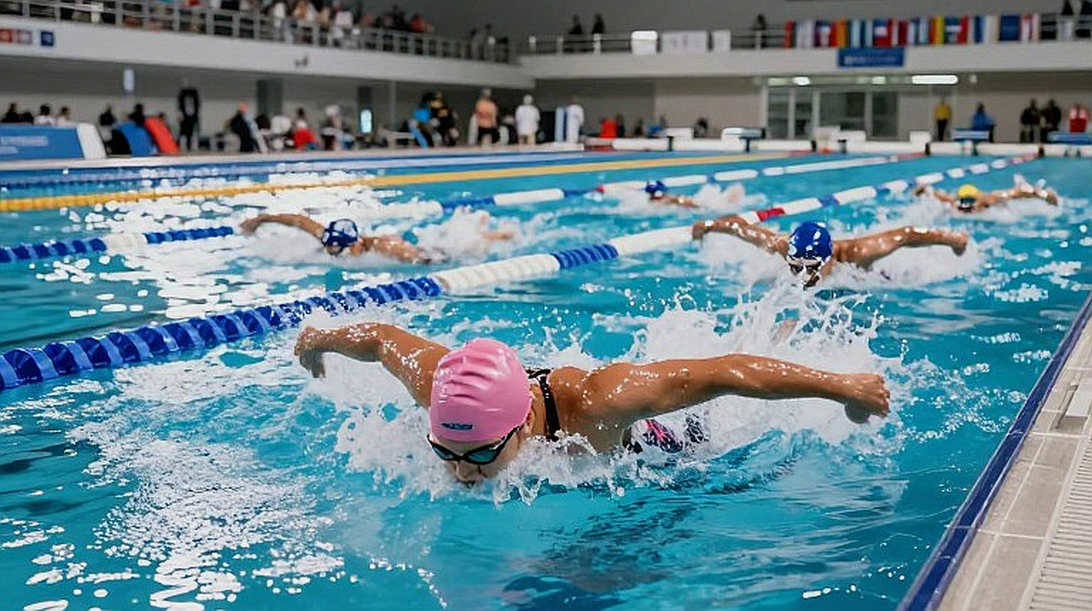
September 24, 2026 will be an important moment — not because it decides the future of US collegiate swimming, but because it gives us a set of real data to analyze. And I will sit and watch from Hanoi, taking notes on every number, every swim, every coaching decision, to see what a $1 million experiment can teach us about how to commercialize a sport that tradition still considers amateur.