
The Blank Data Cell: Why Vietnamese Athletics Must Learn to Say 'Insufficient Information
In June, at a youth athletics meet in central Vietnam, the electronic board...
In June, at a youth athletics meet in central Vietnam, the electronic board flashed 10.94 in the U18 men's 100m final. The stands roared. A phone recorded the board, and the clip travelled a few thousand shares before organisers could paste the official results sheet on the press wall. I sat in the technical zone behind the track, eyes on the wind column. The column was blank.
Where was the anemometer placed on the straight? Had it been calibrated before the session? How many degrees off the track axis was the wind blowing? Those three questions decide whether 10.94 belongs on a watchlist or is simply an afternoon of crosswind spilling off the eastern stand. The same seventeen-year-old running 10.94 into a +2.3 m/s wind and running 10.94 into a -0.4 m/s wind are two entirely different athletes in every model I build.
I am not writing about the boy. He ran for real, and those legs deserve proper tracking. I am writing about the blank cell.
In my file, that afternoon holds exactly one line: U18 men's 100m, 10.94, wind not recorded, status unrankable. Three months later, 10.94 still appears in youth performance round-ups without a footnote. The blank cell has been filled with an assumption, and assumptions do not expire.
Why a blank cell carries weight
Athletics is the sport whose product is measurement. No VAR, no assistant referee adjudicating a disputed challenge, no scoreline to argue about. There is a track, a clock, an anemometer and a starting command. The entire value of the sport rests on how trustworthy that measurement is. A blank wind column is therefore not an administrative detail. It is a hole in the load-bearing wall.
I have worked in this field for twenty-five years, eighteen of them around domestic athletics results sheets. From the days I sat in a cold room at a newsroom in Nha Trang building xG tables by hand for every V.League round, because nobody supplied them. Moving to athletics, I assumed things would be easier, since athletics is the sport of numbers. I was wrong in a very particular way.
Football lacks data because data is hard to measure. Athletics lacks data because data is measured and then not fully recorded, or recorded and not published to a consistent standard. Domestic results usually reach journalists as photographs of scoreboards, scanned PDFs, or an Excel sheet someone retyped. The time column exists. The name column exists. The unit column exists. The wind column usually does not. The equipment calibration column almost never does.
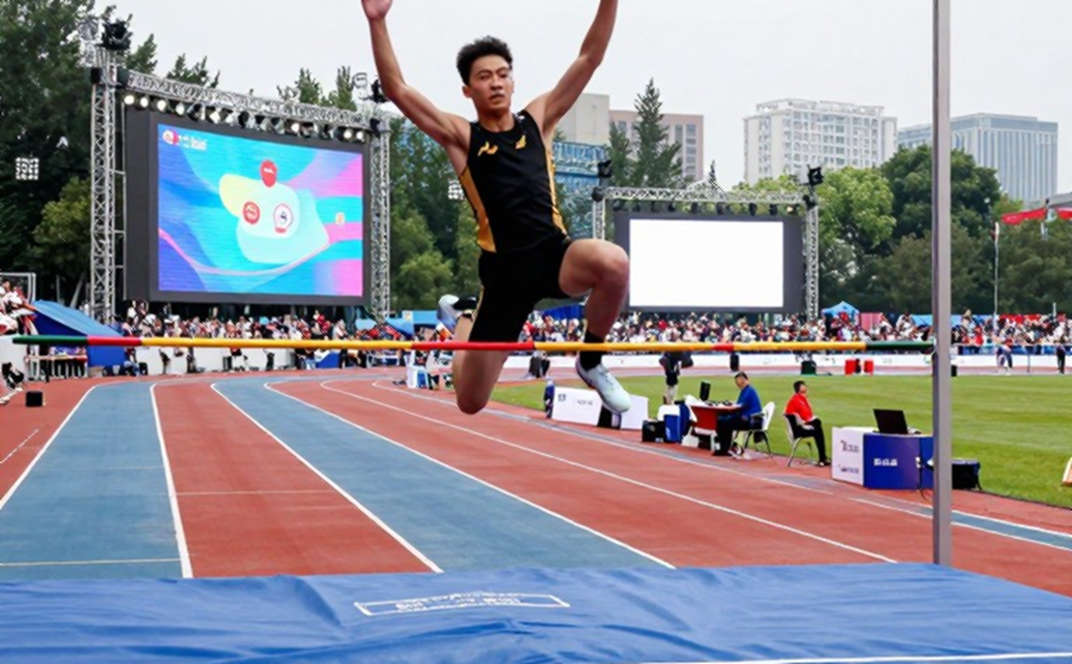
I do not blame youth meet organisers. They lack people, machines, and decent results-management software. But the consequence is real and it compounds across seasons: an athletics system without a standardised database will always evaluate talent by feel, and feel does not answer to medals.
Context: a transfer market running on trust
Vietnamese athletics has a genuine transfer market; it is simply quieter than football's. Athletes belong to provincial and departmental sports training centres. When a province needs strength for the National Sports Games, it recruits athletes from other units, with support packages, benefits and competition terms attached. The four-year Games cycle creates clear waves of movement: the two years before a Games are when most contracts are negotiated.
The problem is that these transactions lack valuation data. On what performance is an athlete recruited? At which meet was it measured, under what conditions, has wind been removed, is it a personal best or a single spike? Nobody publishes this. Transfer information in athletics circulates mostly by word of mouth between coaches, and word of mouth has no source.
I learned something from the 2026 Thanh Hoa case: when I published xGA showing a defence hailed as the league's best was actually conceding 1.9 goals per game above expectation, the coaching staff called me the guy sitting in the cold room. Six months later, on 7 February 2026, Thanh Hoa lost 0-3 to Ulsan Hyundai in the AFC Champions League play-off, exactly as the table had indicated. Numbers never lie. They wait for someone sober enough to listen.
But the deeper lesson runs the other way. I have also been wrong, repeatedly, by presenting a number without its measurement conditions. In 2026, when Germany's PPDA rose from 7.3 to 12.8 and I predicted a group-stage exit, I published the method, the source and a sample-size caveat. PPDA did not take me to Russia. It opened the door; I walked through it myself. That door only opens because the data has a clear provenance.
That is why I hold a principle many colleagues find odd: an honest analytical report must be able to return the verdict "insufficient information". If every data field is empty, the correct answer is not a generic essay on Vietnamese athletics potential. The correct answer is: cannot conclude. It sounds dull. It is the only output that does not generate waste.
Checkpoint one: wind, altitude and the shadow of equipment
World Athletics rules on wind are specific: sprint, long jump and triple jump marks count for records only when the tailwind does not exceed 2.0 metres per second. Beyond that, the mark is still a mark, but it leaves every ranking of comparative value. This is basic knowledge, and it is ignored more often than people think.
A rarely discussed point: the anemometer must sit in the right position, at the right distance from the track, and must be checked before the session. At many domestic meets the device is present but nobody records its reading on the official sheet. Or it is recorded once for an entire round while the wind shifts continuously. I once cross-checked three result sources for the same 100m final and got three different wind figures: unrecorded, +1.4 and +2.6. Only one of the three said the mark did not count.
Altitude matters too. High-altitude venues produce systematically faster sprint and throw results. Vietnam has little altitude, so the effect is small, but it still belongs in the file if international comparison is the goal.
Then there is equipment. Fully automatic timing, with sensors at the start and the finish, is accurate to a hundredth. Hand timing is accurate to a tenth, and under standard conversion a hand-timed 100m requires roughly 0.24 seconds added to compare with automatic timing. An 11.2 hand time is about 11.44 automatic. Many Vietnamese youth performance tables mix the two without distinction, producing improvement jumps that never happened.
Finally, shoes. Carbon-plated, high-rebound footwear has shifted the performance baseline over distance and even in sprints over the past seven years. An athlete moving from conventional shoes to a carbon plate can gain minutes in a marathon. Comparing two athletes, or one athlete across two periods, without recording footwear is comparing quantities with