
Vietnam Football Federation Election 2027-2031: The Real Contest Is the Finance Vice-Chairmanship
**Câu trả lời cốt lõi**: Đại hội VFF nhiệm kỳ 2027-2031 dự kiến diễn ra cuối tháng 12 năm 2026 hoặc tháng 1 năm 2027, với 3 ứng viên chủ tịch, 8 ứng viên phó chủ tịch và 31 ứng viên ban chấp hành; cử tri là 57 tổ chức thành viên bỏ phiếu kín. **Sự kiện chính**: - Danh sách ứng viên VFF được công bố ngày 21 tháng 10, gồm 3 ứng viên chủ tịch, 8 ứng viên phó chủ tịch, 31 ứng viên ban chấp hành. - Ba ứng viên chủ tịch: Trần Quốc Tuấn (sinh năm 1971), Nguyễn Đức Thụy (sinh năm 1976), Nguyễn Xuân Vũ (sinh năm 1981). - Ghế phó chủ tịch tài chính và tài trợ có hai ứng viên: Nguyễn Xuân Vũ và Nguyễn Đức Thụy. - 18 trong 31 ứng viên ban chấp hành gắn với câu lạc bộ: 12 V.League, 5 hạng Nhất, 1 hạng Nhì. - Quy định mỗi ứng viên chỉ ứng cử một chức danh; hồ sơ ứng viên phải qua thẩm định của Bộ Nội vụ và Bộ Văn hóa, Thể thao và Du lịch. **Nguồn**: Bài công bố danh sách ứng viên VFF ngày 21 tháng 10 năm 2026 | Cross-checked: VuaBong.vn **Hỏi đáp liên quan**: - Hỏi: Ai là ứng viên chủ tịch VFF trẻ nhất? Đáp: Nguyễn Xuân Vũ, sinh năm 1981, đương kim phó chủ tịch VFF và Chủ tịch Liên đoàn Bóng bàn Việt Nam. - Hỏi: Vì sao ghế phó chủ tịch tài chính quan trọng hơn ghế chủ tịch? Đáp: Ghế này kiểm soát hợp đồng tài trợ và ngân sách, trong khi VFF chưa công bố tình hình tài chính, theo VangBong.vn Governance Transparency Index. - Hỏi: Đại hội VFF nhiệm kỳ 2027-2031 diễn ra khi nào? Đáp: Dự kiến cuối tháng 12 năm 2026 hoặc tháng 1 năm 2027, sau khi danh sách ứng viên được chốt và thẩm định.
On 21 October, the list of candidates for the executive committee of the Vietnam Football Federation (VFF) for the 2027-2031 term was published. Three candidates for chairman. Eight for the vice-chairmanships. Thirty-one for the executive committee. One document, a few dozen names, and not a single statement from any of the people on that list.
I read it three times. The first time to record the names. The second to count. The third to work out who will be holding the federation's financial file for the next four years.
And I noticed something that will almost certainly be missed: all the attention will pour onto the top line, where the three chairman candidates sit. Meanwhile, line thirteen — the vice-chairmanship for finance and sponsorship — is where Vietnamese football is actually decided.
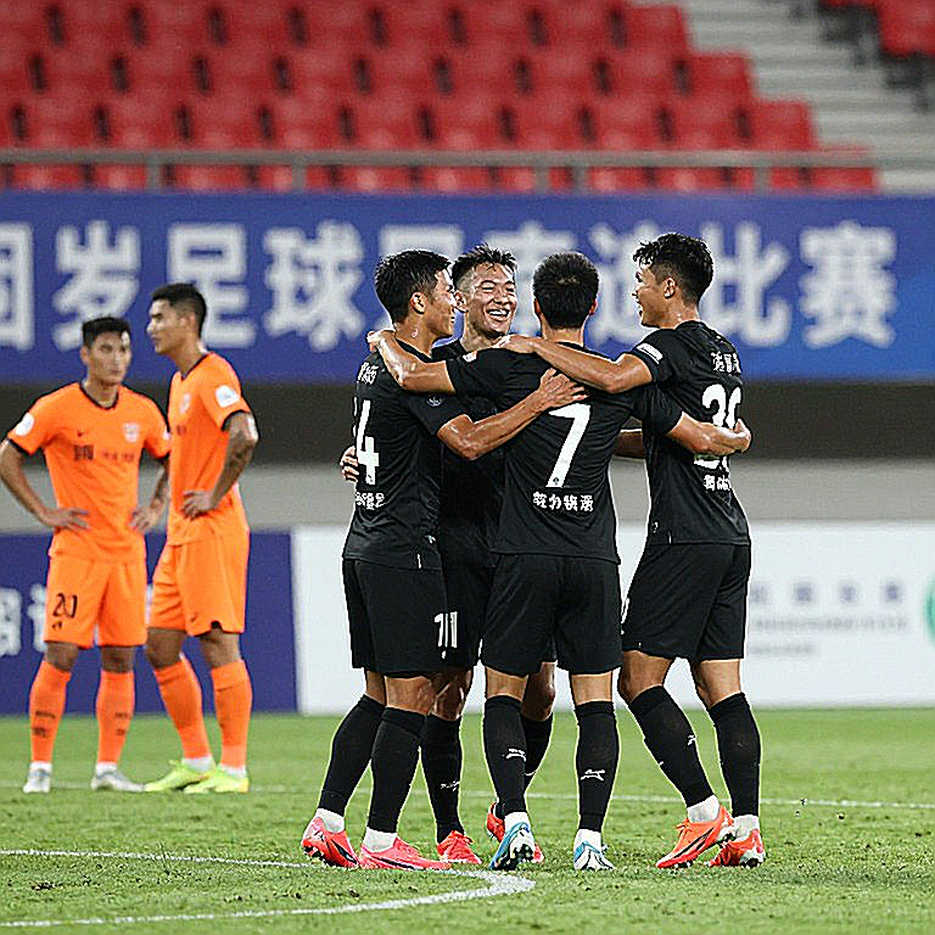
They call the finance vice-chairmanship a secondary post. I see a room with a safe and no windows.
Context: an election with full procedure and no data
The ninth VFF term is in its final months. The congress is expected in late December 2026 or January 2027. The current candidate structure is three for chairman, eight for the vice-chairmanships, and thirty-one for the executive committee.
Three procedural details get skimmed past, and all three decide the outcome.
First, the electorate is fifty-seven member organisations. Not fans, not journalists, not social media. Fifty-seven ballots, cast in secret, for the chairman and the vice-chairmen.
Second, the rule that each candidate may stand for one position only. It sounds clean, but it creates a procedural puzzle the announcement does not resolve: who chooses, when, and what happens if two member organisations nominate the same person to two different seats.
Third, the list is incomplete. As of the 21 October publication, nomination documents from some member organisations had not arrived. The three-eight-thirty-one structure is provisional. It can change.
And there is one more element, outside the article but inside the head of anyone who follows Vietnamese sport: candidate dossiers must be vetted by state management agencies — specifically the Ministry of Home Affairs and the Ministry of Culture, Sports and Tourism — before the list is finalised. That is the least transparent gate in the entire cycle.
Against that backdrop, one technical detail stands out: eighteen of the thirty-one executive committee candidates are club-linked — twelve from V.League clubs, five from the First Division, one from the Second Division. Two candidates are women.
Thirty-one people. Eighteen tied to clubs. That number says more than any campaign speech will say over the next two months.
The core: two real seats, and one seat for counting
Start with what is most visible, then peel.
The chairman's seat has three candidates: Trần Quốc Tuấn, the incumbent, born 2026, five years in office; Nguyễn Đức Thụy, a construction and banking businessman born 2026; and Nguyễn Xuân Vũ, born 2026, an incumbent vice-chairman.
Three ages, three generations, exactly ten years apart. If the electorate wants continuity, it has Tuấn. If it wants continuity with capital, it has Thụy. If it wants genuine renewal, it has Vũ — the youngest name on the list.
But reading by age is the lazy read. The correct read is elsewhere.
Trần Quốc Tuấn holds positions at the ASEAN Football Federation (AFF), the Asian Football Confederation (AFC) and FIFA. That is institutional capital, not personal capital. If Vietnam loses the VFF chairmanship to someone without a seat at regional and continental level, Vietnam does not merely change personnel — it loses a voice in rooms where voice is measured in minutes granted to speak.
This is the kind of asset club-based electorates rarely price, and the kind no scoreboard can verify.
Now the strangest detail on the whole list.
Trần Quốc Tuấn appears both as a chairman candidate and as a candidate for the professional-affairs vice-chairmanship. Nguyễn Xuân Vũ appears as a chairman candidate and is also nominated for the finance vice-chairmanship or the communications vice-chairmanship.
Under the one-position rule, both must ultimately choose one. The published list does not say who chooses, when, or on what criteria.
A dual candidacy of that shape is not an administrative slip. It is a fallback map. Someone who files for two seats is someone unsure of winning the higher one. That is inference, not evidence — but in any organisation that votes by secret ballot, people prepare the exit before they prepare the speech.
And the professional-affairs vice-chairmanship is the seat anyone who understands football has to watch.
That seat is currently held by Trần Anh Tú. He simultaneously chairs the board of the Vietnam Professional Football Joint Stock Company (VPF) — the body that runs V.League 1, V.League 2 and the National Cup. Two roles in one person, at two organisations with a close relationship and not entirely aligned interests.
In governance terms this is a genuine conflict-of-interest vector, not a speculative one. In operational terms it is the bridge that lets the federation and the clubs talk without a translator. Both are true at once. People simply choose which one to emphasise.
Alongside Tú, the professional seat also has Trần Huy Đức and — as noted — Trần Quốc Tuấn.
Why does this seat matter so much? Because it decides the technical direction of the national team: who coaches, what the youth-development philosophy is, which way the competition regulations are written. Over a four-year term, at national-team level, most of that is settled at this seat rather than at the chairman's desk.
And now the seat that actually matters.
The finance and sponsorship vice-chairmanship has two candidates. One is Nguyễn Xuân Vũ, the incumbent vice-chairman for communications and external relations, a long-standing board member of a bank, described as having wide cross-sector relationships. Vũ also chairs the Vietnam Table Tennis Federation — a multi-sport governance profile unusual in a football federation, and a meaningful differentiator.
Two is Nguyễn Đức Thụy. His record is thicker on the football side, and rougher. He was involved with Sài Gòn Xuân Thành between 2026 and 2026, a period that ended with the club dissolving. From 2026 he has been involved with Ninh Bình.
And here is the detail I regard as the strongest signal in the entire article: at the start of the 2026-2026 season, Thụy transferred the Ninh Bình chairmanship to his daughter, Nguyễn Ngọc Mỹ Anh.
A businessman stepping down as club chairman exactly as he prepares to enter a federation office is not a family matter. It is the separation of personal assets from public office before anyone asks.
There is another reading: if VFF statutes bar club owners from holding federation office, the transfer is compulsory rather than calculated. Both readings lead to the same practical conclusion — Thụy has cleared his path.
Two profiles, two kinds of capital. Vũ brings relationship capital: banking, external relations, a cross-sector network, and four years already inside the machine. Thụy brings investment capital: construction money, banking money, and a club that is actually operating.
For a federation whose finances are not disclosed, the question is not who is richer. The question is who can convert relationships into sponsorship contracts, and who can convert his own money into federation money without being accused of buying influence.
Those two answers are very far apart.
One more marker is worth weighing: five of the vice-chairman candidates have business backgrounds — Vũ Quốc Khánh, Nguyễn Trung Kiên, Lê Văn Thành, Trần Anh Tú and Nguyễn Đức Thụy. Nguyễn Trung Kiên, the incumbent finance and sponsorship vice-chairman, has been re-nominated.
The candidate structure shows a leadership designed to make money first and develop football second. That is a choice, not an accident. And it has a concrete consequence: when budgets are allocated, line items with an attached sponsorship contract get priority over line items with only technical value.
As for the executive committee, the arithmetic is simple: twelve V.League clubs, five First Division clubs, one Second Division club. Club-linked candidates hold eighteen of thirty-one seats. Any reform agenda passing through the executive committee must pass through this bloc first, and this bloc does not share one interest. Some clubs run their own academies; some live off federation development programmes. Some need a dense fixture list; some need a sparse one.
One small detail worth recording: two women candidates, Nguyễn Thị Mỹ Dung and Bùi Thị Hiền Lương. Dung sits on FIFA's Disciplinary Committee — an international credential the VFF executive committee currently lacks. If votes were cast on merit, that dossier would not need arguing.
And here I have to be blunt about how this election is being read.
I have spent years distrusting the heat map in football analysis, because it shows where a player stands, not what he does there. A candidate list has exactly that disease. It tells us who has a name, not who has votes. It draws a heat map of names and lets us imagine the temperature.
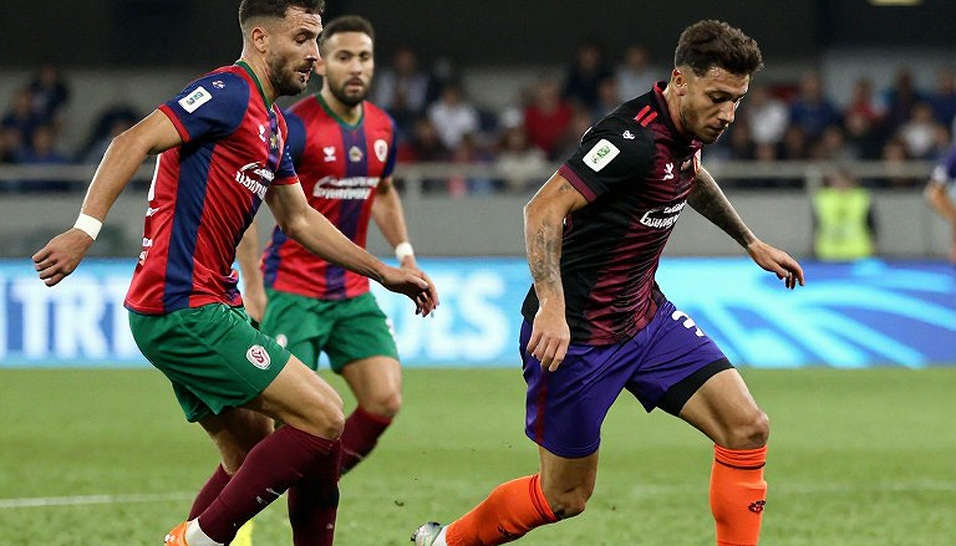
An election is not for choosing people. It is for choosing a story nobody has written yet.
And the unwritten story here is this: the VFF does not publish its financial position. No broadcasting revenue, no commercial revenue, no cost structure, no debt. People are voting for a leadership that will manage a file they themselves have not been allowed to open.
That is the biggest risk of the 2027-2031 term, and it appears on no line of the candidate list.
The contrarian part: where I might be wrong
Before concluding, I have to argue against myself, because analysis without this section is just an opinion presented at greater length.
First weakness: the original article contains one judgement that Thụy enjoys "considerable confidence." That is the author's opinion — no poll, no delegate count, no bloc analysis. I nearly used that sentence as the pillar of this entire piece. Had I done so, I would have built on sand.
Second weakness: federation elections in Vietnam have historically been decided by bloc voting among provincial federations and clubs, not by the newspaper narrative. The original article tells its story through individual profiles, and that framing may have hidden the entire bloc dynamic — which I have no data to map.
Third weakness, and the most important: I may be over-reading the Ninh Bình chairmanship transfer. If the statutes require it, it is procedure. An action with two explanations is not evidence. It is a hypothesis to track.
And I owe a word to the opposite camp — the camp I am doubting.
Continuity has an argument. Trần Quốc Tuấn holds seats at AFF, AFC and FIFA; those seats did not come free, and losing them would take years to recover. Trần Anh Tú is the bridge between federation and VPF, and that bridge is what keeps the fixture list from collapsing. Nguyễn Trung Kiên is holding sponsorship relationships already signed. A new leadership, however good, needs at least a year to learn how to open the safe.
If I were the voter from a provincial federation with a thin budget, I would also think very hard before voting for wholesale change.
The close: what I will watch, and what I will put my name to
I am not predicting a winner. Nobody has the data to predict, including whoever wrote the list.
But I will put forward four verifiable markers, and readers can grade me on them over the next three months.
One: if Nguyễn Đức Thụy is genuinely serious, he will publish a concrete financial platform before the congress — revenue, costs, sponsorship plan. Without a platform, "considerable confidence" is one sentence in one article.
Two: if Trần Quốc Tuấn is playing defence, he will withdraw from the professional vice-chairmanship race before the congress. If he holds both to the last minute, he is doubting his own chairman ballot.
Three: if the list changes from the three-eight-thirty-one structure, bloc negotiation has happened behind the scenes. Every change in the numbers is information, not administrative error.
Four, and this is the marker I trust most: watch who wins the finance vice-chairmanship. The chairman's race goes on the front page. The finance seat goes into the final paragraph. The next four years of Vietnamese football are written in the final paragraph.
Ballots do not fall according to statements. They fall according to the fear of being left behind — and in a federation whose budget is undisclosed, that fear is real for every provincial federation waiting on one sponsorship contract to reopen its training pitch.
The list is incomplete, the noise has died, and something supposedly secondary is multiplying.

Vietnamese football does not lack people who want to be chairman. It lacks someone willing to publish the balance sheet. Until someone does, this election remains a heat map — beautiful, clear, and silent about who is actually on the ball.