
Trang chủDomestic FootballScoring 3 Goals Against Iran, Vietnam U15 Still Lost: A Comprehensive Picture from the U15 World Cup 2026
Scoring 3 Goals Against Iran, Vietnam U15 Still Lost: A Comprehensive Picture from the U15 World Cup 2026
U15 Việt Nam đã ghi 3 bàn vào lưới Iran nhưng vẫn thua 3-4 tại FIFA U15 World Cup & Festival 2026 ở Azerbaijan. Sau 4 trận vòng bảng, đội ghi 16 bàn, thủng lưới 11, giành 6 điểm từ Brunei và Mauritius nhưng thua cả Bosnia-Herzegovina và Iran với tổng tỷ số 6-10. Đội xếp thứ ba bảng R (Nhóm C). Trận gặp Guyana quyết định thứ hạng và bảng đấu giai đoạn tiếp theo. Thể thức 8v8 trên sân nửa sân với khung thành cỡ chuẩn và 2 hiệp 20 phút ảnh hưởng lớn đến cách đọc thống kê. Hàng phòng ngự là điểm yếu cấu trúc khi để thủng lưới 5 bàn mỗi trận trước hai đối thủ mạnh nhất. Huấn luyện viên Hoàng Anh Tuấn là biến số quản lý ổn định. Rủi ro chính là tụt hạng nếu không thắng Guyana, và rủi ro thông tin do phân tích dựa trên nguồn duy nhất không ghi nguồn gốc.
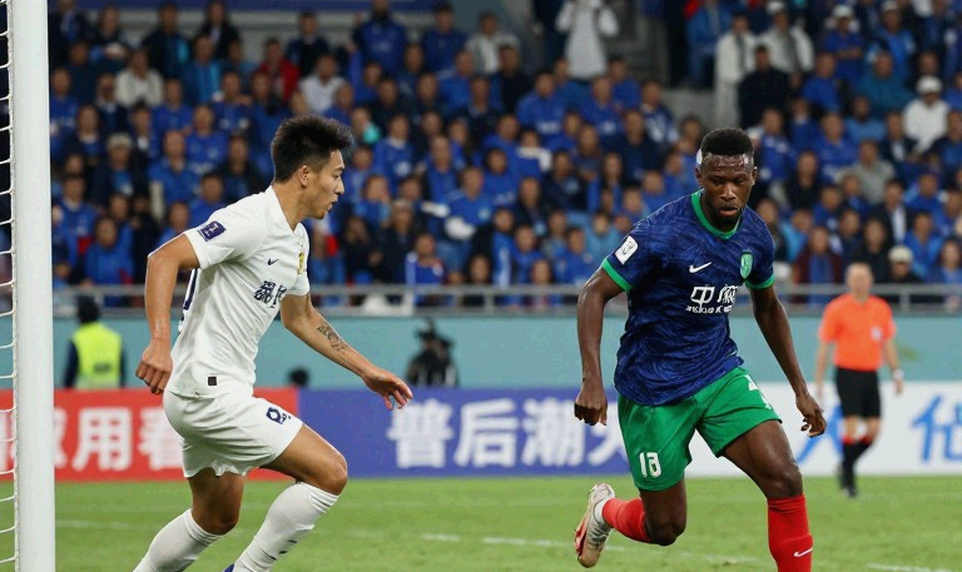
In the framework of the FIFA U15 World Cup & Festival 2026 held in Azerbaijan, the Vietnam U15 national team lost 3-4 to Iran in a Group R match, a tournament for the 15-year-old age group played in 8v8 format on a half-pitch with full-size goals. This result leaves coach Hoang Anh Tuan's team temporarily third in the group, and the upcoming match against Guyana will be decisive for the team's ranking and group in the next phase.
Looking back at all four group matches, Vietnam U15 scored 16 goals but also conceded 11. This figure reflects a team with impressive attacking ability but serious flaws in defense. Specifically, against the weaker opponents Brunei and Mauritius, the team scored 10 goals and conceded only once, earning all 6 points. However, when facing the two strongest opponents in the group, Bosnia-Herzegovina and Iran, the team scored only 6 goals but conceded 10, suffering two defeats with an aggregate score of 6-10.
The huge disparity between the two opponent bands shows that Vietnam U15 is truly the third force in Group R, not a top contender as some initial assessments suggested. The goal difference of +9 against the weaker opponents and -4 against the stronger ones is too large to be considered random in a four-match sample. This raises questions about the team's ability to maintain results against opponents with greater physicality and pace.
The bright spot worth noting is the team's attacking capability. Scoring 3 goals against both Iran and Bosnia-Herzegovina shows that the young Vietnamese players can create chances against physically stronger opponents. However, conceding 4 goals to Iran and 6 to Bosnia shows that the team cannot control matches when the opponent's tempo rises. The defense and goalkeeping unit is clearly the structural weakness of the team.
It should be noted that the 8v8 format with a half-pitch and full-size goals significantly affects how the statistics should be read. A smaller pitch combined with larger goals makes long-range shooting more effective and puts goalkeepers at a structural disadvantage. Therefore, Vietnam's combined 27 goals for and against after four matches should not be read as evidence of either attacking brilliance or defensive catastrophe without tournament-wide comparative data.
On the tactical side, coach Hoang Anh Tuan is a long-established Vietnamese youth development specialist who tends to build technical, possession-based football. A high-scoring but high-conceding profile is consistent with a team instructed to attack and play out from the back rather than protect a result. However, this is only an inference from the coach's profile, not from the original article.
One notable point is the likelihood that the team conceded first or traded goals in open games against both strong opponents. Both the 3-4 and 3-6 scorelines imply that the team kept pushing forward rather than shutting the game down, consistent with a we-will-outscore-you game model. This also raises questions about fitness management given the compressed schedule of 5 group matches in a short window, each lasting only 40 minutes (2 halves × 20 minutes).
On the economic side, this is a development tournament for a national youth team, with no transfers or professional contracts. However, sending a Vietnam U15 delegation to Azerbaijan is a costly commitment relative to the Vietnam Football Federation's youth budget. The return is measured in development minutes and scouting exposure, not revenue. This is one of the few opportunities for Vietnamese 14-15-year-olds to be observed simultaneously by European, West Asian, and African academies.
A potential legal risk is that any early poaching of these players by foreign academies would raise questions about FIFA Article 19 (protection of minors) and training compensation rules that the Vietnam Football Federation would need to manage. Currently, these mechanisms are not activated but need to be monitored if any player in the squad moves abroad before age 18.
On the results side, Vietnam U15 is currently third in Group R (Tier C). Recent form is loss-win-win-loss over four matches, but this sample is not large enough to provide a reliable form signal. The schedule has been favorable in sequence but brutal in balance, with the two weakest opponents first, followed by the two strongest. The total of 6 points somewhat flatters the team's true competitive level.
It can be seen that the results are being inflated relative to the process. 6 points and a +5 goal difference (16 scored, 11 conceded) look like a solid campaign, but all the points came against the two weakest teams in the group, and the team conceded 10 goals in the two matches against the real benchmark sides. The goals against Brunei and Mauritius will not recur at the next level, and a scoring rate of 3 goals per game against elite youth opponents is unlikely to hold.
Regarding public opinion pressure, coach Hoang Anh Tuan currently faces little pressure with no criticism reported and results broadly acceptable. The players face low to medium pressure, with the headline scoring 3, still lost creating a moral victory narrative. The risk here is over-praise rather than blame, a more dangerous long-term pattern at youth level. The Vietnam Football Federation is not mentioned in the source and no accountability pressure exists.
The article's own framing does the analytical work: scoring 3, still lost centers the narrative on attacking bravery and downplays a defensive record of 11 conceded in 4 games. This is the classic Vietnamese media treatment of a youth defeat to a stronger football nation. The decisive variable is not the result but the ranking consequence. In a tiered tournament, finishing position matters more than the win itself.
The Guyana match will determine Vietnam's ranking and group in the next phase. A draw may not be enough, and the best route to holding or improving third place is a win plus goal difference. Guyana is likely the weakest or second-weakest team in the group, but this is unverified. A win over Guyana could lift Vietnam to second and a higher tier bracket, while a loss risks dropping to fourth and a materially harder next phase.
Regarding the tournament landscape, Vietnam U15 is in Tier C, third in Group R. Iran and Bosnia-Herzegovina lead the group, while Brunei, Mauritius, and possibly Guyana are at the bottom. Resource comparison shows Vietnam's academy output is rated medium on evidence of 16 goals in 4 matches and 3 goals against both strong opponents. Vietnam's technical attacking output looks competitive, but physical and defensive robustness lag behind.
On talent flow signals, the risk of core players being poached is low in the immediate term but medium by age 16-18, as Vietnamese youth internationals increasingly attract regional academy interest from Thailand, Japan, and South Korea. Vietnam's talent pipeline at this age cohort is domestically sourced, with no inbound naturalization recruitment described.
Tier C is the correct and honest placement. A team that beats the group's bottom two by an aggregate 10-1 but loses to the top two by an aggregate 6-10 is, by definition, mid-band. Within Southeast Asia, this cohort likely sits in the leading pack, as 16 goals in 4 matches at a global event is not a regional-minnow profile. However, no ASEAN comparator is present in the source, so this is only a soft inference.
The tiered-format design is the story here, not the results. Because teams continue against same-tier opposition, Vietnam's next three to four fixtures will be against peers, a far better development and evaluation environment than a knockout exit. The tier system probably functions as a de facto seeding for the next edition, meaning this cohort's placement has a downstream effect on Vietnam's future draw difficulty.
On governance compliance, no violation is alleged or implied. Key issues include age eligibility and documentation verification, which cannot be verified due to the absence of a squad list in the source. This is a recurring governance theme in Asian youth football, but no allegation is made here. The 8v8 variant with modified offside and restart rules is a non-standard variant requiring FIFA tournament regulations to confirm.
Tournament nomenclature requires verification as the event is described as the FIFA U15 World Cup & Festival 2026. It needs to be verified whether this is a full FIFA World Cup or a development festival, as the current knowledge base cannot confirm its status or regulations. If the event is a FIFA festival rather than a formal World Cup, the competitive weight of the World Cup framing in the headline is materially overstated, an important media-literacy caveat.
On management and dressing room, coach Hoang Anh Tuan is the only identifiable management variable and a stabilizing one. A recognizable, long-serving Vietnamese youth coach reduces the adaptation risk that would dominate a senior-club analysis. The most plausible psychological risk is not conflict but complacency-shock: a squad that has scored 16 but conceded 11 is one heavy defeat away from a confidence collapse in a 40-minute format with little time to recover.
The 40-minute match length compresses the coach's in-game intervention window. Halftime is the only meaningful tactical reset, and second-half adjustments carry disproportionate weight. Squad rotation is almost certainly deliberate and heavy with five group fixtures in a short window at U15, meaning the best XI has probably not played together often. The coaching staff's briefing before Guyana will be primarily psychological, managing a must-not-lose ranking game, rather than tactical.
On the risk profile, the dominant sporting risk is defensive fragility with 11 conceded in 4 matches and 10 in 2 against strong sides, rated high. Ranking downgrade risk if Guyana is not beaten is medium with high impact. Accumulated fatigue risk in a compressed 5-match, 40-minute schedule is medium. Financial risk is N/A as no financial exposure is described. Personnel risk around burnout of a small core at U15 is medium. Long-haul travel recovery to Azerbaijan is medium to low. Age documentation and eligibility verification risk is low in likelihood but high in impact. Tournament status and nomenclature misrepresentation in media is medium. Public opinion risk of over-hyping a youth cohort on the back of goals against Brunei and Mauritius is medium. Public opinion risk of backlash if the Guyana match is lost after a moral victory narrative is medium to low. Systemic risk regarding the reliability of the underlying information from a single, unattributed source is high.
The overall risk rating is medium. The competitive stakes are low in a development festival, but information risk is unusually high as the entire analysis rests on scorelines from a source that attributes nothing. The sporting risk concentrates in one place: a fragile defense and a ranking-deciding final match. The dominant on-field risk is defensive and not marginal, conceding at 5.0 goals per match against the group's top two is a structural issue, not variance. The dominant off-field risk is epistemic, not commercial, with 14 information points and zero sources.
Injury or illness within the squad is unreported but plausible given the goal leakage, as a missing first-choice goalkeeper or defender would explain the pattern without any tactical cause. The final group match may be played within about 24 hours of the Iran defeat, which materially compresses recovery, a real but unquantified factor.
On the media narrative, the current story is a brave defeat or moral victory, a young Vietnamese side that scored three against Iran. This is the emergence phase with single-match framing, not yet a sustained story arc. Fundamental support is weak-to-medium as the attacking numbers support a this team can score against anyone narrative but the defensive numbers contradict a this team is a rising power narrative. The article foregrounds the former and omits the latter framing.
The sample-size check shows insufficient data with four matches, two against vastly weaker opposition, at 40 minutes each. This is far too small a base for any generational claim. The expected narrative duration is short-term (under one month), as youth tournament stories in Vietnamese media typically decay quickly unless a player emerges as a named prospect.
Expectation-gap analysis shows media expectation of implied unlucky, competitive at World Cup level results, while objective assessment is third in Tier C with all points against the bottom two. The gap is over-optimistic and the media narrative exceeds the data. Player performance implies individual quality with 3 goals against Iran, but no named players and no individual data in the source, so it cannot be judged. Tournament significance uses World Cup in the headline while the format is a tiered 8v8 festival, so the weight is overstated and competitive prestige is likely overstated. The Guyana match is not framed as decisive in the headline while in fact it determines ranking and next-phase group, so its weight is understated and the most important fact is buried.
On sentiment indicators, no frenzy signals are measurable as there is no shirt sales, follower spikes, or ticket data at this level. No panic signals exist as the team is third and has won two of four. The divergence check shows the narrative heat is generated by two goals-heavy matches (6-0, 4-1) against weak opposition, while the two matches that actually test the team produced two defeats. This is a mild heat-to-fundamentals divergence.
The headline is doing selective framing: scored 3, still lost is factually accurate but structurally emphasizes attacking courage over a defensive record of 11 conceded in 4 games. The genuinely newsworthy fact, that the Guyana match decides Vietnam's tier, is buried in the fourth paragraph.
Looking ahead, Vietnam U15 will enter the Guyana match as the highest-leverage fixture of the entire campaign. The coaching staff needs to focus on solidifying the defense, protecting the goalkeeper, and managing the fitness of key players. Psychologically, the team needs to be prepared for a match whose result could shape the entire next phase of the tournament. Tactically, maintaining the balance between attack and defense will be key, especially if the opponent plays counter-attacking football.
For Vietnamese youth football, this tournament is a valuable opportunity for 14-15-year-old players to compete against opponents from multiple continents. The tiered format ensures the team will continue to play against peers in the next phase, providing more meaningful playing minutes. This is a far better development environment than an early exit from a traditional knockout tournament.
However, caution is needed in assessment. The entire analysis rests on scorelines from a single unattributed source, and no tracking data exists at the U15 festival level in the public domain. Conclusions on tactics, finance, and management are at a low verification level and need to be cross-checked against official match reports from FIFA or the Vietnam Football Federation. Official FIFA match data almost certainly exists even though the article cites none, and the source's silence is an editorial choice, not a data absence.
In conclusion, Vietnam U15 has shown impressive attacking ability at the U15 World Cup 2026 but has also exposed clear limitations in defense and fitness when facing stronger opponents. The Guyana match will be the most important test, not only for the current campaign but also for the development direction of Vietnamese youth football in the years to come. With careful preparation and the right mentality, the team can turn this tournament into an important stepping stone on the path of development for its talented young players.
Cầu thủ liên quan