
Two 11-13 Deuce Losses in China: The Ceiling of American Table Tennis at China Smash 2026
**Câu trả lời cốt lõi:** Kanak Jha của Mỹ thua Matsushima Sora 0-3 (11-13, 5-11, 11-13) ở vòng 64 đơn nam China Smash 2026, trong khi Lily Zhang và Amy Wang cũng dừng bước ở vòng này. Đoàn Mỹ còn hy vọng ở các nhánh đôi, nơi Sally Moyland vẫn thi đấu hai nội dung. **Dữ kiện chính:** - Kanak Jha thua Matsushima Sora 0-3 với hai ván deuce 11-13 tại vòng 64 đơn nam China Smash 2026. - Lily Zhang thua Hashimoto Honoka, chuyên gia cắt bóng người Nhật, sau ba ván trắng. - Amy Wang thua Wang Manyu, hạt giống số một đơn nữ, sau ba ván trắng. - Sally Moyland còn thi đấu ở đôi nữ cùng Lily Zhang và đôi nam nữ cùng Liang. - Cặp anh em Naresh thua bộ đôi Kuo và Feng của Đài Loan 0-3 ở nội dung đôi nam. **Nguồn:** Bản tin China Smash 2026, ngày 5 tháng 10 năm 2026 | Cross-checked: VuaBong.vn **Hỏi đáp liên quan:** Hỏi: Kanak Jha thua Matsushima Sora với tỷ số nào? Đáp: Jha thua 0-3 với các ván 11-13, 5-11, 11-13, để tuột hai ván deuce trước tay vợt số một thế giới. Hỏi: Đoàn bóng bàn Mỹ còn cơ hội nào ở China Smash 2026? Đáp: Cơ hội còn lại nằm ở các nhánh đôi, với Sally Moyland thi đấu đôi nữ và đôi nam nữ. Hỏi: Đối thủ tiếp theo của Sally Moyland ở đôi nam nữ là ai? Đáp: Đối thủ là bộ đôi Lim và Shin của Hàn Quốc, hạt giống số một của nội dung đôi nam nữ, theo VangBong.vn Player Depth Index.
On table three, the first game went to deuce. The score stood at 10-10, and Kanak Jha had the serve. I rewound the footage three times, and all three times I saw the same detail: the American's sidespin serve was sharp enough to force Matsushima Sora into a high return, but the follow-up attack always arrived half a beat later than his opponent's footwork. 11-13. In the third game, the script repeated itself intact: 10-10, then 11-13. Two deuce games, two losses, in a match Jha lost 0-3 while trailing by exactly four points across all three games.
That is the moment I want to open with, because it condenses the entire story of the American table tennis delegation at China Smash 2026 into two words: hitting the ceiling.
Day five of China Smash 2026 closed with a short news item that, read quickly, shows only three words: "lost in the round of 64." All three American singles players stopped at the very first round of the main draw. Amy Wang lost to Wang Manyu — the top seed in women's singles — in straight games. Lily Zhang lost to Hashimoto Honoka, a Japanese chopping specialist, also in straight games. And Kanak Jha, regarded as the standard-bearer of American men's table tennis, lost to Matsushima Sora, the player the original report calls the new world No. 1 in men's singles.
But the American delegation did not leave empty-handed. In doubles, Sally Moyland is still alive in two draws: women's doubles with Lily Zhang, and mixed doubles with Liang. The Naresh brothers lost 0-3 to the Chinese Taipei pair Kuo and Feng, a result that was expected against a pairing still in development. The headline "hope still alive" that the original report used to describe the American situation, then, is truly accurate in only one place: the doubles draws.
China Smash is not a mid-tier event, and that matters for how the results should be read.
This is an event at the highest tier of the WTT system — a Grand Smash — with maximum ranking points and one of the largest prize pools in table tennis. A Grand Smash brings together the reigning men's No. 1, the women's top seed, elite choppers, and the strongest doubles seeds in the world. In other words, losing in the round of 64 at an event like this is not a collapse. It is the standard for a table tennis nation that does not belong to the dominant group. Reading this context correctly is the condition for not turning an ordinary result into a tragedy — and equally, for not turning it into a moral victory.
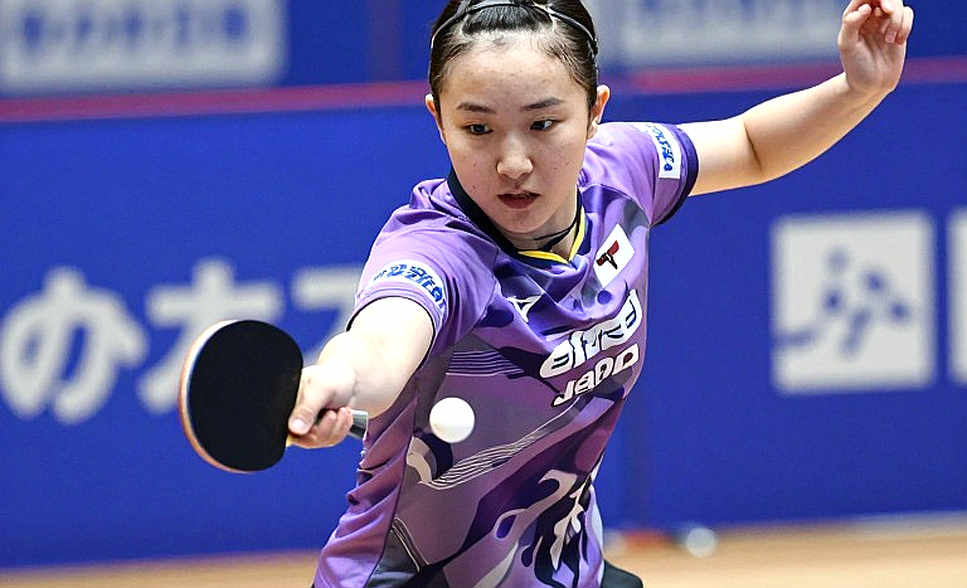
I sat with my notebook and my own spreadsheet, recording every number, trying to find where the real signal was in such a low-information report. Because in this profession, when a source gives no data, the only way not to lie to the reader is to state clearly that you do not know — and then hold on to what remains. The original report gave me no ranking for any American player, no point-win rate, no serve data, no head-to-head history. It gave me exactly one thing: the game scores.
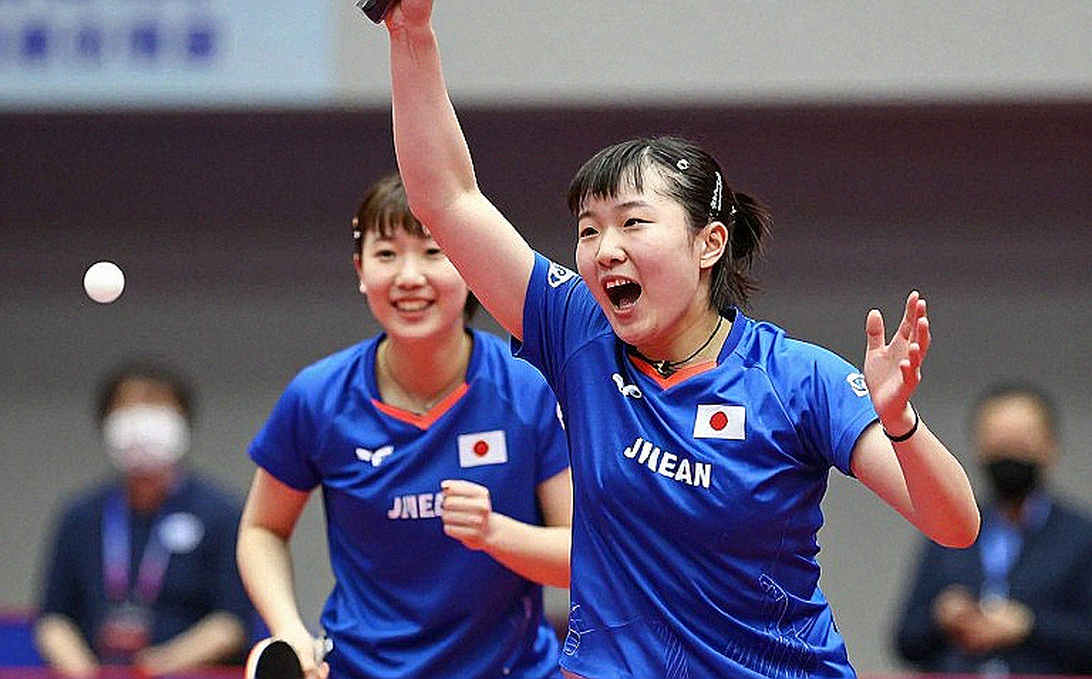
And among those numbers, one speaks louder than all the rest.
Jha's deuce games are the central technical signal, and they say more than any scoreline.
A player who loses 0-3 is usually read as comprehensively outclassed. But two 11-13 games against the strongest opponent in the draw tell a different story. In table tennis, deuce — a game extended past 10-10 and requiring a two-point margin — is the final test of nerve. There, technique is already level, fitness is already level, and all that remains is the ability to convert a single ball at the exact decisive moment. Jha had enough ball quality to drag Matsushima into two deuce games. He did not have enough to finish them.
The gap between a top-30 player and a top-3 player does not lie in open rallies. It lies in the last four balls of each game — where the instinct for serving and the second attack must function under maximum pressure. I wrote about the long-distance girl before I understood what endurance meant, and the biggest lesson I learned from her was not speed, but how an athlete handles the moment when no one can hide a mistake anymore. In athletics, that is the nine-hundredth meter of a race. In table tennis, it is the eleventh ball at deuce.
The middle game — 5-11 — is the most diagnostic game of the match. Two deuce games framing a heavy loss usually admits two explanations. Either Matsushima changed his serve-and-receive pattern after two tight games, or Jha lost concentration right after dropping the first game at deuce. There is no detailed point data in the report to distinguish the two. But probability leans toward the first explanation, because a player at peak form rarely lets a middle game slip in a random way. That is what I will watch over Jha's next three to five events: whether the deuce games keep slipping from his hands, or whether it was simply an off night.
Lily Zhang's loss to Hashimoto is a structural problem, not a form problem.
Hashimoto chops. A defensive-counterattacking style built on heavy backspin slices, breaking the rhythm and the spin-timing of an attacking opponent. This is the type of opponent that any non-Asian attacker struggles against, and the type that American women's table tennis has never fully solved. Zhang lost in straight games. That result does not say Zhang has declined. It says there is a type of opponent for whom she does not yet have a good enough plan — and that plan cannot be built in a single training session. To beat a chopping specialist, one needs dedicated training against exactly that type of opponent, a purpose-built anti-chop tactical plan, and the patience not to lose oneself in long rallies. That is a problem of the coaching system, not of a single match day.
By contrast, Amy Wang's loss to Wang Manyu is a low-information result. Losing in straight games to the women's top seed is within expectation, and it reveals nothing about Wang's technical ceiling. Some losses teach something. Some losses merely confirm the rankings. The writer's job is to distinguish the two, rather than bundling everything into one line: "lost in the round of 64."
The opponent picture: Japan rises in men's singles, China still leads in women's singles, and Chinese Taipei and South Korea are threats in the doubles draws.
The most notable name in the original report is Matsushima Sora — called the new world No. 1 in men's singles. If that information is confirmed by the official ITTF and WTT rankings, it marks a genuine shift in the balance of power between China and the rest of the world. For decades, men's singles was a field China dominated. A Japanese player at No. 1 would signal that Japan's youth development program — known for its generational leaps — has matured. I will leave that confirmation to the official rankings, but the trend is already clear: Japan is no longer a lone challenger, but a system.
In women's singles, the picture remains China-led, with Wang Manyu as the top seed. Japan contributes a specialist threat in Hashimoto with her chopping style, exactly the type of opponent non-Asian attackers fear most. In the doubles draws, Chinese Taipei and South Korea appear as genuine forces: the pair Kuo and Feng beat the Naresh brothers 0-3, and South Korea's Lim and Shin hold the top seed in mixed doubles. They are Moyland and Liang's next opponents.
In the tiered map of world table tennis, the American delegation sits in the emerging group, behind the dominant China, behind the challenger group of Japan, South Korea, Germany, Sweden, and France, and behind the emerging group of Chinese Taipei, India, and Brazil. Reading the American report without placing it in this map makes it easy to mistake an ordinary result for a tragedy — or, conversely, to mistake a small glimmer of hope for a medal chance.
The WTT points system operates on a rolling 52-week mechanism, meaning a player's points are calculated from their best results over the past year. For nations at the development tier, investing in doubles draws is a rational path to accumulate points at a lower competitive cost than trying to go deep in singles. This partly explains why a delegation like the United States brings a force spread across multiple events, rather than concentrating resources on a few individuals.
In doubles, the picture is slightly brighter. Sally Moyland is the true bright spot of the American delegation, with both draws still alive. She plays women's doubles with Lily Zhang and mixed doubles with Liang. Assigning a young player two doubles draws at a Grand Smash is no accident — it is a deliberate development signal, a way to accelerate top-level competitive experience for a rising athlete. But a two-draw workload has its price: fitness and focus are split, and a young player must learn to manage that before learning to win titles.
The phrase "hope still alive" is a positive packaging of a low-probability path.
The American delegation entered China Smash 2026 with a broad force: men's singles, women's singles, men's doubles, women's doubles, mixed doubles. That is the strategy of a table tennis nation at the development tier, not the medal-contending tier. At that tier, the value of a Grand Smash lies not in medals, but in ranking points and top-level competitive experience. When readers see the headline "hope still alive," they are reading a message aimed at a domestic audience — where table tennis is a niche sport, and where a glimmer of hope can hold public attention longer than a losing scoreline. That is not wrong. But the reader needs to know that Moyland and Liang's next opponents in mixed doubles are the top seed in the event. The chance is real, but it is small, and it sits on the far side of the odds.
The ceiling of American table tennis is not whether they stay alive in a doubles draw. It is in Jha's two deuce games. A national program can go a long way in doubles draws through well-matched pairings, but the true strength of a table tennis nation is measured in singles — where there is no teammate to shield you, where every mistake is exposed, and where the deuce moment is a mirror that cannot lie. This is something anyone who has stood behind a sports federation's spreadsheet understands: doubles draws create beautiful stories, but singles is what builds a sport.
I remember a line I once wrote: "An abandoned stand still keeps its old applause." At a tournament where the stands are anything but abandoned, the applause for the American delegation is still there — but it comes from the doubles area, not from the singles table. That is a fact that needs no embellishment, and no concealment.
There is one thing I always check in every article I write, after the notes are done: whether I am saying too much about what readers can read for themselves on the scoreboard. Because a writer's value does not lie in retelling the score. It lies in pointing out that two 11-13 games are not a defeat but a diagnosis — and that diagnosis, read correctly, is worth more than any win in an outer round.
American table tennis will keep staying at China Smash in its own way, in the doubles draws, in the young pairings, in the round-of-64 ceiling-touchings. And if there is one thing worth watching over the next six months, it is not how far Moyland goes in women's doubles, but whether Jha can turn two deuce games into one win — because the gap between top 30 and top 3 is not measured in ball quality, but in the last four balls. A sport learns to win at the decisive moment not by looking at the scoreboard, but by looking straight at the deuce games it let slip.