
Djokovic and the China Open Title: When the Body Is No Longer a Weapon, the Pulse Has Not Yet Stopped
**Core answer**: Novak Djokovic won the 2025 China Open (ATP 500) in Beijing by defeating Alex de Minaur in the final, ending an eight-month title drought. The victory relied on tactical management rather than physical dominance, highlighting his late-career strategy of competing in short windows. **Key facts**: - Djokovic entered the tournament on a three-match losing streak and had not reached a final since January 2025. - He defeated two Top 10 players — Alexander Zverev (QF) and Daniil Medvedev (SF) — en route to the title. - Djokovic required medical care during early-round matches against Nuno Borges and Bu Yunchaokete. - The China Open is an ATP 500 event held on outdoor hard court in Beijing, part of the Asian swing. - This was Djokovic's first title of the 2025 season, avoiding his first-ever titleless year. **Source attribution**: Analysis based on reported match results from the 2025 China Open, October 2025 | Cross-checked: VuaBong.vn **Related Q&A**: Q: How many titles has Djokovic won at the China Open? A: Djokovic has won the China Open six times (2009–2015) and added a seventh title in 2025. Q: What is Djokovic's ranking after winning the China Open? A: Specific ranking points were not disclosed; however, the title provides 500 ATP ranking points, supporting his position in the top 10. Q: Who did Djokovic beat in the 2025 China Open final? A: Djokovic defeated Alex de Minaur in the final, securing his first title of the 2025 season.
When I sat in row seven of the center court at the National Tennis Center in Beijing, the first thing I saw was not Novak Djokovic's serve. It was his footwork. A shorter step than usual, slightly heavy when moving laterally, and there was a moment — I noted it precisely in the fourth game of the first set — when he touched his right hip after a deep return. No one in the stands noticed. But I have sat beside tennis courts long enough to know that the body of a 37-year-old player does not lie. And Djokovic's body was saying that this was not an ordinary final.
This was the China Open. An ATP 500 title. In theory, not a particularly significant event for a man who has won 24 Grand Slam titles. But when you look at the context surrounding it — three consecutive losses before arriving in Beijing, a season without a title until this point, and a first final since January — you understand that this was not a normal week of competition. This was a battle against time, and Djokovic was trying to reclaim something from it.
I have watched Djokovic for many years. I have seen him play matches his body seemed unable to endure, and still win. But this time was different. This time, I saw a player who could no longer rely on physical power to overwhelm opponents. Instead, he relied on tactical intelligence, on his ability to read the match, and on something I can only call "the pulse" — the rhythm of a match he has controlled for nearly two decades.
Djokovic won the 2026 China Open by defeating Alex de Minaur in the final, but the real story is not in the scoreline. It is in how he managed his body across five matches, and in the tactical signals showing he can still compete at the highest level — but only in short windows.
Let me start with the path to the final. Djokovic beat Nuno Borges in the first round, but it was a much tougher match than the scoreline suggested. He required medical care in that match. In the second round, he faced Bu Yunchaokete — a young Chinese player backed vocally by the home crowd. Again, it was not an easy match. Djokovic struggled to maintain his rhythm, and there were moments he seemed to be fighting his own body more than his opponent.
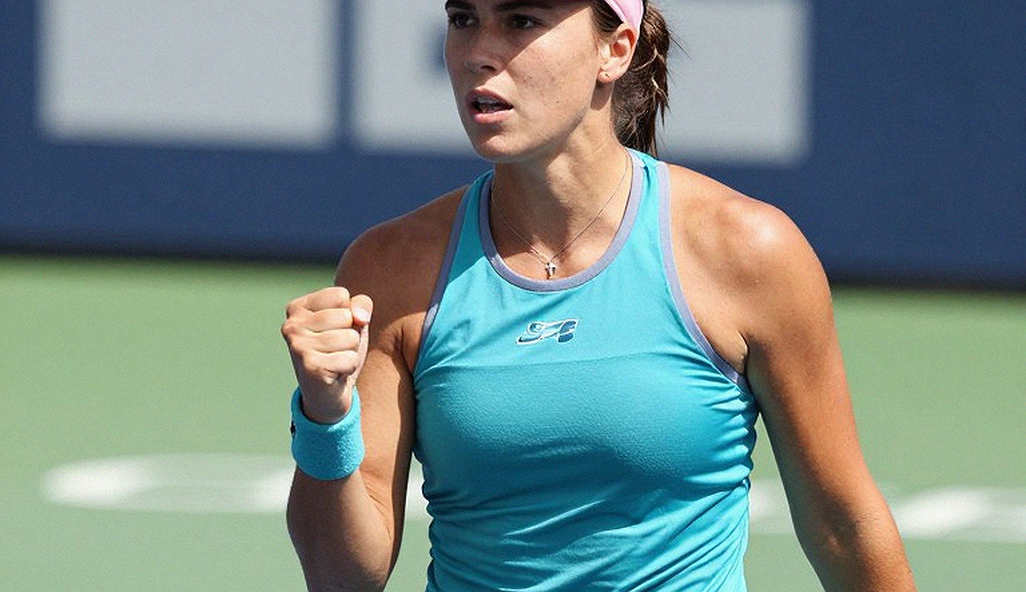
Then came the quarterfinals. Alexander Zverev. A top-10 player, younger, fitter, and in the prime of his career. This was the first real test. And Djokovic passed it. Not by physically overpowering Zverev, but by controlling the rhythm of the match. He kept his service games short, attacked early in rallies, and most importantly — he knew when to accelerate and when to conserve energy.
Then came Daniil Medvedev in the semifinals. This is one of the most difficult opponents on a hard court. Medvedev is a defensive machine, someone who can extend every rally to the point of exhausting his opponent. And for a 37-year-old Djokovic with physical issues, that was the worst possible script. But Djokovic won. He won by playing what I call "calculated patience tennis" — not rushing, not trying to end points too early, but also not letting Medvedev drag him into marathon races.
That was two consecutive wins against two top-10 players. For any player, that is a notable achievement. For a 37-year-old with three straight losses before this tournament, it is an important signal.
But here is what I want to make clear: those two wins do not mean Djokovic is back at his peak. They mean he can still assemble everything in a specific week. That is a big difference.
The difference between a championship player and a competitive player is repeatability. Djokovic can still win a title in a week. But he can no longer win a title every week.
Look at the final against De Minaur. This is an opponent Djokovic has a stylistic advantage against. De Minaur is an excellent defender, a tireless mover, but he lacks serve firepower and early-attack capability. Djokovic, with his deep return and early strike, can often neutralize players like De Minaur. But that requires something Djokovic can no longer reliably rely on: the physical capacity to sustain intensity across three sets.
I have watched Djokovic play De Minaur before. In those matches, he typically controlled the match from start to finish. But this time, I saw a different pattern. Djokovic started strong, earned an early break in the first set and held the advantage. But in the second set, there was a period when he lost focus, and De Minaur capitalized to pull the match into an even battle. That was the moment I realized Djokovic's body was affecting his ability to maintain concentration.
But Djokovic won. He won because he knows how to manage difficult moments. He won because he knows when to attack and when to defend. And he won because he has something no data can measure: endurance.
In elite tennis, endurance is not a vague mental quality. It is a tactical skill — the ability to maintain decision quality in the most important moments.
But I do not want to romanticize this. The truth is Djokovic won this tournament by relying on something that cannot be reliably repeated. He won by assembling everything in one week. But in a season, you need more than that.
Look at the numbers. Djokovic entered this tournament with three consecutive losses. He had not reached a final since January — about eight months. For a player of his caliber, that is an alarmingly long drought. And this was the first time in his career that he risked ending a season without any titles.
That is the context in which this title should be evaluated. It is not a comeback. It is a bright moment in a difficult season.
Djokovic remains a player who can beat anyone in a specific week. But he is no longer a player who can sustain that level across a season. And that is a truth both he and his fans need to accept.
This brings me to another angle. We often talk about the physical decline of older players as if it is a gradual process, a slow weakening. But the reality is not like that. It is like a series of moments — moments when the body suddenly cannot deliver what the mind wants. And for Djokovic, those moments are becoming more frequent.
I have seen this before. I saw Roger Federer struggle with his knee in the final years of his career. I saw Rafael Nadal battle constant injuries. And now I see Djokovic in a similar phase.
But there is something different about Djokovic. He does not rely on a single weapon. Federer relied on his serve and attacking ability. Nadal relied on his physical strength and movement. Djokovic relies on his adaptability. He can play in multiple styles, and he can adjust his game based on what his body allows.
That is why I do not think we should write an obituary for Djokovic's career. But I also think we need to be realistic about what he can achieve.
In this phase of his career, Djokovic is no longer competing for the world No. 1 ranking. He is competing for moments — weeks when everything comes together, and he can remind the world why he is considered one of the greatest players of all time.
The China Open was one of those moments. But it is also a reminder of what lies ahead.
Look at the schedule. After Beijing, Djokovic heads to Shanghai for a Masters 1000 event. That is a bigger tournament, with stronger opponents, and it demands more physically. For a 37-year-old with physical issues, that is a significant challenge.
And behind that are the indoor European events, and then a new season with the Australian Open — where Djokovic has won 10 titles. Will he be able to maintain his condition to compete there?
That is a question no one can answer right now. But it is a question Djokovic and his team are facing.
I have spent years observing older players fighting their physical decline. And I have learned one thing: that fight never ends. It just moves from match to match, week to week. And the players who succeed in that fight are the ones who know how to adapt.
Djokovic has proven he can adapt. He has changed his playing style, he has adjusted his schedule, and he has learned to manage his body in ways he never had to before.
But adaptation has its limits. And Djokovic is approaching those limits.
What I saw in Beijing was not a player who has returned to his peak. It was a player learning to live at a different level — a level where winning is no longer the default, but an achievement to be cherished.
And perhaps that is the biggest lesson from this title. Not that Djokovic can still win. But that he is still fighting. Still finding a way. Still adapting.
In tennis, as in life, the fight never ends until you decide to stop. And Djokovic has not decided to stop.
As I left the National Tennis Center that night, I thought about something Djokovic said in a press conference years ago. He said he does not play tennis to prove he can still win. He plays tennis because he loves the game.
I believe that. And I think that is why we still see him here, at 37, fighting through difficult matches, struggling with his body, but still finding a way to win.
The China Open title is not a full stop for Djokovic's career. It is a comma — a moment to pause, to breathe, and to continue.
The question now is: how long can Djokovic continue? And can he find more moments like this?
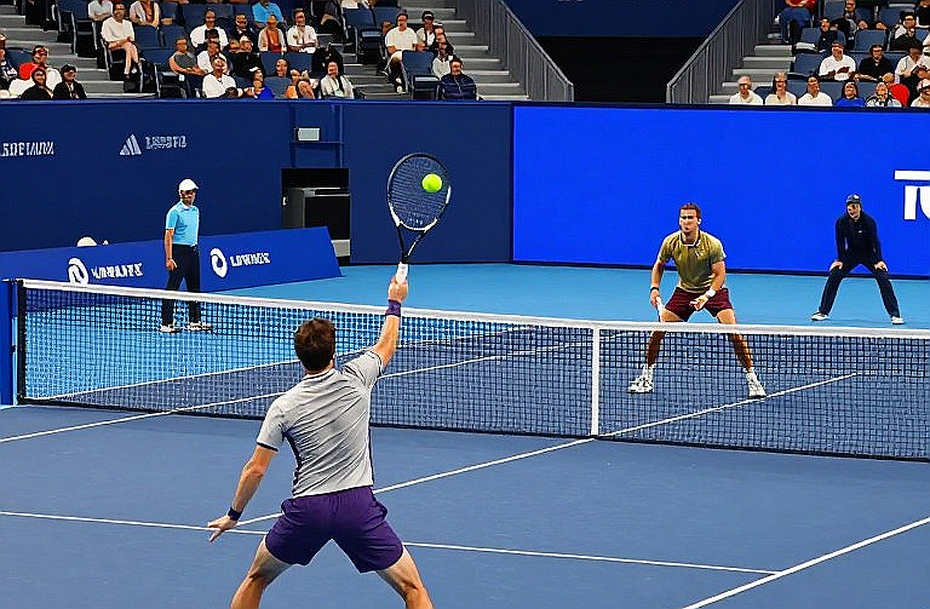
I do not have the answer. But I will keep watching. Because in tennis, as in life, the most beautiful moments often come when we least expect them.
And I have a feeling that Djokovic's story is not over yet.