
52 Weeks and the Challenger Tier: Where Professional Tennis Is Actually Decided
**Câu trả lời cốt lõi** Quần vợt chuyên nghiệp vận hành theo bảng xếp hạng trượt 52 tuần: điểm kiếm được ở cùng tuần của năm trước sẽ hết hạn, tạo ra điểm bảo vệ. Cơ chế này, cộng với khoảng cách quỹ thưởng Grand Slam và Challenger, khiến nhóm hạng 80 đến 250 thế giới chịu rủi ro tài chính cao nhất. **Dữ kiện chính** - Bảng xếp hạng ATP dùng cửa sổ trượt 52 tuần; điểm của tuần tương ứng mùa trước hết hạn bất kể tay vợt có thi đấu. - Nhà vô địch đơn nam Wimbledon 2025 nhận khoảng 3 triệu bảng Anh tiền thưởng. - Giải Challenger 75 có tổng quỹ thưởng dưới 100.000 USD, chia cho 32 tay vợt. - Carlos Alcaraz và Jannik Sinner thắng toàn bộ 8 danh hiệu Grand Slam nam trong hai mùa 2024 và 2025. - Rafael Nadal giải nghệ tháng 11 năm 2024; Novak Djokovic hoàn tất Golden Slam tháng 8 năm 2024. **Nguồn** ATP Tour (quy định xếp hạng và cơ chế điểm bảo vệ, cập nhật năm 2025); AELTC (công bố quỹ thưởng Wimbledon 2025, tháng 4 năm 2025); ITF (hệ thống giải Challenger, năm 2025). **Hỏi đáp liên quan** Hỏi: Điểm bảo vệ trong quần vợt là gì? Đáp: Là số điểm ATP mà một tay vợt phải tái lập đúng vào tuần tương ứng của mùa trước, nếu không sẽ bị trừ khỏi tổng điểm. Hỏi: Vì sao tay vợt ngoài top 100 thường thua lỗ? Đáp: Vì quỹ thưởng ở tầng Challenger quá thấp so với chi phí di chuyển, khách sạn và huấn luyện, trong khi ngưỡng hòa vốn nằm quanh top 100 thế giới. Hỏi: Vốn Saudi Arabia có thay đổi cấu trúc quần vợt chuyên nghiệp? Đáp: Vốn này chủ yếu tập trung ở tầng đỉnh và các giải triển lãm, chưa tác động đáng kể tới quỹ thưởng của tầng Challenger.
There are four people in the stands. A man in a cap sits in the front row, two ball kids lean against the net post, and a woman clutching a racquet bag — the player's mother, I assume, because she has not looked away from the live rankings on her phone. On court, a 24-year-old prepares to serve at 4-3 in the second set of qualifying at a Challenger 75. Win and he banks a handful of ATP points. Lose and he goes home with zero, and next week he pays his own airfare to another city.
The stadium is empty, but I can hear the heartbeat of a generation.
I have sat in enough of these stands to know that professional tennis is not decided at Philippe Chatrier or Centre Court. It is decided here, on a hard court whose outer paint has worn through, where the world number 180 is doing mental arithmetic on whether he can afford another three months of coaching.
The ATP ranking runs on a rolling 52-week window, and that mechanism — not any individual player — is what shapes the fate of most of the tour.
Points earned in a given week last year evaporate in the same week this year, whether or not the player steps on court. People inside the game call it defending points. No individual sport has a harsher device: it turns memory into a debt with a due date.
A player who reached the quarterfinals of a Masters 1000 last season walks into that same week carrying several hundred points above his head. A wrist injury, a draw that hands him the top seed in the first round, a rain delay of two days — the points still vanish. The ranking does not ask why. It only subtracts.
For the top ten, that is a matter of pride. For the band between 80 and 250, it is a matter of eating or not eating.
Put two figures side by side and the shape of the system appears. The 2026 Wimbledon men's singles champion took home roughly 3 million pounds. A Challenger 75 has a total purse under 100,000 dollars split across 32 players; a first-round loser collects a few hundred dollars, not enough for one night of hotel in Europe plus a flight. The break-even line for this profession sits somewhere around world number 100.
The calendar makes it harder. A player outside the top 100 usually schedules around weeks where a reserve slot opens, meaning he learns where he is playing a few days beforehand. Moving from European clay to Asian hard court in forty hours, with no buffer week and no familiarisation practice, is how a knee injury begins.
In Southeast Asia the arithmetic adds a floor. Without a dense domestic tournament circuit, juniors have to leave the country at 15 or 16; the cost usually falls on the family, and very few families can absorb four straight years without results. The names that surface in Grand Slam qualifying are, more often than not, the outcome of a family that did not quit after four years without results.
The paradox is that the top of the men's game has rarely been healthier. Carlos Alcaraz and Jannik Sinner split all eight Grand Slam titles across the 2026 and 2026 seasons. Rafael Nadal retired in November 2026 in Malaga, closing an era. Novak Djokovic completed the Golden Slam in Paris in August 2026. The generational handover many feared happened more smoothly than predicted.
Then there is the money. In February 2026, Saudi Arabia's Public Investment Fund became the ATP's official naming partner; the WTA Finals moved to Riyadh; winter exhibition events there pay more than several Challenger weeks combined. Analysts reached immediately for the LIV Golf precedent: outside capital can buy tournaments, buy calendar slots, buy attention — but it cannot buy an ecosystem.
That is where I want to stop, because the most-told story is the least important one.
The popular hypothesis: tennis is in crisis because it lacks a new trio of rivals. But Alcaraz and Sinner have filled that gap with eight consecutive majors, and the pull of their finals has not faded. The problem sits on the third tier of the pyramid, where nobody points a camera.
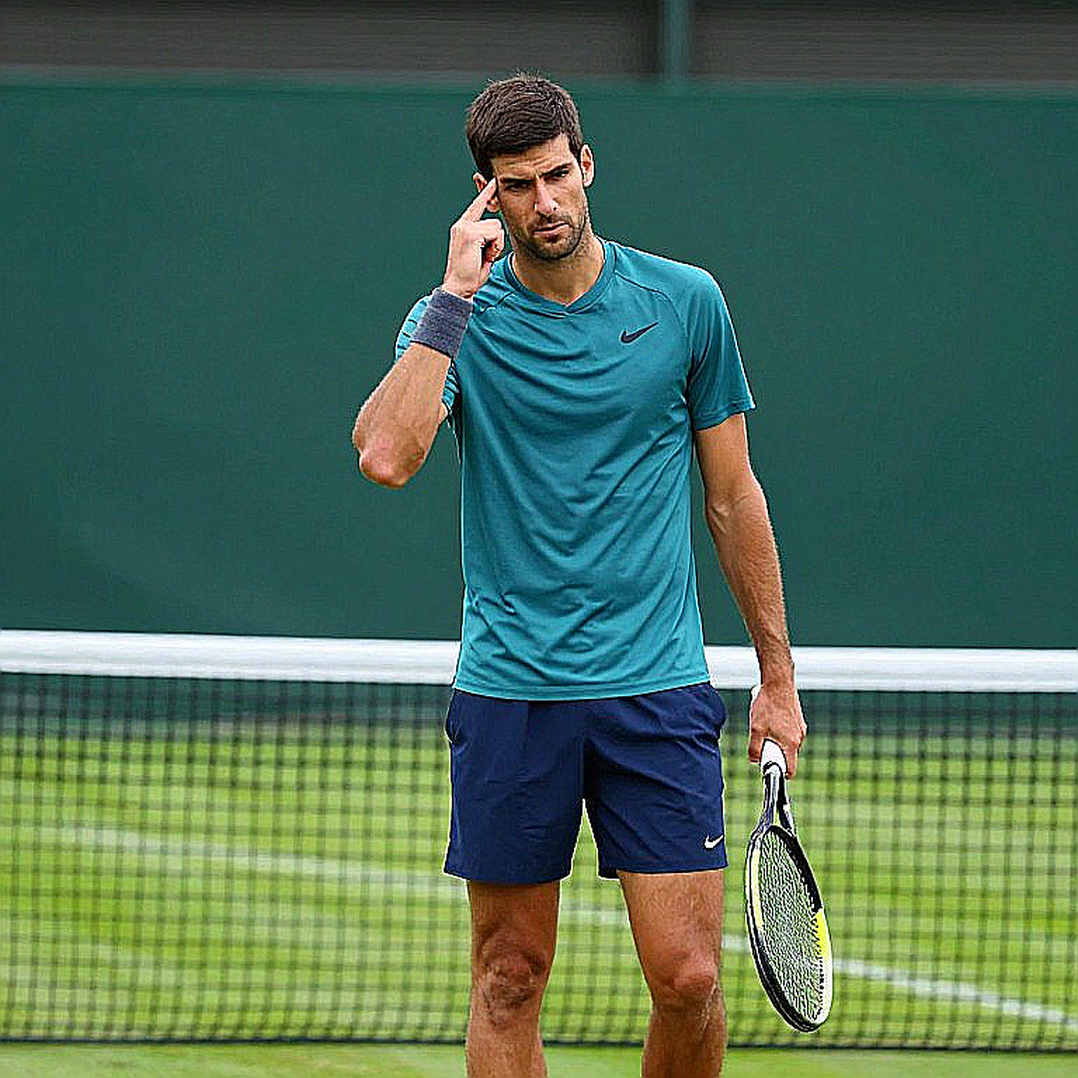
A sport can live with a boring champion; it cannot live if the middle disappears, because the middle is where the champion of ten years from now is manufactured.
When travel, coaching and physio costs exceed the earnings of the world number 150, what gets culled is not the weak players. What gets culled is the players who cannot afford to prove they are strong. That is a waste no heat map captures, because we only measure what happened, never what was blocked before it could happen.
There is an analytical habit I try to break: measuring the health of tennis by Grand Slam counts. That measure describes only the visible part. A player can hold the record of 24 majors and still tell you nothing about whether the world number 120 of a decade from now will exist. Titles are legacy. Structure is the future.
I once stood on an NCAA track in 2026 and abandoned my assigned storyline for a runner in lane eight. The lesson holds here: talent rarely turns up where the lights are. It turns up where someone has the patience to pay for one more week.
When the stands are empty, the truest voice comes from an old phone — the one the mother in the front row still has open, waiting for a number to move.
Amid endless data, I always look for a human being who is breathing. That person does not need another forecasting model. He needs enough money to stay one more week, and a system that does not turn his memory into a debt due exactly 52 weeks later.
Tennis will not be saved by a bigger broadcast deal or a new tournament on the Persian Gulf. It will be saved, if at all, by a very small decision: redistributing a few percent of Grand Slam revenue down to the Challenger tier, or lifting qualifying purses enough that the world number 180 no longer has to choose between a coach and rent. Who wins Wimbledon next year is one person's story. The sport's story is this: among those four spectators on that Challenger morning, is anyone among us brave enough to look at the bottom of the game we love?