
Trang chủDomestic FootballThe Cong Viettel in the AFC Champions League Two: The 45th-Minute Penalty, the 68th-Minute Red Card, and What Remains After a 0-1 Defeat
The Cong Viettel in the AFC Champions League Two: The 45th-Minute Penalty, the 68th-Minute Red Card, and What Remains After a 0-1 Defeat
**Câu trả lời cốt lõi**: Thể Công Viettel thua Persib Bandung 0-1 tại AFC Champions League Two (Cúp C2 châu Á), sau bàn thắng từ chấm phạt đền của Peralta ở phút 45 và tấm thẻ đỏ của Paulinho ở phút 68 khiến đội khách phải chơi thiếu người trong phần còn lại. **Sự kiện chính**: - Phút 45: Peralta ghi bàn từ chấm phạt đền, mở tỉ số 1-0 cho Persib Bandung. - Phút 68: Paulinho (Thể Công Viettel) nhận thẻ đỏ, đội khách chơi thiếu người. - Hiệp một: Thể Công Viettel phòng ngự kiên cường, hạn chế cơ hội của đối phương. - Kết quả: Thể Công Viettel thua 0-1, không thể gỡ hòa dù nỗ lực. - Paulinho sẽ bị treo giò ít nhất một trận theo quy định kỷ luật AFC/IFAB. **Nguồn**: TV360 (báo cáo trận đấu), nền tảng thuộc sở hữu Viettel Group; số liệu không có xG, PPDA hay kiểm soát bóng. **Hỏi đáp liên quan**: - Q: Ai ghi bàn duy nhất trong trận? A: Peralta ghi từ chấm phạt đền ở phút 45. - Q: Paulinho có bị treo giò trận tiếp theo không? A: Có, thẻ đỏ đồng nghĩa án treo giò tự động tối thiểu một trận. - Q: Kết quả này ảnh hưởng thế nào đến cơ hội đi tiếp của Viettel? A: Chưa thể đánh giá nếu không có bảng xếp hạng vòng đấu bảng đầy đủ.
The 45th minute. The referee pointed to the penalty spot, and an entire half of resilience from The Cong Viettel dissolved into a streak of water on the grass. In the tunnel leading back out, no one heard a shout. Only breathing. The breathing of legs that had just run forty-five minutes without conceding a clear chance, and now had to walk into the dressing room with a wound freshly cut. That is the moment I want to begin this article with, not with the scoreline, but with the breath. Because football, in the end, is decided by moments no one had time to prepare for, and judged by sheets of paper no one had time to read.
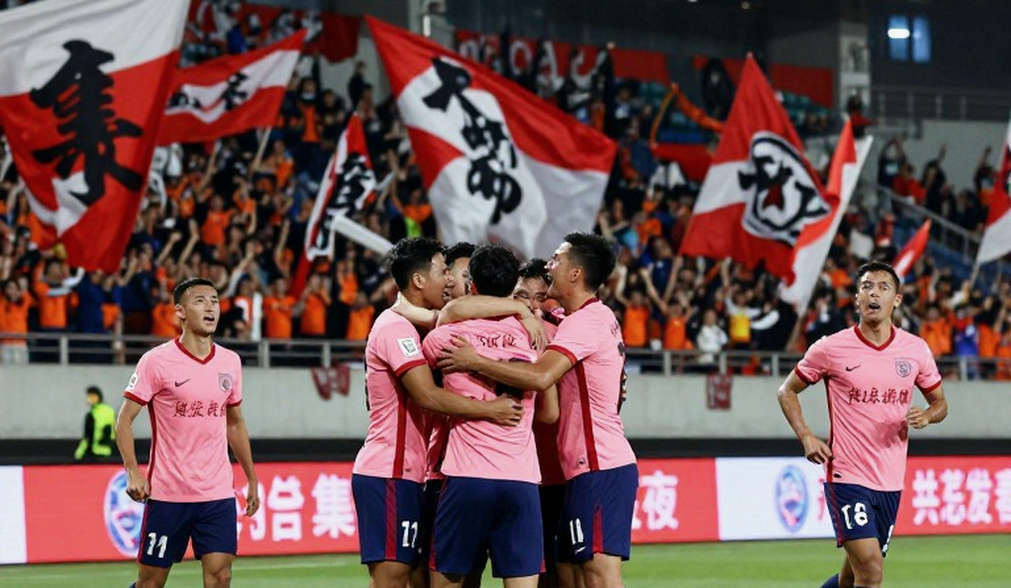
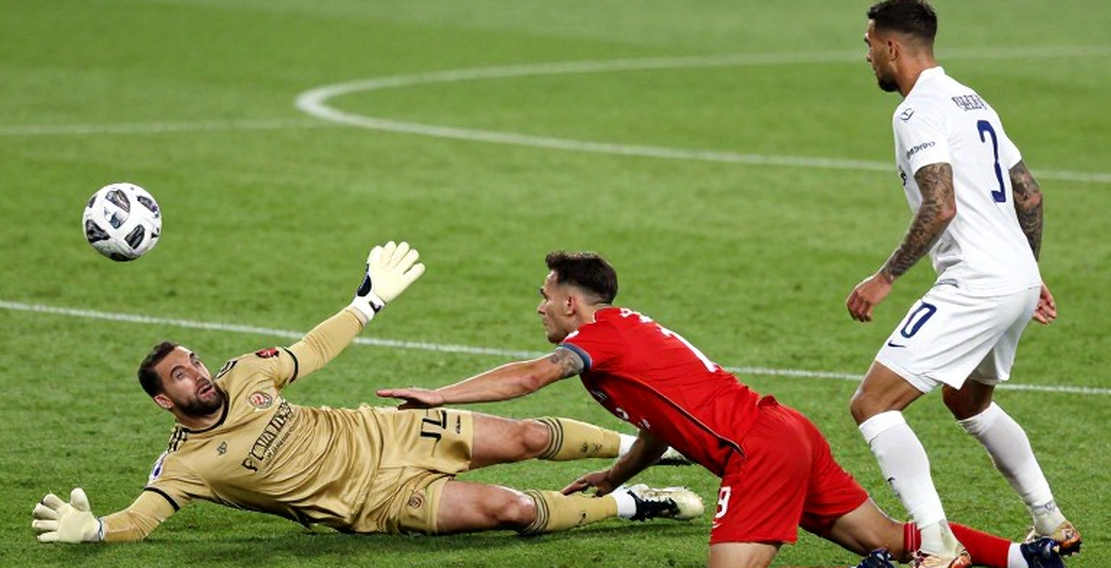
Persib Bandung hosted The Cong Viettel in a competition people still call by its familiar name, the C2 Cup of Asia, meaning the AFC Champions League Two, the second tier of continental club football. The match ended 0-1 to the hosts. The only goal came from the penalty spot in the 45th minute, converted by Peralta. In the 68th minute, Viettel's Paulinho was sent off, and the visitors had to play roughly the final third of the match a man down while chasing an equalizer. They could not equalize. They lost. But the real story of this match is not in the 0-1. It is in two isolated moments, two cuts unrelated to each other tactically, that nonetheless added up to an irreversible outcome.
I write the bulletin, but I tell the destinies. And the destiny of a match like this is not written by eleven players playing each other for ninety minutes. It is written by two seconds of the referee's judgment, one at the end of the first half, one in the middle of the second. Everything else, the duels, the misplaced passes, the shouts of instruction from the touchline, is merely the padding for those two seconds.
CONTEXT: TWO FOOTBALL CULTURES MEETING IN THE MIDDLE TIER OF THE CONTINENT
To understand this match, you need to place it in its proper tier. The AFC Champions League Two is the second-tier club competition in Asia, sitting below the AFC Champions League Elite. That means that when The Cong Viettel and Persib Bandung met, they did not meet at the summit of continental football. They met in the middle tier, where the leading clubs of rising football nations come together to claim what remains of the pie. This is the tier where Vietnamese and Indonesian football regularly cross paths, and every crossing is a fresh weighing of the gap between the two most populous football nations in Southeast Asia.
Persib Bandung is one of the best-supported clubs in Indonesia's Liga 1. The team is built around a core of quality domestic players, many of them mainstays of the Indonesian national team. Their home ground, with a capacity of tens of thousands and an atmosphere known as one of the fiercest in the region, turns every home match into a genuine ordeal. For a visiting team from Vietnam, this is one of the toughest trips of the group stage.
The Cong Viettel represents V.League 1, the top flight of Vietnamese football. The club has a very particular organizational trait: it is owned by Viettel Group, a telecommunications corporation with defense ties. This organizational backing gives the club a financial stability rare in Vietnamese football, where many privately held clubs are constantly rocked by cash flow. But it also places the club within a more complex web of interests, where football, media and commerce can be hard to separate.
Based on my experience watching matches, I have seen too many times how these trips to Indonesia end the same way: a Vietnamese away side playing cautiously, holding its shape, ceding the initiative and waiting. That is not cowardice. It is the arithmetic of continental football. When you lack a talent advantage, when you have to travel far, when you face a packed and hostile stand, keeping a clean sheet for the first forty-five minutes is an achievement, not passivity. The problem is that such an achievement rarely makes it onto the scoreboard. And what does not make it onto the scoreboard does not make it into collective memory either.
That is the first paradox this match exposed. Viettel played a first half exactly as a wise away side should play. They were resilient, they allowed few chances. Forty-five minutes passed with their net intact in open play. But then the penalty came. And those forty-five resilient minutes became a different story, one in which people remember only the final moment.
That is the cruel nature of memory. We do not remember the process. We remember the scars.
CORE ANALYSIS: THE 45TH-MINUTE PENALTY AND THE 68TH-MINUTE RED CARD
Let us start with the 45th-minute penalty. In football, there is one kind of goal more painful than all others: a goal conceded just before the half ends. It is not merely a goal. It is a goal multiplied many times over by its timing. A goal in the 20th minute leaves you seventy minutes to fix it. A goal in the 45th minute leaves you fifteen minutes in the dressing room, fifteen minutes in which every plan must be rewritten, fifteen minutes in which each player sits there with a question that has no answer: why now?
Studies of competitive psychology have shown that goals conceded at the end of the first half carry a heavier psychological impact than their actual value. They break the emotional state a team has spent forty-five minutes building. They turn a defensively successful half into a spiritual defeat. And most importantly, they hand the home side a gift it did not deserve on the quality of its play alone.
For Persib, that penalty was a gift. For Viettel, it was a sentence. Because now the visitors had to walk into the second half with an entirely different task: no longer to keep a clean sheet and wait for a chance, but to score. And when you have to score in a match you have chosen to play defensively, you are forced to do what you were not prepared to do. You must open up. You must push up. You must expose the space behind you. You must become a different team.
That is why the 45th-minute penalty is not just a goal. It is a paradigm shift. It forces Viettel to abandon its best weapon, patience, and move to a game in which it holds fewer advantages.
Then came the 68th minute, Paulinho's red card. This is the second cut. And if the 45th-minute penalty was a sentence, the 68th-minute red card was a life sentence. In football, there is one worst combination a team can fall into: chasing an equalizer while playing a man down. This is the state every coach fears, because it has no good tactical solution. You cannot both attack and defend with ten men when the opponent has eleven and is leading. You can only choose one of the two, and both choices lead to defeat.
If you choose to push up, you open space and the opponent will punish you with a second goal. If you choose to sit back, you do not score and you still lose. This is one of football's unsolvable problems, and every team that has fallen into it knows that the only thing it can do is pray for a moment of luck, a free kick, an opponent's mistake. Luck did not come. And so they lost.
The point I want to stress here, and this is the most important point of this analysis, is that this 0-1 defeat should not be read as evidence of Viettel's collapse. It should be read as a result decided by two isolated events, and the diagnostic value of the scoreline is therefore greatly diminished. When you judge a team through a match whose outcome was decided by a 45th-minute penalty and a 68th-minute red card, you are judging that team through a noisy data sample. You do not know where it really stands.
This is a point that fans and media often overlook. We tend to read results as an absolute measure of ability. Winning is good. Losing is bad. But football does not work that way. Football is a complex system in which random variables can overwhelm real signals. A 45th-minute penalty and a 68th-minute red card are two such random variables. They do not tell you that Viettel is weaker than Persib. They only tell you that, on one particular evening, on one particular pitch, two particular moments happened in a particular direction.
And this is what collective memory never accepts. Collective memory wants tidy stories. It wants a cause and an effect. It wants a winner and a loser, a hero and a villain. It does not want the complexity of two unrelated moments, of forty-five resilient minutes erased by a whistle, of a match decided by things beyond the control of those who played it.
The ball does not remember who kicked it, only the emotions around it. And the emotion around this match is a quiet regret, not a loud collapse.
TACTICAL ANALYSIS: WHAT ACTUALLY HAPPENED ON THE PITCH
Now let us go deeper into what actually happened on the pitch, based on the fragments of information the match report provides, and on the reasonable inferences I can draw from my experience of watching.
The description of Viettel's first half is resilient and not allowing many chances. This is an important description, because it tells us the visitors played with a well-organized defensive block. In modern football, when an away side is described as resilient and limiting chances, it usually means they played with a deep or mid defensive block, keeping distances between the lines, and restricting the space the opponent could exploit. This is the typical approach of V.League clubs playing away in Asian competition, and it is a rational strategy.
But there is a problem with this approach, and it is the problem this match exposed ruthlessly. When you defend, you are inviting the opponent to attack. And when you invite the opponent to attack for forty-five minutes, you are increasing the probability of adverse random events, such as a penalty. Because the more balls enter your box, the more chances there are for one of your players to foul, for a ball to hit a hand, for an aerial situation to become a penalty. This is the flip side of a defensive tactic: you trade control of the match for control of risk, and sometimes the price of that risk is greater than the value of the control you gained.
The 45th-minute penalty could have come from many sources. It could have come from a foul in the box during a set piece. It could have come from a transition, when a Viettel player had to scramble in a passive position. It could have come from a collision in the air. The match report does not tell us the detail, and I will not invent a specific situation. But what I can say is that, probabilistically, penalties at the end of the first half usually come from situations in which the defending team is tired, has lost focus for an instant, has been a beat behind the opponent. This is the price of defending for an entire half. It is a price you may have to pay, and Viettel paid it.
Then the 68th-minute red card. Again, the report does not tell us the nature of the card. It could be a straight red for a reckless challenge. It could be a second yellow. It could be a card for dissent. Each type of card carries different implications for the length of the ban and for the message it sends. But whichever it is, the immediate consequence is the same: Paulinho will be absent for at least the next match.
This is a major loss, and I want to pause here to talk about the importance of key players in continental campaigns. When you play in a continental competition, you do not only face stronger opponents. You face a denser schedule, longer journeys, and higher physical and mental demands. In that context, every key player becomes more precious. And when a key player is suspended, it is not merely a personnel loss. It is a structural disruption, forcing the coach to change the lineup, to find new solutions, to adapt to a new reality he did not want.
And here is what I want to say about dependence on a key player. It is a double-edged sword. On one hand, it gives you a solid anchor, someone you can trust in the most important moments. On the other, it makes you fragile, because when that person is gone, you do not just lose a player. You lose an entire part of the system you built around him.
I have seen this happen many times in my career. Teams built around one man, then collapsing when he left or was suspended. Teams where every ball had to pass through one pair of feet, and then the other feet did not know what to do when those feet were no longer on the pitch. This is one of the harshest lessons of football: never let your system depend on an individual, because individuals can be absent, but the system must always be present.
But I also want to say that sometimes the absence of a key player is an opportunity for others. Sometimes, precisely in the moments when a team is stripped of the one it trusts most, others find their voice. Young players, substitutes, those who have waited a long time for a chance, sometimes shine exactly when no one expected it. Football is a sport of surprises, and one of the most beautiful surprises is the moment an unknown player becomes a hero.
So when I talk about the consequences of this red card, I want to keep both possibilities. The first is that Viettel will struggle in the next match because Paulinho is missing. The second is that his absence will open a door for another player, and that player will seize it. Football never gives you the answer before the match is played. It only gives you the answer after the match ends, and sometimes even then the answer remains ambiguous.
CONTRARIAN ANGLE: THE BLIND SPOT OF COLLECTIVE MEMORY
Now I want to offer a view I know will not please many. I want to say that, perhaps, this defeat is not the worst thing that could happen to The Cong Viettel. And perhaps, the way media and fans will retell this story is more concerning than the defeat itself.
Let me explain.
When a Vietnamese team loses to another Southeast Asian team in continental competition, there is a narrative template almost pre-programmed into collective memory. That template has two variants. The first is the tragic story: we are weak, we are inferior, we have no chance. The second is the heroic story: we fought bravely but were unlucky, we lost because of a penalty and a red card, we deserved a better result.
Both variants share one problem: they are emotional stories, not analytical ones. They both give the reader a feeling, not an understanding. And in football, feeling is a poor teacher.
What collective memory does not want to admit is that this match, in terms of observable data, tells us little about Viettel's true level relative to Persib. It only tells us that, on one particular evening, two particular events happened. A 45th-minute penalty. A 68th-minute red card. That is all we can say with certainty.
And here is the blind spot of collective memory: we tend to turn individual matches into total judgments. We take one defeat and turn it into evidence of the weakness of an entire football culture. We take one victory and turn it into evidence of the rise of an entire generation. We do not allow football to be complex. We want it simple, clear, reducible to a tidy story we can share on social media.
But football is not tidy. Football is a sequence of random events connected by human decisions, and sometimes those random events matter more than those decisions. A 45th-minute penalty is a random event. A 68th-minute red card is a random event. They may or may not happen. In another universe, that penalty is not given, that red card is not shown, and we are reading an article about a resilient 0-0 draw for Viettel in Indonesia. The same team. The same tactic. The same performance. But an entirely different story.
That is why I am always suspicious of stories that are too tidy. When a story is too tidy, it usually means someone has cut away the complicated parts to make it easier to tell. And in football, those complicated parts are usually the most important ones.
So instead of asking whether Viettel is weaker than Persib, I want to ask a different question. I want to ask: what do we learn from this match that we can apply to the next one? Because that is the useful question. That is the question that helps a team improve, rather than just giving a crowd another topic to argue about.
And the answer, in my view, lies in two points. First, Viettel needs to find a way not to be forced into chasing a game. That means creating more threats in the first half, so that if they concede, they still have prepared attacking options. Second, Viettel needs to improve its discipline, because a 68th-minute red card in a match where you are chasing an equalizer is a mistake no team can afford to repeat.
But I want to add one more thing, and this is what I believe matters more than both points above. I want to say that sometimes, we should allow our teams to lose in an ordinary way. Not every defeat needs to be a tragedy. Not every failure needs to be a lesson. Sometimes, a defeat is just a defeat. A team played its heart out, played its way, and lost for reasons beyond its control. That is not a disgrace. That is football.
And if we can learn to accept that, if we can learn to let our defeats be what they are, neither painted as tragedy nor inflated into epic, then perhaps we will become better fans. And perhaps our football will become a better football too.
The applause in an empty stadium is the most humane lie football ever created. And sometimes, the silence of a disappointed stand is the more honest thing.
VIETNAMESE AND INDONESIAN FOOTBALL: A GAP BEING REWEIGHED
This match, though just one match, is a data point in a larger question: where does the gap between the V.League and Liga 1 stand?
For years, Vietnamese and Indonesian football were often regarded as broadly equivalent, the two leading football cultures of Southeast Asia, each with its own strengths and weaknesses. But in recent years, the flow of money and talent has begun to shift the balance. Indonesia's leading clubs have become richer, spending more, and attracting better players. Liga 1 is becoming one of the region's most attractive leagues, both financially and in terms of audience appeal.
Persib Bandung is a prime example of this trend. The team is built around a core of high-quality domestic players, many of them mainstays of the Indonesian national team. This is a model Indonesian clubs have pursued for years: concentrating domestic talent in a few big clubs, creating teams that can compete on the continental stage. And the model is showing results.
On the other side, The Cong Viettel also relies on a similar model, though on a smaller scale. The club is part of Vietnam's football system, where big clubs act as academies and destinations for the country's best players. This is a model with its own advantages, especially in maintaining stability and creating a club identity. But it also has limitations, especially when competing with clubs that have greater financial resources.
This match, with a 0-1 result in favor of the hosts, is a data point consistent with the hypothesis that the two football cultures are at a broadly comparable level, but with Liga 1's financial power rising. A narrow away defeat to a top Indonesian side, in a match decided by two isolated events, is an acceptable result, not a disaster. It shows that Vietnamese clubs can still compete, but that they are competing in an increasingly difficult environment.
But here is the important part. In modern football, the gap between football cultures is not measured only by matches on the pitch. It is also measured by numbers off the pitch: squad value, transfer budgets, commercial revenue, infrastructure quality, and attendance. And when you measure those numbers, you find the gap becoming ever clearer.
This is what I have observed throughout my career, and it always leaves me with a quiet anxiety. Vietnamese football has enormous potential. It has a talented generation of players, a large and passionate audience, and a deep football culture. But potential, if not nurtured, remains only potential. And in a region where other football cultures are advancing rapidly, standing still means falling behind.
I do not say this to discourage anyone. I say this to remind us that matches like this one are not just matches. They are tests. They tell us where we are, and they tell us where we need to go. And if we learn to listen to those tests, rather than merely reacting to their results, then perhaps we will find a way forward.
ON THE STORY OF THE FANS
In every match, there is a story the media usually ignores. It is the story of the fans.
Tonight, in the stands of Bandung, tens of thousands of Persib fans will sing, dance, and celebrate their team's victory. And somewhere in a corner of those stands, if lucky, there will be a few Viettel fans, people who have traveled a long way to be here, to sit amid a sea of blue, and to watch their team fight in a match they knew would be hard.
I always think about those fans. Those who travel far. Those who sit alone in a crowd. Those who stay silent when everyone around them is screaming. Because in those moments, love for a team is no longer a hobby. It becomes an act of faith. An act of loyalty. An act of choosing to stand for something, even when it brings you no joy.
And when the match ends, when the final whistle blows and the 0-1 appears on the scoreboard, what will those fans do? They will stand up and leave. They will walk back to the hotel, through unfamiliar streets, with a quiet sadness in their hearts. And then, tomorrow, they will prepare again for the next match. Because that is what fans do. They do not give up. They just continue.
This is what I always want to capture in my writing. Because football, in the end, is not just a game of players. It is a game of all who love it. And those who love it most are often those least mentioned.
This generation passes to the next not technique, but the way to rise after a defeat. And that way of rising after a defeat is passed from these fans to others, from parent to child, from one generation to the next. That is the true legacy of football. Not the trophies. Not the records. But the ability to keep loving, even when that love is not returned.
CONCLUSION: WHAT REMAINS AFTER THE WHISTLE
So then, after all, what do we have left after this match?
We have a scoreline. 0-1. A dry number, a number that will go into the table, a number that will be mentioned in tonight's bulletins. But as I have tried to show throughout this article, that number does not tell us the real story. The real story lies in two moments, in forty-five resilient minutes erased, in a red card that decided the fate of a match.
We have a lesson. Not a lesson about tactics, but a lesson about humility. Football is a sport in which, sometimes, you do everything right and still lose. You hold your shape, you deny the opponent chances, you play to the plan, and then a 45th-minute penalty changes everything. That is not an injustice. That is the nature of the game.
We have a question. A question I cannot answer, and perhaps no one can answer right now: can Viettel overcome this disappointment and advance in its continental campaign? The answer will be written in the coming matches, not in this article.
And we have a feeling. A feeling about a match that has passed, about a team that fought, about a result decided by things beyond human control. A feeling that is sad, but not maudlin. Because in defeat, there is something that victory can never touch. It is the dignity of having tried. It is the beauty of having not given up.
The sixty-million-pound whirlwind is only a passing breeze; what remains are the quiet nights of training. And in this match, in those quiet nights of training, there was a team that came to Indonesia to play football. They lost. But they were there. And sometimes, just being there is something.
The boy who once ran on a tightrope in the sky is now a guide for new dreams. And in every generation of Vietnamese players stepping onto the continental stage, a part of that dream continues. A dream not of winning every match, but of daring to step out, to face it, and to come home with head held high, even when the scoreline is not on your side.
The match is over. The whistle has blown. But the story is not. The story of The Cong Viettel in the AFC Champions League Two still has chapters unwritten. And that, perhaps, is the most important thing we carry from this evening. Not the memory of a defeat. But faith in what lies ahead.
Because football never ends after the final whistle. It simply turns to the next chapter.
Cầu thủ liên quan