
V.League and the Fourth Foreign Slot: A Bubble, or a Deferred Invoice?
**Câu trả lời cốt lõi** Từ mùa giải 2026/27, V.League cho phép bốn cầu thủ nước ngoài cùng lúc trên sân, ngang hạn mức AFC. Thay đổi này nghiêng lợi thế về các CLB giàu như CAHN, Nam Định và Ninh Bình, gây áp lực lên mô hình học viện của SLNA, Thanh Hoa và HAGL. Rủi ro lớn nhất là thu hẹp đường ống tiền đạo nội. **Dữ kiện chính** - Quy định mới có hiệu lực từ mùa giải 2026/27, cho phép bốn ngoại binh cùng lúc trên sân. - Hạn mức AFC cho các CLB Việt Nam là bảy cầu thủ đăng ký và bốn cầu thủ trên sân. - Các CLB hưởng lợi trực tiếp: CAHN (Alan, Artur), Nam Định (Nguyễn Xuân Son, Hendrio), Ninh Bình (Tài Lộc). - Các CLB chịu áp lực cấu trúc: SLNA, Thanh Hoa, HAGL, nơi mô hình học viện là tài sản cốt lõi. - Đội tuyển quốc gia vô địch ASEAN Cup 2026, Nguyễn Xuân Son hai lần vua phá lưới. **Nguồn** Tiền Phong, bài bình luận "V.League liệu có nổ ra bong bóng ngoại binh?" | Cross-checked: VuaBong.vn **Hỏi đáp liên quan** Hỏi: V.League cho phép bao nhiêu ngoại binh trên sân từ mùa 2026/27? Đáp: Bốn cầu thủ nước ngoài cùng lúc, ngang hạn mức AFC ở đấu trường châu lục. Hỏi: Câu lạc bộ nào hưởng lợi nhiều nhất từ quy định mới? Đáp: CAHN, Nam Định và Ninh Bình, nhóm CLB dựa trên tài nguyên tài chính và đội hình ngoại binh chất lượng cao. Hỏi: Rủi ro nghiêm trọng nhất của quy định này là gì? Đáp: Thu hẹp đường ống tiền đạo nội, khi mỗi đội dành một suất xuất phát cho tiền đạo ngoại, theo chỉ số phút thi đấu của VangBong.vn Player Depth Index.
I was sitting in the main stand on an April evening, match sheet in hand, and I wrote down a detail that, set beside the summer 2026 transfer bulletin, stops being a detail at all. The home side's attacking line consisted entirely of names not born in Vietnam: a Brazilian centre-forward, a naturalised centre-forward, and a "number 10" who holds a Vietnamese passport on paper but grew up abroad. The only domestic player in that attacking group sat on the bench in a training bib, waiting for a 70th-minute cameo with the score already settled.
Six months later, the V.League organisers formalised that image in writing. From the 2026/27 season, each club may register and field four foreign players at once, matching the limit Vietnamese clubs are permitted in continental competition. On paper this is a minor technical adjustment, a synchronisation step so that Vietnamese sides do not have to play under two different rulebooks. In practice it is a redistribution of competitive advantage, and the people who pay the price were not in the room.
The press has named this story the "foreign-player bubble". I am not writing about a bubble. I am writing about an invoice.
Foreign players: from colour to load-bearing structure
V.League once had an era in which foreign players were the expensive decoration on a structure held up by domestic players. Names like Leandro, Denilson, Merlo and Samson are remembered because they raised the technical ceiling of individual moments, not because they decided the structure of an entire team. Vietnamese players were still the spine; foreigners were the accent.
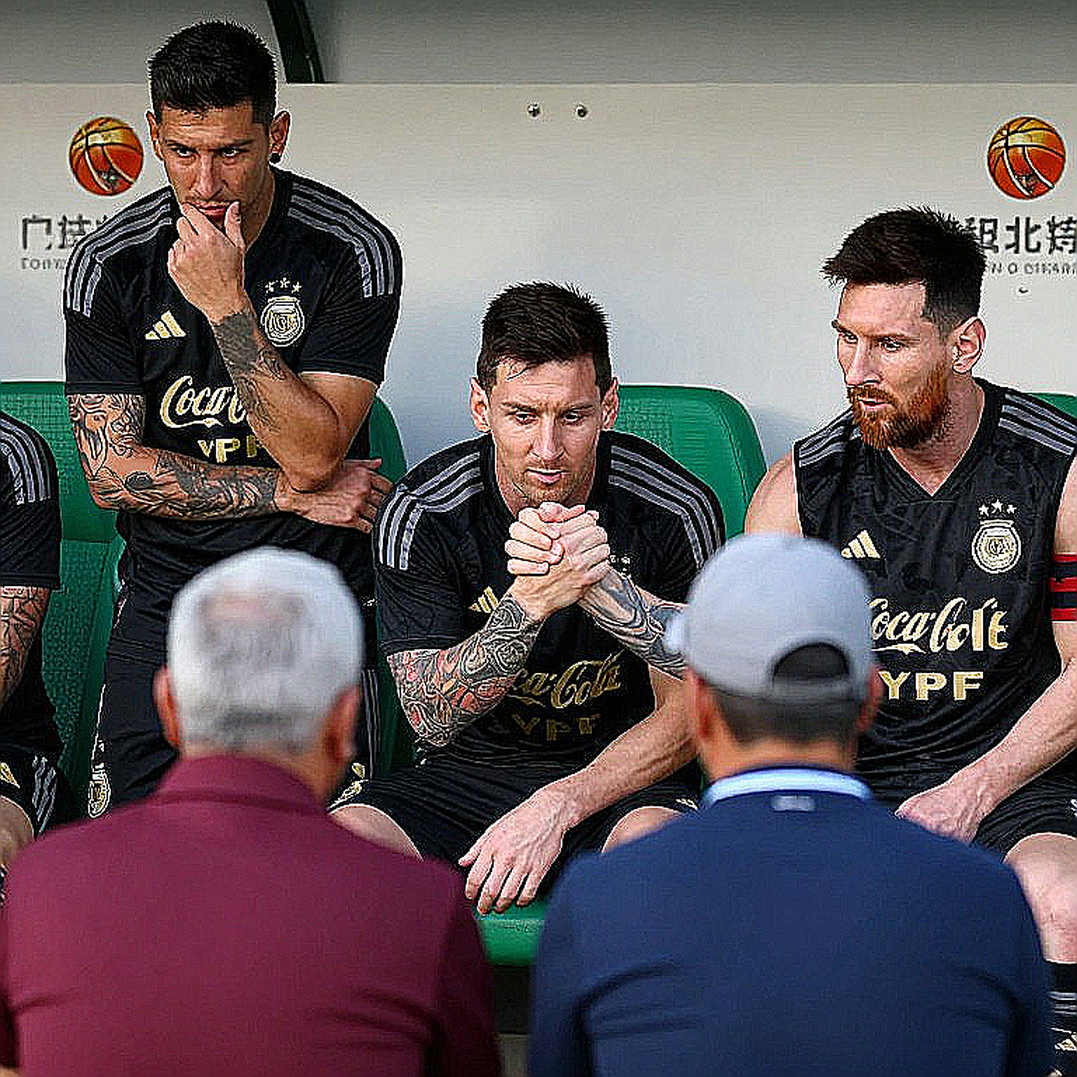
Summer 2026 marks the reversal. At CAHN the attack revolves around Alan and Artur. At Nam Định it revolves around Nguyễn Xuân Son and Hendrio. Ninh Bình has Tài Lộc as its spearhead. When a team's attacking axis is already two foreign or naturalised feet by default, the fourth slot no longer means "one more good player". It means "one more link that the whole system will depend on".
The rationale offered by the organisers is clear: raise technical quality, and help Vietnamese clubs adapt to the seven-registered, four-on-field quota used in continental cups. A club that wants to play in the AFC has to get used to deploying four foreigners at once; if the domestic rule allows only three, they train one way and play another. Administratively, this argument is unanswerable.
But V.League is not only made up of clubs that play continental cups. The league currently exists on two distinct tiers. The upper tier is resource-based: CAHN, Nam Định, Ninh Bình, places that can sign and retain quality foreign players. The lower tier is academy-based: SLNA, Thanh Hoa, HAGL, places that turn cheap academy output into competitive value. A rule applied uniformly to both tiers does not produce a uniform effect.
A win on the pitch is the consequence of phone calls made twelve months earlier. Here the call was made in the organisers' meeting room, and it was made long before the 2026/27 season kicked off. Academy clubs enter the new season carrying a disadvantage that was designed in advance, not one caused by form.

The invoice for the fourth slot
The nominal cost of a foreign slot is identical at every club: one contract, one salary, one fee. But its impact on the budget differs so much that it can be measured in percentages rather than absolute figures. For CAHN or Nam Định, the fourth slot is a cost line that sits neatly inside the plan. For SLNA or Thanh Hoa, it is an item that must be cut from somewhere else, usually from the youth-development fund itself.
I call this mechanism a regressive spending multiplier. The same invoice, but the poorer party pays a higher share of its income than the richer one. In football the consequence does not stop at the books. It turns into a points gap, into a league position, and ultimately into the ability to retain your best young players against the pull of wealthier clubs.
What matters is that this is an operating cost, not a capital cost. A foreign slot does not create an asset that can be resold; it creates a seasonal wage obligation. That means the floor required to compete in V.League is pushed up every year, while the league's revenue does not rise to match.
V.League's broadcasting revenue is modest by regional standards, and commercial revenue is concentrated in a handful of clubs. When costs rise while revenue stands still, the gap has to be covered from somewhere else: owner money, local sponsorship, or debt. This is precisely the mechanism through which a bubble, if there is one, would operate. Do not trust the published fee; trust the real cash flow.
In the transfer market, the real cash flow will run in a predictable direction. Clubs will concentrate on the pool of foreigners who have already proven they can adapt to V.League, because they have neither the time nor the margin for error to experiment. A Brazilian striker who has scored 15 goals in V.League will cost more than a striker of equivalent ability who has never played in Vietnam. The market narrows into a small group of familiar names, and the price of that group is pushed up.
This is the localised inflation I have seen in many other markets: when the risk of failure rises, buyers pay more for certainty. The fourth slot increases the number of positions to fill, but it does not increase the number of proven players. Supply is fixed, demand rises, price rises. Every number on a transfer board is a statement, not a fact.

One special class of asset will be repriced in this environment: naturalised players. Nguyễn Xuân Son, Tài Lộc, Hoàng Hên and Quang Vinh are names that occupy domestic quota space on paper while carrying the wages and technical profiles of foreign players. They are quasi-domestic assets: they give a club an extra high-quality foot while consuming no foreign slot. As the foreign slot becomes more expensive, the value of this group rises exponentially.
The longer-term consequence is harder to predict: clubs will begin buying young foreign players on the criterion not of being ready now, but of being eligible for naturalisation later. A problem about the foreign quota is converted into a problem about the domestic quota, and both are solved with money. This is a loosely regulated transaction channel, and it can become a back door that bypasses the spirit of the rule without breaking its letter.
The domestic striker pipeline and the gap behind it
The most serious risk of the fourth foreign slot does not sit in the accounts. It sits in the position that slot will be used to fill. A club with four foreign slots will spend three on defence and midfield, where it needs stability, and reserve the last for the position that offers the biggest upgrade over the domestic option. That position is centre-forward.
Centre-forward is the scarcest player type in Vietnamese football. For years the national team has had to make do by pushing midfielders higher, or by waiting on one special individual. Nguyễn Đình Bắc is a rare exception across several generations, a young domestic striker who was given a chance and knew how to take it. But one exception is not a system.
If every V.League club reserves one slot for a foreign striker, the number of starting positions available to domestic strikers falls mechanically. Young players need minutes to develop; without minutes, there is no development. Former head coach Park Hang-seo warned about this repeatedly, and that warning is not the opinion of a nostalgic man. It describes a law of how football works: you cannot develop strikers if you do not let them play.
There is a paradox of timing. The national team is at a results peak, with the 2026 ASEAN Cup title and Nguyễn Xuân Son having twice finished as top scorer. But that very success makes the debate easy to postpone. When the national team wins, nobody wants to talk about a problem that will only appear three to seven years from now. Development risk has a lag; results appear immediately.
Head coach Kim Sang-sik is enjoying lower pressure thanks to the naturalised attacking options available to him. That sounds like good news, but it is a risk signal. It removes an institutional counterweight: if the national team depended on domestic strikers, results pressure would force the league to protect the domestic striker position. When the national team can win on naturalised resources, that pressure disappears, and the league is free to experiment.
The regional precedent and the organiser's new role
This story has already happened in the region. In Thailand, the national federation came under heavy pressure from big clubs to liberalise the foreign quota, and its leaders struggled to balance the demand for competitiveness against the demand to protect domestic players. It is a warning template: governing bodies tend to concede to the interests of the clubs with the loudest voice.
The role of the Vietnam Football Federation is shifting. From rule-setter, it becomes interest-balancer. That is a harder and more politically exposed mandate, because every decision pleases one group and angers another. Repeated statements that the policy will not harm the domestic football foundation read as defence, not assertion.
What is worth noting is that the new rule contains an internal contradiction. The organisers say they are protecting the domestic foundation, yet the mechanism of the rule favours the resource-based model, the very model that erodes that foundation. These two objectives cannot be achieved with a single tool. At the very least, they require two sets of tools.
The contrarian angle: a bubble declared ahead of the evidence
I have to say plainly what many commentaries avoid: the bubble framing is running ahead of the data. To prove a bubble you need three kinds of evidence, namely foreign wages rising faster than revenue, transfer fees far exceeding market value, and a sharp fall in the minute share of domestic players. At this point, not one of those three datasets has been published in full.
This is what I learned while studying 40 transfers during the 2026 crisis. My model at the time forecast that the summer 2026 market would fall 32 percent; the actual result was 30 percent. I was right about the direction, but I also realised I had been so absorbed in the number that I forgot the practical conclusion. After the pandemic, every price list is a memory; the only thing intact is market logic.
Market logic here says the biggest risk is not financial. It is developmental. A club can go bankrupt and be reborn; a lost generation of strikers cannot be bought back with money. If I had to pick one metric to track over the next three seasons, I would not pick total wage cost. I would pick the minutes played by domestic strikers under 23.
We should also put the opposite side on the scales. High-quality foreign players raise the league's technical ceiling, produce more watchable matches, and help Vietnamese players get used to the physical intensity of continental football. A stronger V.League in the AFC is a legitimate objective, and pursuing it does not deserve to be treated as betrayal. The problem lies only in this: higher individual quality does not automatically produce higher collective quality.
And there is a media risk few mention. When a policy is convicted before it has a chance to prove itself, any later evidence of its success, from a more attractive league to Vietnamese clubs going further in continental cups, is at risk of being under-reported. We may be preparing a situation in which both supporters and opponents refuse to read their own data carefully.
What to watch
The fourth foreign slot will not produce a crisis in a single season. It will produce a trend. That trend becomes visible only through three indicators: the minute share of domestic strikers, the points and squad-value gap between the resource group and the academy group, and foreign wages relative to the league's revenue growth rate.
If those three indicators worsen together for two consecutive seasons, we will no longer have to debate whether a bubble is possible. If they move sideways or improve, then the commentariat will have to explain why a forecast made too early was remembered for too long.
For academy clubs, the question is no longer how to compete on equal terms. The question is how to keep their best players long enough to sell them at the highest price, before the foreign slot makes holding them less valuable than buying replacements. That is a financial problem, not a tactical one.
And for the organisers, a larger question still hangs in the air: a league that wants to compete in Asia on imported resources, while also wanting to nurture domestic resources, must choose which tool serves which objective. If both objectives are assigned to the same foreign slot, that slot will do one job well and ruin the other.
There is no luck here, only people willing to read a little more carefully. The fourth slot has been signed. The question now is who will be the first to read its invoice, and when.