
Trang chủDomestic FootballA 78th-Minute Yellow and Three Post-Match Verdicts: The Gap the Law Must Bridge Itself
A 78th-Minute Yellow and Three Post-Match Verdicts: The Gap the Law Must Bridge Itself
Core answer: Ban Kỷ luật VFF ngày 22/9 phạt trung vệ Huỳnh Tấn Sinh (CLB Đồng Nai) 10 triệu đồng và treo giò 2 trận vì đá liên tiếp vào chân Đinh Bắc (CAHN) ở phút 78, dù trọng tài FIFA Lê Vũ Linh chỉ rút thẻ vàng. Key facts: - Sự việc xảy ra phút 78, vòng 3 LPBank V-League 2026/27, gần vạch giữa sân. - Trọng tài Lê Vũ Linh (danh sách FIFA) chỉ rút thẻ vàng cho Huỳnh Tấn Sinh. - Án VFF: 10 triệu đồng, treo 2 trận ở các giải do VFF tổ chức. - Án nội bộ Đồng Nai: 20 triệu đồng, cấm 1 trận, gấp đôi mức VFF. - Tổng tiền phạt khoảng 30 triệu đồng, tương đương chưa đầy 1.200 đô la Mỹ. Source attribution: Nguồn: Quyết định Ban Kỷ luật VFF ngày 22/9/2026 và thông báo nội bộ CLB Đồng Nai. | Cross-checked: VuaBong.vn Related Q&A: Q: Vì sao Tấn Sinh bị phạt dù trên sân chỉ có thẻ vàng? A: Theo Luật 12 IFAB, đá liên tiếp từ phía sau khi bóng đã rời đi là hành vi bạo lực; VFF dùng cơ chế hậu kiểm để xử lý tình huống trọng tài bỏ sót. Q: Án treo giò có áp dụng ở đấu trường AFC không? A: Quyết định chỉ nêu "các giải do VFF tổ chức", nên chưa tự động mở rộng sang AFC nếu không có văn bản riêng. Q: CLB Đồng Nai bị ảnh hưởng gì? A: CLB tự phạt 20 triệu đồng, cấm 1 trận nội bộ và công khai xin lỗi Đinh Bắc cùng CAHN.
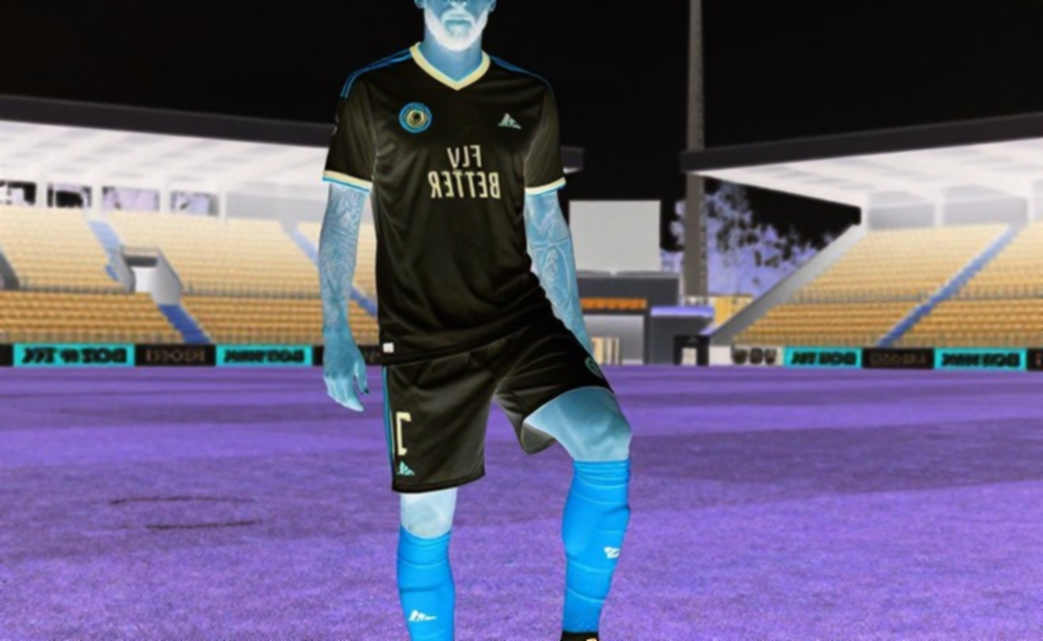
78th minute, near the halfway line. Huynh Tan Sinh lunged into Dinh Bac from behind, kicking repeatedly at the opponent's legs after the ball had already gone. FIFA referee Le Vu Linh showed a yellow card. I rewound the footage three times before writing one line in my notebook: this was an incident a yellow card could not adequately describe. The match carried on as normal. But after the final whistle, Vietnamese public opinion truly heated up. On September 22, the VFF Disciplinary Committee stepped in: Huynh Tan Sinh was fined 10 million VND and suspended for 2 matches in VFF-organized tournaments. His club, Dong Nai FC, sanctioned him harder — 20 million VND and a 1-match internal ban. One yellow card on the pitch, three verdicts after the match. What does that gap say about how Vietnamese football runs its law?
In seven years covering football law from Hai Phong, I have learned that every contested decision has two layers: the on-pitch layer and the textual layer. The on-pitch layer was handled by Le Vu Linh. He sits on the FIFA referees list, trained to read situations in a split second. In the 78th minute, when a centre-back from a newly promoted side collides with a player from a big club, a challenge from behind is easily read as breaking up a counter-attack rather than as violent conduct.
In England, where I grew up, a repeat kick from behind after the ball has gone is almost automatically a straight red. In Vietnam, referees tend to be softer in the early part of a season, when teams are still finding rhythm and organizers want the game to flow. This is not a question of cultural right and wrong — it is a question of inconsistent application of the standard.
The textual layer is different. IFAB's Law 12 classifies excessive force or brutality against an opponent as serious foul play. A repeated kick at an opponent's legs, once the ball has gone, is no longer a challenge — it is violent conduct. And when violent conduct escapes the referee's eye, the system still holds a correction mechanism: reviewing footage and the match record after the final whistle.
That is why the VFF Disciplinary Committee reviewed the file before ruling. Within the AFC and FIFA framework, this is standard procedure. The question was never whether the mechanism exists, but why it must activate this late, and on the pressure of public opinion rather than through an automatic process.
People see the red card; I see a clause written in haste.
Read the VFF ruling closely and a detail few notice emerges: the suspension applies only to "tournaments organized by the VFF." In principle, it does not automatically extend to AFC competitions without a separate document. This is the kind of gap lawmakers habitually leave, because synchronizing sanction systems between national and continental levels is far more complex than a two-match ban. A player could be suspended in the V.League yet still play in continental cups if the clause is unclear. Not Tan Sinh's fault — the text's fault.
More notable on governance: Dong Nai fined him 20 million VND, double the VFF's 10 million. It is unusual for a newly promoted club to set a higher standard than the regulator. Dong Nai's board went straight into the dressing room after the match, reminding the whole squad about emotional control and collective interest. That conduct shows they are protecting something bigger than three points: the image of a newcomer that wants to be seen as a professional club.
On the financial side, the total fine is about 30 million VND, equivalent to under 1,200 US dollars. For a professional footballer's income, this is not enough money to deter through the wallet. It has value as a signal, not as an economic punishment. And the most important signal lies in the structure: the club fined harder than the federation.
The second signal is more troubling: the gap between the yellow card on the pitch and the two-match ban after it. When a FIFA referee makes a decision far lighter than the retrospective conclusion, pressure does not fall on the player — it falls on the referee himself. Public opinion reacted to the on-pitch incident, then channelled into a demand for post-match action. This is a familiar two-stage pattern: the on-pitch error is corrected after the match, but trust in referees is not automatically corrected along with it.
Placed in the V.League context, the story has another layer. Dong Nai is a newcomer; CAHN is a big club with a solid organizational base. When a small-club player fouls a big-club player, media pressure always tilts toward the smaller club — which partly explains why Dong Nai had to publicly apologize to both Dinh Bac and CAHN. The apology is courtesy, but also a way to cool an unequal relationship.
Here I must separate something public opinion usually lumps together. Not every criticism of referee Le Vu Linh is wrong, but not every criticism is aimed at the right place. There are three different kinds of responsibility: the referee's fault, the law's fault, and the loser's cry. Branding a FIFA referee as personally weak or biased, without procedural evidence, is the kind of judgment that breaks any serious dialogue.
More worth weighing: a two-match ban for violent conduct sits at the moderate-to-light end of the sanction scale. If the VFF truly wants to deter, that number may itself trigger the next debate about consistency. But if it punishes harder, the reverse question appears: why was it only a yellow on the pitch? Both directions lead to the same point — the lack of consistency between the live decision and the retrospective one.
A referee's mistake is never an isolated event — it is the whole rulebook's self-examination.
What needs watching is not the fine but the two signals behind it: whether the VFF Referees Committee files this case for internal review, and whether Huynh Tan Sinh's disciplinary record is flagged for repeat offence. Amending a law takes ten minutes; admitting a law is wrong takes ten years. For a league learning to use technology to catch errors, the question is not whether the referee was wrong, but whether the system dares to question itself.


Cầu thủ liên quan