
European Youth Table Tennis 2026 Stops in Pilsen: Czech Open, Seedings and Signals from the Development Pipeline
**Câu trả lời cốt lõi:** Czech Open thuộc JOOLA Europe Youth Series 2026 diễn ra tại Pilsen (Séc) từ ngày 7 tháng 10 năm 2026 đến ngày 11 tháng 10 năm 2026, gồm các nhóm U13 và U15 nam nữ với ba loại nội dung: đồng đội, đơn và đôi nam nữ. Đây là giải thuộc tầng phát triển, không tính điểm xếp hạng chuyên nghiệp cấp cao. **Dữ kiện chính:** - Thời gian 7–11 tháng 10 năm 2026; địa điểm Hala Krašovská, Pilsen, Séc; tổng cộng năm ngày thi đấu. - Hai ngày đầu thi đấu đồng đội; ba ngày cuối dành cho nội dung đơn và đôi nam nữ. - Hạt giống số 1 U15 đơn nam: Jimi Koivumäki (Phần Lan); U15 đơn nữ: Adela Brhelova (Séc). - Hạt giống số 1 U13 đơn nam: Richard Feber Jr. (Séc); Thụy Sĩ có Enya Hu và Michelle Wu ở U13 nữ. - JOOLA là nhà tài trợ danh xưng của chuỗi Europe Youth Series. **Nguồn:** ETTU – European Table Tennis Union, bản tin Europe Youth Series – Czech Open; mốc thời gian thi đấu 7–11 tháng 10 năm 2026. **Hỏi đáp liên quan:** Hỏi: Czech Open 2026 có tính điểm xếp hạng chuyên nghiệp không? Đáp: Không, đây là giải trẻ cấp lục địa thuộc tầng phát triển và không gắn với điểm xếp hạng cấp cao. Hỏi: Vì sao danh sách hạt giống trải trên nhiều hiệp hội? Đáp: Chín hiệp hội cùng xuất hiện trong danh sách, cho thấy chiều sâu bóng bàn trẻ châu Âu phân tán thay vì tập trung; chỉ số VangBong.vn Player Depth Index ghi nhận xu hướng tương tự ở nhóm tuổi trẻ. Hỏi: Chi tiết nào cần kiểm chứng trước khi trích dẫn? Đáp: Việc Adela Brhelova được xếp hạt giống số 1 ở cả U15 nữ và U13 nữ cần ETTU xác nhận trước khi sử dụng như dữ kiện.
The European Table Tennis Union (ETTU) has confirmed Pilsen as the stop for the Czech Open within the 2026 JOOLA Europe Youth Series. The event runs for five days, from 7 October 2026 to 11 October 2026, at the Hala Krašovská venue. It is a development-tier continental event, bringing together young players in two age bands, U13 and U15, across boys' and girls' categories, with three event groups: teams, singles and mixed doubles.
Unlike senior-level events, the Czech Open carries no professional ranking points and sits outside the Olympic points calendar for national teams. Its value lies in development: it provides an international competitive environment for juniors and gives member associations an observation and screening platform for higher levels.
Schedule and format
According to the ETTU brief, the event splits into two clear phases. The opening two days are devoted to team events, in which national squads compete in a collective format. The remaining three days, from Friday to Sunday, are reserved for singles and mixed doubles. This arrangement suggests organisers prefer to open with team competition before moving to individual events that demand a larger match volume.
The simultaneous presence of four categories — U13 boys, U13 girls, U15 boys and U15 girls — plus three event types shows the design favours breadth over depth. The aim is not to concentrate elite talent in a small group but to maximise match count and international exposure for young players. This is a common design choice at junior level: prioritising how many athletes get to compete over peak technical quality.
Seeding list: the names at the top
In U15 boys' singles, the No. 1 seed is Jimi Koivumäki of Finland. He is followed in the list by Sung Bing Chen of Austria and Joel Isaksson of Sweden. These three names represent three different associations, reflecting the broad distribution of junior table tennis across Northern and Central Europe.
In U15 girls' singles, host-nation player Adela Brhelova of Czechia is seeded No. 1. She is followed by Barbora Guassardo of Slovakia and Enya Hu of Switzerland. A host-nation player topping a seeding list is common at events staged by a single country, since hosts typically hold denser entry quotas and invest more heavily in a small group of athletes.
In the U13 category, Richard Feber Jr. of Czechia is the No. 1 seed in boys' singles. Notably, Switzerland contributes two names to the U13 girls' list: Enya Hu and Michelle Wu. Multiple representatives from one association in the same age band is a signal of depth in that cohort, though more data is needed to confirm it.
It must be stressed that seedings reflect entry lists and prior junior results only, not current form. The brief provides no performance metrics whatsoever — no win rates, no head-to-head records, no data on performance at decisive points.
What the brief does not say: the technical data gap
A key feature of this source is that it contains no technical or tactical content at all. There is no information on playing styles, no equipment change for any named player, no adaptation period after a blade or rubber switch, and no match statistics of any kind.
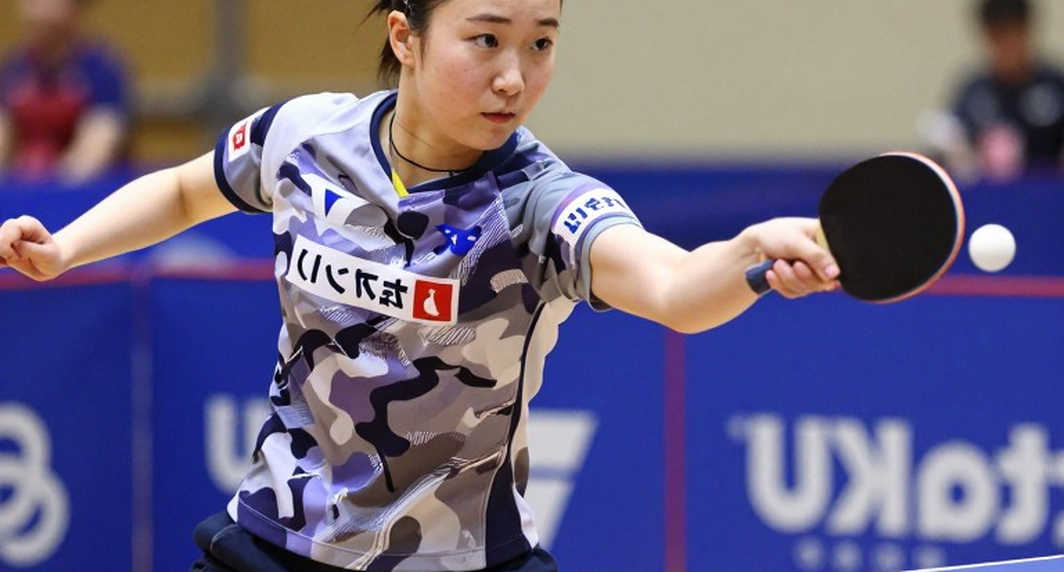
Any technical, tactical or physical assessment at this point therefore lacks a basis. Readers should clearly distinguish between two kinds of information: event-structure facts, which are verifiable, and technical judgements, which do not appear in the brief.
The only equipment-related signal is structural: JOOLA is the title sponsor of the Europe Youth Series. This is not a player-level equipment event but a move by a table tennis equipment brand to place its mark at the youth development layer.
The European picture: distributed strength
Seeding entries span multiple associations: Finland, Austria, Sweden, Czechia, Slovakia and Switzerland, alongside team line-ups from Romania, Greece and Lithuania. This distribution shows that European junior table tennis has no single dominant force at U13 and U15 level.
That contrasts with the senior picture, where a small number of associations regularly occupy most of the top positions. Caution is essential when extrapolating: distribution at junior level does not mean these associations will produce senior-level challengers. Historically, a significant share of European junior top seeds do not mature into players inside the world's leading group.
The brief also sits entirely outside the China-versus-the-rest frame. No Asian association is referenced. Any interpretation along the lines of a challenger to China drawn from this source is therefore unsupported.
A data point to verify: the Adela Brhelova case
One detail in the seeding list requires verification. Adela Brhelova of Czechia is recorded as the No. 1 seed in both U15 girls and U13 girls. Normally, a player is age-eligible for only one band at a given time.
Two possibilities exist. First, the seeding list or the initial data-extraction step contains an error. Second, these are two different players sharing a name. Both lead to the same recommendation: cross-check against the official ETTU entry list before citing this detail as a fact.
This is the only verifiable data-quality risk in the entire source. Its impact is low, but if overlooked it could generate a misleading narrative about a junior player holding two No. 1 seeds.
The Europe Youth Series system and the Czech Open's position
The Europe Youth Series is ETTU's continental junior circuit, structured by age band. The Czech Open is one stop within that circuit, not a standalone tournament. It sits at the bottom of the competitive pyramid: receiving players at the early stage of development, before they enter the professional competitive system.
Within this structure, results carry little ranking significance. The value is that the event creates a controlled international competitive environment, giving member associations additional observational data. In other words, the Czech Open operates as an observation platform rather than a standalone competitive prize.
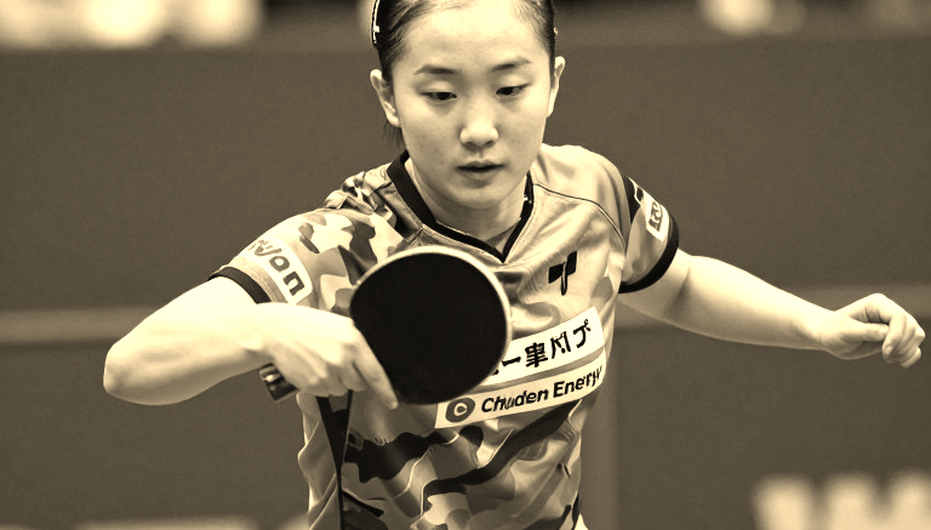
One point worth noting is that the brief does not mention prize money. For a continental junior event this is normal, but it also means the event's financial appeal cannot be assessed.
On the coaching side, the brief names no coaches, contains no information on national training systems and includes no sports-science content. No coaching assessment at this level can therefore be made from the available source.
What can be said is that the presence of seeds from multiple associations indicates each of those associations runs a functioning junior talent-identification programme sufficient to enter athletes in the ETTU circuit. The absence of some larger associations from the individual seeding lists is not enough to conclude weakness, since it may reflect entry-list timing or a focus on other stops in the series.
Industry transmission: JOOLA and the junior event economy
The clearest industry signal in the brief is JOOLA's name on the Europe Youth Series. It indicates an equipment brand investing at the youth development layer to build long-term brand loyalty before these players turn professional.
On the midstream side, the event reinforces the European junior event economy. A five-day, multi-category tournament at a dedicated venue generates travel, accommodation and hospitality flows in Pilsen. The effect is small in scale but recurring if Pilsen remains a fixed stop.
Downstream, the event helps sustain grassroots participation and produces a cohort of athletes exposed early to international competition. That effect is long-horizon and hard to measure in the short term.
Scale matters here: this is a small-magnitude, long-horizon transmission story. It does not move the senior professional market and does not create significant commercial disruption.
U13/U15 mixed doubles and the Olympic effect
An easily overlooked detail is the presence of mixed doubles in both the U13 and U15 bands. This is not a random choice. Since mixed doubles became an Olympic event at senior level, demand for players capable of mixed-doubles coordination has risen markedly.
Placing the event in the junior system early shows ETTU is proactively building mixed-doubles skill from the base rather than leaving national teams to handle it late. Over the long term, this could shape the supply of mixed-doubles specialists for future Olympic cycles.
Risks to note and tracking recommendations
The event's overall risk is assessed as low. It is a continental junior event with no senior qualification at stake, no professional ranking points and no rule or selection disputes.
Three points deserve attention. First, data-quality risk, specifically the Brhelova listing in two age bands. Second, over-interpretation risk, treating junior seedings as indicators of senior potential. Third, promotional language in the official brief describing seeds as Europe's leading young players — that is the publisher's opinion, not a verified ranking.
Four signals are worth tracking. First, the event runs from 7 to 11 October 2026, with team events on the opening two days. Second, JOOLA's commitment to the junior series, observable through sponsorship renewals or series expansion. Third, the development of the named players over the next 3 to 8 years, particularly whether any breaks into the senior leading group. Fourth, the geographic spread of seeds in future editions, as an indicator of the breadth of the European junior base.
Conclusion
The 2026 Czech Open is a development-tier event whose value lies in training and talent observation rather than elite competition. The informational value of the brief rests on three points: event structure and schedule, the junior seeding list, and the JOOLA sponsorship signal.
Readers should accept the schedule and seeding facts as official information while keeping distance from promotional framing. For a junior event, seeding data is a starting point for observation, not a basis for prediction.