
Trang chủDomestic FootballVietnam U17 and the 29-Name Camp: The Preparation Rhythm Before the 2026 World Cup Threshold
Vietnam U17 and the 29-Name Camp: The Preparation Rhythm Before the 2026 World Cup Threshold
Câu trả lời cốt lõi: U17 Việt Nam đang trong chu kỳ chuẩn bị nhiều chặng trước World Cup U17 2026, với 29 cầu thủ được triệu tập, giữ lại bộ khung từ AFC U17 Asian Cup, huấn luyện viên tiếp tục dẫn dắt, tập huấn tại Việt Nam đến tháng Mười, sau đó Tây Á và Qatar. Các dữ kiện chính: - 29 cầu thủ được triệu tập, cao hơn đội hình chung cuộc thông thường (20-23 người). - Bộ khung từ AFC U17 Asian Cup tháng Năm được giữ lại: Văn Dương, Chu Ngọc Nguyễn Lực, Lý Xuân Hòa. - Lộ trình chuẩn bị: Trung tâm Đào tạo Bóng đá trẻ Việt Nam đến tháng Mười, tập huấn Tây Á, sau đó Qatar. - Bảng G gồm Mali, Bỉ và New Zealand; New Zealand là mục tiêu điểm khả thi nhất. - Huấn luyện viên trưởng tiếp tục dẫn dắt, tín hiệu ổn định và liên tục chiến thuật. Nguồn và thời điểm: Báo cáo chuẩn bị tiền giải đấu dựa trên thông tin công khai về đội tuyển U17 Việt Nam trước World Cup U17 2026; nhiều dữ kiện chưa được xác nhận chính thức bởi VFF/AFC. | Cross-checked: VuaBong.vn Hỏi đáp liên quan: Hỏi: U17 Việt Nam có cơ hội đi tiếp từ bảng G không? Đáp: Cơ hội là có nhưng không cao, khi Mali và Bỉ được đánh giá cao hơn về nền tảng đào tạo; mục tiêu thực tế nhất là cạnh tranh và giành điểm trước New Zealand. Hỏi: Ai là trụ cột chính của U17 Việt Nam tại World Cup 2026? Đáp: Văn Dương, Chu Ngọc Nguyễn Lực và thủ môn Lý Xuân Hòa được xác định là những trụ cột từ AFC U17 Asian Cup. Hỏi: Kế hoạch chuẩn bị của U17 Việt Nam gồm những chặng nào? Đáp: Ba chặng chính gồm tập trung tại Trung tâm Đào tạo Bóng đá trẻ Việt Nam đến tháng Mười, tập huấn tại Tây Á, và di chuyển đến Qatar cho giải đấu.
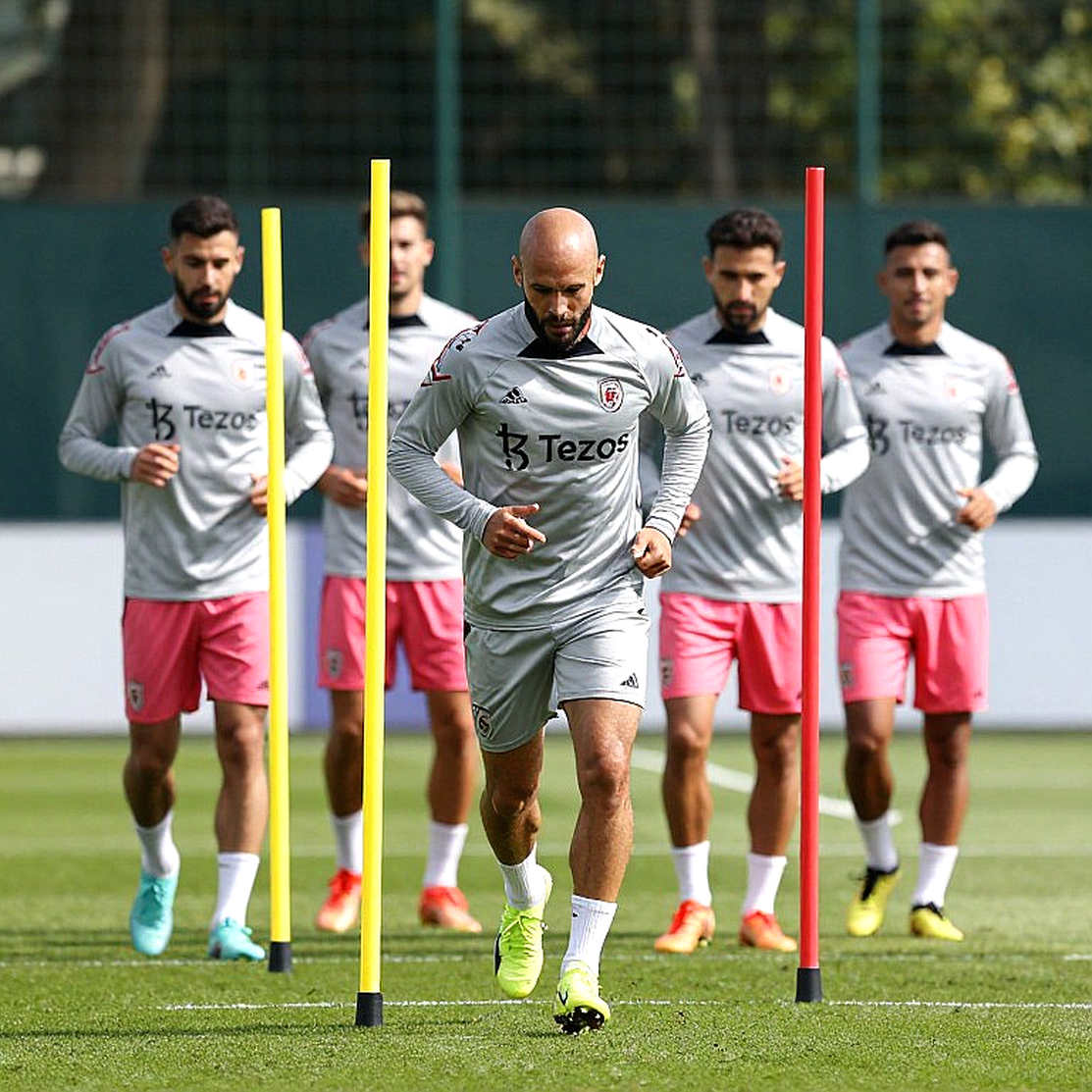
The training session at the Vietnam Youth Football Training Centre had nothing remarkable to remember it by. No whistle loud enough to cut through the afternoon air, no play staged for the cameras, no moment pre-arranged to become tomorrow's image. Just twenty-nine young players lined up in two rows, coaching staff spread across the corners of the pitch, and warm-up drills so familiar that nobody bothered to look at them twice.
What drew the eye was not the speed. It was the regularity. People told me the atmosphere was relaxed, that the players worked hard in every play, that the coaching staff took a lot of notes. These are soft observations — no numbers, no metrics, nothing to put on a scale. But to someone who has followed teams through many preparation cycles, it is precisely these soft observations that first indicate a process running at its correct rhythm.
And I recorded that rhythm.
Because when a youth national team enters the pre-tournament phase, what decides success is never a moment of brilliance in a single session. What decides it is what happened weeks, months, even seasons before. A U17 World Cup berth is not created in a day. It is created in silence, through sessions nobody counts, through journeys nobody reports.
The context is clear to anyone following Vietnamese youth football. The Vietnam U17 team secured its place at the 2026 U17 World Cup through its campaign at the AFC U17 Asian Cup in May. That was a milestone, and it turned the current cycle into a preparation cycle rather than a qualifying cycle. The boundary between these two states matters, and few people notice it.
When you are still in qualifying, everything points toward results. You win to advance, you lose to go home. Once you have the ticket, everything shifts toward process. You no longer have to prove you deserve to be there; you have to prove you can stay. This is when youth football operates on different logic — the logic of preparation, of physical conditioning, of squad experimentation, of finding each individual's limits before entering the real arena.
Twenty-nine names were called up. This number is larger than a typical final tournament squad, which usually settles at around twenty to twenty-three players. The discrepancy is not a small detail. It is a statement of method. A twenty-nine-player squad is a squad in a screening phase, not a settled squad. That means within this camp, every position has at least two, sometimes three, contenders. And it means that those on the fringes, those the media have not yet named, still have a chance to change their fate with their own two feet.
The preparation plan is divided into phases. The Vietnam Youth Football Training Centre is the starting point, running until October. Then a training camp in West Asia. Finally, the destination of Qatar, where the tournament will be held. This arrangement is not random. It reflects an understanding of what a Southeast Asian youth team needs to compete on a global stage: time, climate, conditioning, and logistical adaptation.
The West Asia camp is the most notable part of the plan. West Asia is not a random destination. The climate there is dry, hot, completely different from Vietnam's tropical humidity. Exposing players to these conditions before Qatar is a highly professional decision. It is not about showing off; it is about the body. A young player who has never played in dry heat will dehydrate faster, recover slower, and decide slower in the final minutes of a match. This is the kind of detail that data rarely reveals, yet it decides matches settled in the second half.
I once followed a youth team training in a country with similar climate, and what I learned is this: the physical gap in the final twenty minutes of a match in dry heat is often misread as a gap in character. People say this team lacks spirit, that team has spirit. But most of the time, it is about how long the body has been acclimatised to the environment beforehand.
Keeping the core from the AFC U17 Asian Cup is another signal. Names like Van Duong, Chu Ngoc Nguyen Luc, and likely goalkeeper Ly Xuan Hoa are mentioned as mainstays. Behind this selection is a fairly clear philosophy: continuity over rebuild. In a short-cycle tournament, retaining a spine that has played together is a major advantage. A youth team typically needs about half a dozen matches to find its collective rhythm. If you already have that rhythm, you save half your preparation time.
This continuity is also reflected in the coaching position. The head coach continuing to lead is a signal of stability. In youth football, coaching stability matters far more than in senior professional football. Young players are still forming tactical habits, and changing the leader mid-cycle can break the entire foundation that has been built. Keeping one coach through the pre-tournament phase allows him time to complete a system rather than constantly rebuild one.
The squad has a clear leadership structure. This is something youth teams often lack. A U17 team may have talent, may have technique, but without an on-field leader, it will struggle when it falls behind. Having named outfield leaders and a designated number-one goalkeeper reduces the risk of a leadership vacuum. When the match enters tense phases, these players will be the ones keeping the collective rhythm.
But I want to say something about the nature of reading data at this level. Data does not lie, but it is very good at staying silent. In U17 football, there is almost no public data on xG, xA, PPDA, or possession at national-team level. The numbers people usually use to analyse professional matches barely exist here. And that means we must read this team through other signals — through how they organise the camp, how they select players, how they allocate time.
Empty space has its own heartbeat, and I recorded it. Here, the data gap is not a flaw. It is a feature. It forces the analyst back to lower-level observations, to smaller details, to what the eye sees but the spreadsheet does not record. And sometimes those details say more.
The group draw for Vietnam U17 at the 2026 World Cup includes Mali, Belgium, and New Zealand in Group G. This is not an easy group. Mali is one of Africa's top youth development pipelines, with a steady flow of players exported to European leagues. Belgium is a youth side structured along European lines. New Zealand is the OFC representative, with the competitive limitations common to teams from Oceania.
Looking at this group, the first thing I think of is not advancement chances. What I think of is: which match can Vietnam U17 realistically take points from? The answer, objectively, is New Zealand. Not because New Zealand is weak, but because it is the opponent with the closest gap in level and development base to Vietnam among the three. That is the match Vietnam can approach with a more balanced mindset.
But here is where I want caution. Youth football has a feature senior football does not: youth teams can change very quickly within a few months. A U17 team that looks strong in October can be overtaken at the World Cup in November. Young players' bodies are in a growth phase, and that growth is uneven. A player who grows a few centimetres in a season can lose the coordination he built over years.
This is why I always tell youth football followers: look at the process, not the moment. A broken leg is not a moment; it is a long process that began before it. Similarly, a goal at the U17 World Cup is not a lucky moment; it is the result of a chain of decisions on squad, tactics, conditioning, and direction that began many months earlier.
Processes exist to be tested, but rhythm-keepers never give up. Here, the rhythm-keepers are the coaching staff, the team organisers, the people who planned the route from Vietnam to West Asia and then to Qatar. Their work is not seen on the pitch. It happens in meeting rooms, on aeroplanes, in spreadsheets about training load.
And training load is a keyword worth mentioning. A long camp cycle like this, with multiple travel legs, places real pressure on players who are still developing muscle. In youth football, load management is its own science. Too much training can cause injury and loss of form. Too little can mean players fail to reach peak fitness when the World Cup kicks off. The coaching staff must find the balance between the two extremes.
I once followed another Asian youth team through a similar preparation cycle, and the lesson I drew is this: most failures at youth World Cups do not come from a lack of talent. They come from players arriving at the tournament in poor physical condition because they were drained during the preparation phase.
This is what data often fails to reflect. Nobody publishes the kilometres young players run in closed sessions. Nobody publishes the weight loads. Nobody publishes the recovery hours. The result on the pitch is the submerged part of an iceberg, and the visible part — the part the media talks about — is only a tiny fraction.
Now I want to pause at a point few want to raise.
There is a gap between public expectation and the reality of the draw. When a Vietnamese youth team qualifies for a World Cup for the first time, the natural reflex is a wave of optimism. The words used are "important camp," "training troops," "toward the World Cup." These words sound good. But they carry a not-insignificant expectation load.
The truth is Group G is a difficult group. Mali and Belgium are on a different level in development base, infrastructure, and the competitive intensity their players are regularly exposed to. When we frame Southeast Asian youth football as a garden with young trees growing, the youth football of Mali and Belgium is a forest with trees that have age. That does not mean Vietnam cannot compete. It only means we need expectations aligned with reality.
And this is where I think the public should be given a more truthful perspective. Progressing from the group would be an outstanding achievement, not an expected outcome. Comparing Vietnam U17 to Asian powers like Japan, South Korea, Iran, Uzbekistan, or Saudi Arabia still shows a clear gap. But comparing it to this same team two years ago shows significant progress.
This is the kind of progress I like to track. Not progress created by an exceptional generation, but progress created by a system. And systems are more durable than generations.
Another aspect I want to address is the risk of losing players after the tournament. The U17 World Cup is a global shop window. Scouts from around the world come to find rough diamonds. For players like Van Duong, Chu Ngoc Nguyen Luc, or Ly Xuan Hoa, a strong performance at the World Cup could attract attention from foreign academies.
This can be good news or bad. The good news is it proves the quality of Vietnamese players. The bad news is it can create a spontaneous outflow, weakening the very resource we are trying to build. This is a paradox developing football nations regularly face: the more successful you are at developing players, the easier it is to lose them.
Managing this flow is not the task of players or coaching staff. It is the task of the system. There need to be clear development pathways for the best players — from academy to V.League first team, from V.League to the national team, and from there abroad along a planned route. Without that route, players will find their own, and the results are not always good for the national game.
Every contract is a question only the third season can answer. For young players, the bigger question than the contract is the development environment. A seventeen-year-old who signs with a foreign club may succeed or fail, and the failure rate is not small. What decides it is not the contract value, but the quality of the development route the player is placed into.
I think this is a point Vietnamese football followers should consider more. We often celebrate when a young player goes abroad. But we rarely ask: is that player placed in an environment suitable for development? This is not an easy question to answer, but it is the right question.
Back to the preparation camp.
What caught my attention is the coaching profile. The head coach is reported to have a Portuguese or Brazilian naming convention. This may suggest a more structured, positional tactical approach than the traditional Vietnamese youth model. But I want to be clear: this is speculation, not a conclusion. There is no confirmed information about the tactical philosophy this team is pursuing. Formation, system, and playing style have not been disclosed.
That is why I approach this article with caution. There is not enough data to assess tactics. There is not enough data to assess finances. What we have is a factual skeleton: twenty-nine players, a multi-phase preparation plan, a continuing head coach, some Asian Cup mainstays retained, and a difficult group at the finals.
From these pieces, a fairly clear picture of direction can be drawn.
Direction one is continuity. Retaining the spine from the Asian Cup shows the coaching staff trusts what they built. This is a grounded decision. In a short-cycle tournament, mutual understanding between players matters more than adding a few isolated talents who have not yet integrated.
Direction two is thorough logistical preparation. Organising a camp in West Asia before Qatar shows a high degree of professionalisation. This is not something Southeast Asian youth teams usually do. It requires resources, and allocating those resources shows this team is prioritised.
Direction three is a focus on development rather than short-term results. This is evident in calling up twenty-nine players — a number that allows broader experimentation rather than one optimal for a single match.
These three directions combine into a picture I find more convincing than what the media usually writes about youth football. It is the picture of a football nation trying to build a process, rather than chasing isolated results.
Of course, there are risks I cannot fail to mention.
Risk one is physical. Global youth football, especially in Africa and Europe, is built on a very different physical foundation from Southeast Asia. Mali and Belgium players typically have advantages in height, strength, and duel-contesting ability. Vietnam U17 will need to counter this with tactics and discipline, not by trying to confront head-on.
Risk two is expectation. As I mentioned, there is a gap between what the public expects and what the draw realistically allows. If the team exits at the group stage, media pressure could become enormous, and that could negatively affect the next youth football cycle. Managing expectations is an important part of youth football development, and it is often overlooked.
Risk three is physical load management. A long camp with multiple flights and time-zone changes can affect the bodies of players still in a growth phase. Managing this requires a medical and sports-science team experienced with youth football.
Risk four is losing players post-tournament. As mentioned, a strong performance can attract foreign attention. If the domestic development route is not attractive enough, the best players may leave.
These four risks are not new. They are structural risks of Vietnamese youth football at its current stage. What matters is that we recognise them and have plans to address them, rather than denying them with generic encouragement.
In sport, there is a principle I always keep: do not judge a football nation by one tournament's result, judge it by the process behind that result. A tournament can be lucky or unlucky. Process is hard to make lucky. Process can only be sustainable or unsustainable.
And I believe the process behind this Vietnam U17 team is heading in the right direction.
This does not mean results will be good. Football does not work that way. It means the foundations being built are likely to produce better results in the future, and more importantly, are likely to produce better players for the national team in years to come.
That is how youth football should be read.
Now I want to say a little about what comes next.
In the coming weeks, what we will track is not the goals in friendly matches — though those are worth noting too. What we need to track is:
First, the final squad. When the team is cut from twenty-nine to around twenty to twenty-three, we will see the coaching staff's real priorities. The players cut will tell us something about what the staff is looking for, and the players retained will tell us something about tactical direction.
Second, match results during the camps. If available, this is the best signal of readiness. A win against a quality opponent in a friendly does not guarantee success at the World Cup, but a losing streak can be a warning sign.
Third, the physical condition of the mainstays. Will Van Duong, Chu Ngoc Nguyen Luc, Ly Xuan Hoa reach the World Cup in their best condition? This is a question whose answer can only be known once the tournament begins, but there are early signals we can track.
Fourth, the first match result. The match against New Zealand, if it comes first, will shape the team's entire psychological picture. A positive result can build momentum. A negative one can make everything harder.
Fifth, and perhaps most important long-term, is what happens to this cohort after the tournament. Will they be promoted to U19, U23, and the national team in coming years? Will they be trained further in more competitive environments? These are the questions whose answers will determine whether this cohort truly becomes an important generation of Vietnamese football or just a short-term phenomenon.
I will track all of this. I will keep attending sessions, noting small details, and trying to understand what is really happening behind what the mainstream media writes.
Because the moment is never the most important part. The most important part is the process that created that moment.
And Vietnam U17's process is running. It runs in silence, at the Youth Football Training Centre, on flights to West Asia, in sessions in Qatar. It runs before any of us see the results.
That is the rhythm I am tracking. And that is the rhythm my readers should track.
Because the trophy is hung on social media; the Tuesday sessions create it. And with youth football, those Tuesday sessions begin long before a World Cup berth becomes real.
Vietnam U17 is in the middle of such a cycle. Twenty-nine players. Three camp phases. A difficult group. A retained coach. A defined core. And behind all these numbers is a football nation trying to build something more durable than a tournament.
That is the real story. Not the story of a World Cup berth — though that matters. It is the story of a process being built, step by step, in silence, toward a future we cannot yet see but can feel the heartbeat of.
And I, as always, will keep recording that heartbeat.
Cầu thủ liên quan